
The new Babyn Yar Holocaust Memorial Centre is a Trojan horse for Putin’s hybrid war
An interview with Yohanan Petrovsky-Shtern, a historian, philologist and essayist. Interviewers: Aleksander Palikot and Jerzy Sobotta
ALEKSANDER PALIKOT AND JERZY SOBOTTA: You’ve been visiting Babyn Yar since you were very young. The 80th anniversary has just passed. Was it different this time?
YOHANAN PETROVSKY-SHTERN: Most importantly this time there were two different commemorations. Between September 29th and 30th, there was an unofficial or semi-official event. I would have been there too, if not for my Northwestern University teaching commitment. Many people came, including representatives of various public organisations and representatives of different Ukrainian Jewish communities. They paid tribute to the 33,771 Jews massacred at Babyn Yar over two days in September 1941 during the Nazi occupation of Kyiv.
December 2, 2021 -
Aleksander Palikot
Jerzy Sobotta
Yohanan Petrovsky-Shtern
-
Interviewsissue 6 2021Magazine
Photo: Anastasiia Simferovska (CC) commons.wikimedia.org
There was also a different celebration. The representatives of the Ukrainian political elite had their official ceremony on October 6th, something never done before. They were joined by individuals such as Ilya Khrzhanovsky and Max Yakover, managers of the Babyn Yar Holocaust Memorial Centre (BYHMC) – a notorious project that includes building a huge Holocaust museum at the site of Babyn Yar. Top political leaders from Israel and Germany joined them too. This second commemoration, privatised by the Russian-sponsored institution continues the Soviet-style official commemorations that turns the Babyn Yar tragedy into a pop-show with the superstars of political beau monde participating. They might reach out far and wide and help make the Babyn Yar massacre more visible, but I have always preferred the depth over the width. This kind of commemoration requires a modicum of humility. But perhaps Russian oligarchs and pompous politicians and historians in Ukraine who bow down to them consider humility a nuisance, particularly in this case.
Why do you see it this way?
From the 1960s onwards, the popular rallies commemorating the Babyn Yar victims were unofficial. Relatives of Jewish victims conducted their unauthorised rallies until 1967 when the communists hijacked the idea and sought to replace the rallies into an official commemoration of victims of the Great Patriotic War. The authorities euphemistically referred to these victims as “peaceful Soviet citizens” murdered by the Nazis at Babyn Yar. The unofficial and official commemorations merged in the post-Soviet times and successive Ukrainian presidents – Leonid Kravchuk, Leonid Kuchma, Viktor Yushchenko and even Viktor Yanukovych – all showed up on September 29th at Babyn Yar to commemorate the tragedy.
So what has changed now?
The split between the official and unofficial became acute again because the Babyn Yar Holocaust Memorial Centre, which was established in 2016, turned out to be a part of Vladimir Putin’s hybrid war against Ukraine. In order to gain prestige, money and visibility, influential politicians in Ukraine decided to support the Russian nouveau riche, who are willing to invest huge amounts of money into the establishment of the centre. However, most of the Ukrainian public opinion and civil society do not support this project. Instead, they support a Ukrainian project approved by various levels of national authority. However, any prospect of supporting local projects has been ignored by Volodymyr Zelensky’s administration.
What exactly do you find so outrageous about the project that is now being realised?
I do not find it ethical to place a museum on the site of mass execution. Besides, this grandiose project promoted as the most spectacular Holocaust memorial in Eastern Europe is an insult to popular memory. Russian filmmaker Ilya Khrzhanovsky and the startup-manager Max Yakover who lead the project seek to build a Disneyland-type attraction on the site, where 100,000 people had been massacred. They are constructing a Holocaust amusement park with installations and role-playing games exactly at the place where people were brought in packs, undressed, thrown into the pits, shots by bullets or machine-gunned. Their undertaking is disgusting.
A number of Ukrainian intellectuals who signed an open letter criticising the project share your criticism. But on the other hand, isn’t it also problematic that Ukraine has not managed to build a commemoration complex at the site after 30 years of independence?
Let me remind you that the creation of the menorah monument, which I saw as a very significant move, was carried out in 1991 on the initiative of the mayor of that particular city district. That testified to the willingness of the Ukrainian authorities to reverse the antisemitic policies of the previous regime. Moreover, many new memorials have appeared. The memorial to Roma victims was transferred from a different site to Babyn Yar. The memorial to the mentally ill people from the Saint Cyril hospital who were shot there was established at the site as well. There is also a new memorial to several hundred Ukrainian nationalists executed at the site, although we do not know where exactly they were shot. It is important to understand that the Jews created a kind of a blueprint for the commemoration of different victims of the Second World War and Babyn Yar became the site where other groups began to place their monuments.
Can you tell us a bit about your personal connection to Babyn Yar? Why is this place important for you, and why do you believe it is such an important symbol for Ukraine?
I am directly linked to the Babyn Yar massacre through my family on both sides. My father’s grandmother remained in occupied Kyiv in 1941. She was struck by a rifle and killed on the spot by a Nazi guard on her way to Babyn Yar. Her name was most likely Esther. That’s how the title of my sister Katja Petrowskaja’s novel, Vielleicht Esther, came to be. On my mother’s side, Anna Krzevina, my mother’s grandmother and Liolia Krzevina, my mother’s aunt, were taken to Babyn Yar and shot there on September 29th 1941. My grandmother’s brother Arnold Krzevin managed to escape because he was an albino: blond and blue-eyed, and did not look like a Jew. I remember Babyn Yar from the time when I was a kid. Every September during the 1960s my grandmother Rosa took her brother Arnold and they went to the Babyn Yar rally. I started to go there a little bit later.
When was that?
My own Babyn Yar story started in the 1970s. In 1972, 11 Israeli sportsmen were shot by Palestinian terrorists during the Munich Olympic Games. Next August, several Kyiv residents wanted to commemorate them at Babyn Yar. Among them was David Miretski, my art mentor. Together with a dozen friends, he was detained by the KGB and sentenced to 15 days in prison. After that, he lost his job and had to leave the USSR. I lost my teacher. Since the mid-1970s, I have been bringing people to Babyn Yar. These were family friends from Moscow and Leningrad. I took them there as I knew Kyiv well, although the authorities were unsympathetic to those kinds of unsupervised visits. During these visits, I was mostly silent. The people who were coming knew much more than I did, they did not need a guide.
An interesting case happened in 1992, when I took Rabbi Moshe Potolsky, the head of the yeshiva in Kyiv, to Babyn Yar. We were standing in front of the huge Soviet-style monument established in 1976, which had nothing to do with Jews as it showed robust Soviet soldiers and Slavic-looking people falling into the pit. In front of the monument, there were three memorial plaques: in Yiddish, Russian and Ukrainian. I remember standing there with my rabbi while a young couple looked at the statue. The girl pointed to the Yiddish plaque and asked her boyfriend: “What is this language?”. The boy replied: “I have no idea, probably Armenian”. Those two probably heard something about the Armenian Genocide, but they knew nothing about the Holocaust, the Jewish genocide. I was in deep shock. Living through this kind of story gives you an excellent idea of what the wider population knew and did not know about the site. Yet for Jews, Babyn Yar was the major site of Jewish memory, a symbol of the Holocaust in Ukraine.
To many people in the West, the name Babyn Yar does not even ring a bell. What can be done to draw more attention to the history of the Holocaust in Ukraine?
There is no doubt that Ukraine needs its own Holocaust memorial. The Ukrainians need to incorporate the memory of the Holocaust into their national historiography. I support the vision of Ukrainian history that incorporates ethnic minorities: Crimean Tatars, Czech Mennonites, Jews, Poles, Roma, Russians and others. This vision has been developed in academic discourse but it needs to be brought into education and public commemoration. The Holocaust should be taught at schools and universities, not just as a separate topic, but as part of any course on the Second World War.
It is crucial to reach out to Ukrainian thinkers, public figures and politicians and explain to them that Ukraine deserves its own version of the 20th century’s key events. They need to understand that Putin and Vladislav Surkov are ultimately using three or four Jewish oligarchs, who are investing their money into the Holocaust memorial centre. By allowing this to happen, Ukrainians are allowing imperial ideologists to impose their own – misleading and harmful – vision of events on Ukraine.
What is exactly wrong with the narrative they are trying to impose? To what extent does the essence of the problem revolve around the issue of collaboration and Ukrainian nationalism?
Research about the issue of collaboration is only in its initial stages so to take any kind of definitive line would be disingenuous. To say that the Ukrainians collaborated as a whole or that all Ukrainian nationalists participated in mass executions is misleading. What needs to be done is that people who represent the Jewish side of the story and the Ukrainian nationalist side of the story need to work to reconcile the two historiographies, even if it takes a century.
Who loves to talk about Ukrainian collaboration at the expense of other significant aspects of the Holocaust on the Ukrainian territory? Those who want to impose a Soviet-style narrative of the Great Patriotic War on Ukrainian public opinion. That conversation is their favourite subject matter, although they know nothing about the topic, do not draw on studies based on serious archival research, and do not understand the complexity of the issue. They do not know, for example, that the Hilfspolizei, the auxiliary police formed by the Nazis from local inhabitants, was called the Ukrainische Hiltzpolizei because it was formed in Ukrainian lands. It was not called this because it was made up of Ukrainians. As a matter of fact, this formation included many Hungarians, Poles and Russian POWs on top of Ukrainians. But to call it ethnically Ukrainian is wrong. People who are planning to create this new “Holocaust Disneyland” are not interested in such nuances. Focusing on Ukrainian nationalists’ collaboration with the Nazis remains crucial for them because it obfuscates a broader historical perspective, which people at the BYHMC simply ignore.
What is the main bone of contention here?
Russian propagandists and their puppets ignore that the war started on September 1st 1939, not on June 22nd 1941. They do not want to recognise that the fate of European Jews was sealed by the partition of Poland between the Nazis and the Soviets when Hitler and Stalin put the Molotov-Ribbentrop Pact into practice. The entire fate of Eastern Europe’s Jews would have been very different if not for the situation Timothy Snyder calls a “double occupation”, which unfolded between 1939 and 1941. First, the Soviets came to the western regions of Ukraine and Belarus, then they occupied the Baltic States. Two years later, the Nazis reoccupied these territories and smashed any remaining vestiges of social institutions that had not been crushed by the Soviets. This double destruction created a void, a black hole in which violence skyrocketed and mass murder became feasible.
Any discussion of this period is impossible without addressing Nazi-Soviet collaboration between 1939 and 1941. The SS learned how to establish the concentration camps directly from the NKVD. The purges of the class-based groups declared the enemies of the people in the pre-war USSR prepared the population to the purge of groups based on ethnicity that were also declared, now by the Nazis, the enemy of the people. As a result, the Soviet authorities share responsibility with the Nazis for what would become known as the Holocaust.
The more people learn about the importance of about a million Soviet POWs who joined General Vlasov’s army and other German units to fight the Soviet army on the Nazi side, the more they will hear from the hardliners of Russian official historiography about those Ukrainian troops who fought as part of the Wehrmacht. Russians cannot bear to hear this story to the point that last year Putin’s administration introduced a paragraph into Russian criminal law incriminating anybody who publicly discusses or revisits the Soviet role in the destruction of Nazi Germany.
Do you think that this agenda will be reflected in the historical narrative pursued by the Babyn Yar Holocaust Memorial Centre?
They will work out how to present it in a hybrid way. They will talk about the Soviet attempts to help the marginalised Jewish minority in Western Ukraine from 1939 onwards. They have professional historians ready to create their own narratives in line with the ideas of hardliners. They will know how to go about twisting historical narratives to please their Kremlin sponsors. But they would never say what I have just said because they absolutely deny that the Soviet Union bears any responsibility for causing the Holocaust.
Why does the front line of this hybrid war lie in historical memory?
Any historical discussion today is highly politicised, particularly on what Ukraine was and is today. This poses a big issue for Russia. The official Russian historiography says that Russia has its roots in the Kyivan Rus’ and thus Ukraine is a strange entity that should be incorporated into the Russian lands as it allegedly has always been.
The Ukrainian story is much more complex. Whether Kyivan Rus’ was Russian or Ukrainian is essentially a modern question and an issue for discussion. There is a definite continuity between the Kyivan Rus’ and the Duchy of Halych–Volhynia, as well as the 16th and 17th century Cossack state and early Ukrainian autonomy in the times of the Hetmanate. The modern part of this story begins with Ukraine’s short-lived independence from 1917 to 1920, the relatively autonomous Ukrainian Socialist Republic in the 1920s, and what independent Ukraine has been since 1991. Thus, we are talking about absolutely irreconcilable visions of what Ukraine is and was. The attempt to curb the Ukrainian narrative is very visible in the Russian media. The idea of Ukrainian independence is unacceptable for the Russian liberals too.
If the BYHMC is part of Putin’s hybrid war, why did people such as Belarusian noble laureate Svetlana Alexievich, long-time German Foreign Affairs Minister Joschka Fischer, Polish ex-president Aleksander Kwaśniewski, Israeli politician Natan Sharansky or President of the World Jewish Congress Ronald Lauder join its supervisory board?
The answer to your question is very simple: ignorance, prestige and money. The distinguished people who you mention such as Kwaśniewski, Lauder and also Patrick Desbois, who recently joined the club, simply do not know what we are talking about. They are completely ignorant about what Babyn Yar has been for the last 80 years for ordinary Kyivans, Ukrainian Jews and Ukrainian dissidents. Others added their names to the supervisory board because they seek prestige.
What about the people who run the project? Ilya Khrzhanovsky isn’t known to be a supporter of Putin.
As for Khrzhanovsky and his ilk, the issue is money. We are talking about 90 to 120 million US dollars invested into this project. It is more than what has been invested into the Polin Museum in Warsaw, which raised about 80 million US dollars. I think that Khrzhanovsky and Yakover are extremely cynical about what they are doing. They could be knowledgeable and talented, and even good professionals, but they are first-rate cynics. Ultimately, they are affordable puppets in the hybrid war of Putin and Surkov against Ukraine.
And what about Volodymyr Zelenskyy, the Klitschko brothers and the Ukrainian state?
In their case, it is mostly a question of prestige, although there is also money involved. Through such costly projects, Ukrainian politicians always manage to enrich themselves, either in terms of commodities or connections. I do not see any kind of serious understanding or deep reflection about what they are doing.
What would you say if Germany also decided to finance the project?
Who knows how to wage a hybrid war? The Germans? The French? The Americans? No, the Russians. It is Russian know-how and since it is theirs, they know how to use it very well. They are cautiously exploring ways to wage hybrid war elsewhere, but first and foremost in Ukraine. Because without Ukraine, there is no Russian empire. They have been extremely successful in what they have been doing so far in Georgia, Moldova and Ukraine. Their territorial acquisitions in Ukraine created buffer zones preventing Kyiv from joining the European Union.
The Babyn Yar museum is a major part of this hybrid war. It is sponsored by influential oligarchs, Michael Friedman, German Khan, Pavel Fuchs and Victor Pinchuk, some of whom are significantly dependent on Putin. They have attracted big names that you mentioned to the project and use them to promote it. In result they convinced the German government to support what is practically a Russian hybrid war tactic against Ukraine. If the German government agrees to support it with money, this will only help Putin promote his horrible, imperialist, aggressive, “Russia Today”-type ideas in Ukraine.
Do you see any positive way forward in this situation?
Yes, I do. I think governments that are planning to participate in the BYHMC project, most importantly the German government, should support the Ukrainian project. It has been developed over years, approved by numerous academic and administrative bodies and seeks to carefully navigate the different narratives about Babyn Yar. I also think a group of people capable of re-evaluating their actions should step down from this project. The Ukrainian government should stop ignoring the massive protests against Russian participation in the project. The mayor of Kyiv should abandon the subversive idea of leasing the entire site to the BYHMC. We need to turn Babyn Yar into a decent and respectful place that will be visited by Ukrainians, Jews and everybody else. It has to remain a place for commemoration of the victims and not a Holocaust Disneyland.
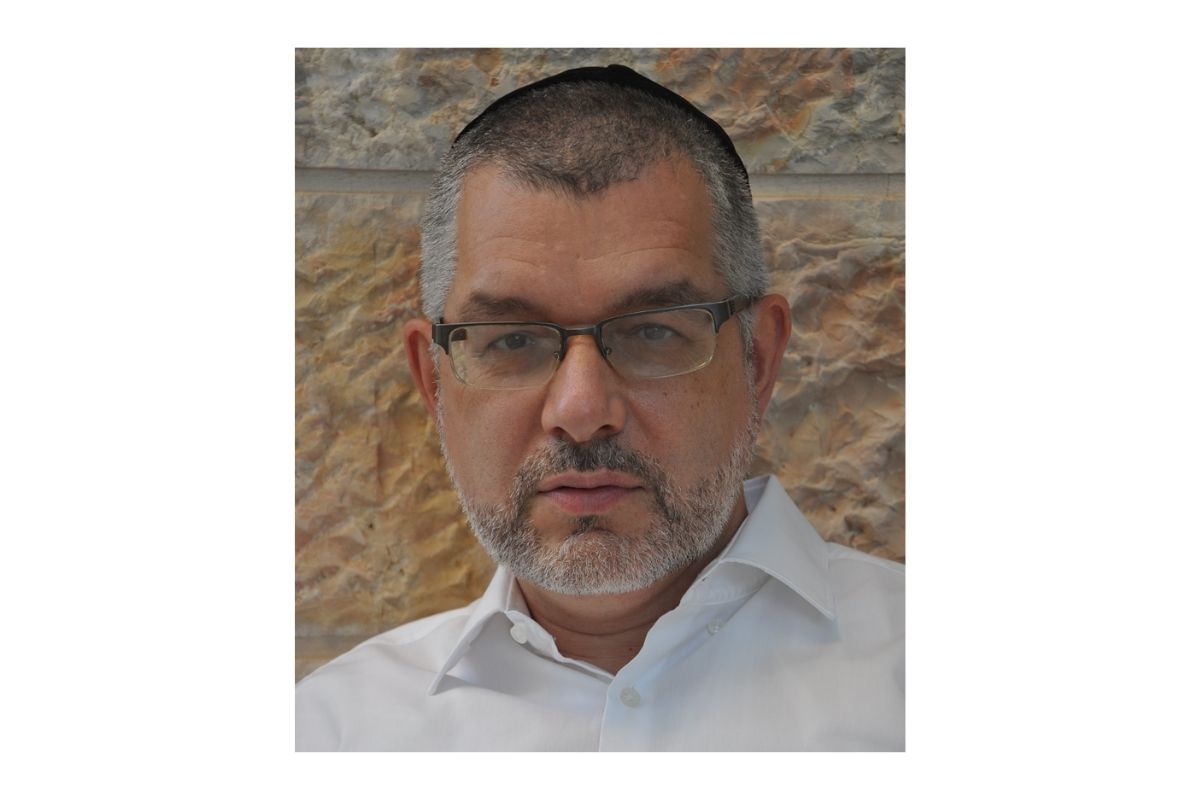
Yohanan Petrovsky-Shtern (born in 1962 in Kyiv, in the Ukrainian SSR of the Soviet Union) is a historian, philologist and essayist. He is the Crown Family Professor of Jewish Studies and Professor of Jewish History in the History Department of Northwestern University, United States. In addition to his teaching and research, he is also an artist, whose conceptualist figurative artwork has appeared in several museums including the Spertus Museum Gallery in Chicago and the Ukrainian Museum in New York.
Aleksander Palikot is a journalist and researcher focusing on Central and Eastern Europe. He has an academic background in philosophy, history and sociology.
Jerzy Sobotta is a radio journalist with the German radio station Bayerischer Rundfunk and writes for Süddeutsche Zeitung on politics, culture and philosophy.