
Text resize: A A
Change contrast

A new corridor, a new impetus

The South Caucasus has serious potential to become a full-fledged logistics hub of regional significance. While opposition to developing a new corridor remains, the potential benefits for all countries in the South Caucasus and beyond will outweigh any costs or perceived risks.

The region of the South Caucasus is located at the intersection of logistics routes leading from north to south and east to west. Of course, the countries of the region are interested in increasing their logistical attractiveness. In this regard, significant funds have been invested in the development of logistics infrastructure over the past ten years. In particular, the Alat port in Azerbaijan was recently built and is now operational. In order to ensure the smooth functioning of the International North-South Transport Corridor, Baku allocated a soft loan to Iran of 500 million US dollars to finance the construction of the Astara-Rasht railway line. The investment was also used for the creation of logistics-related infrastructure to service this line. Azerbaijan took on a long-term lease of the Iranian section of the railway, as well as a railway station and a cargo terminal located there.

December 2, 2021 - Ali Hajizade - Hot Topicsissue 6 2021Magazine

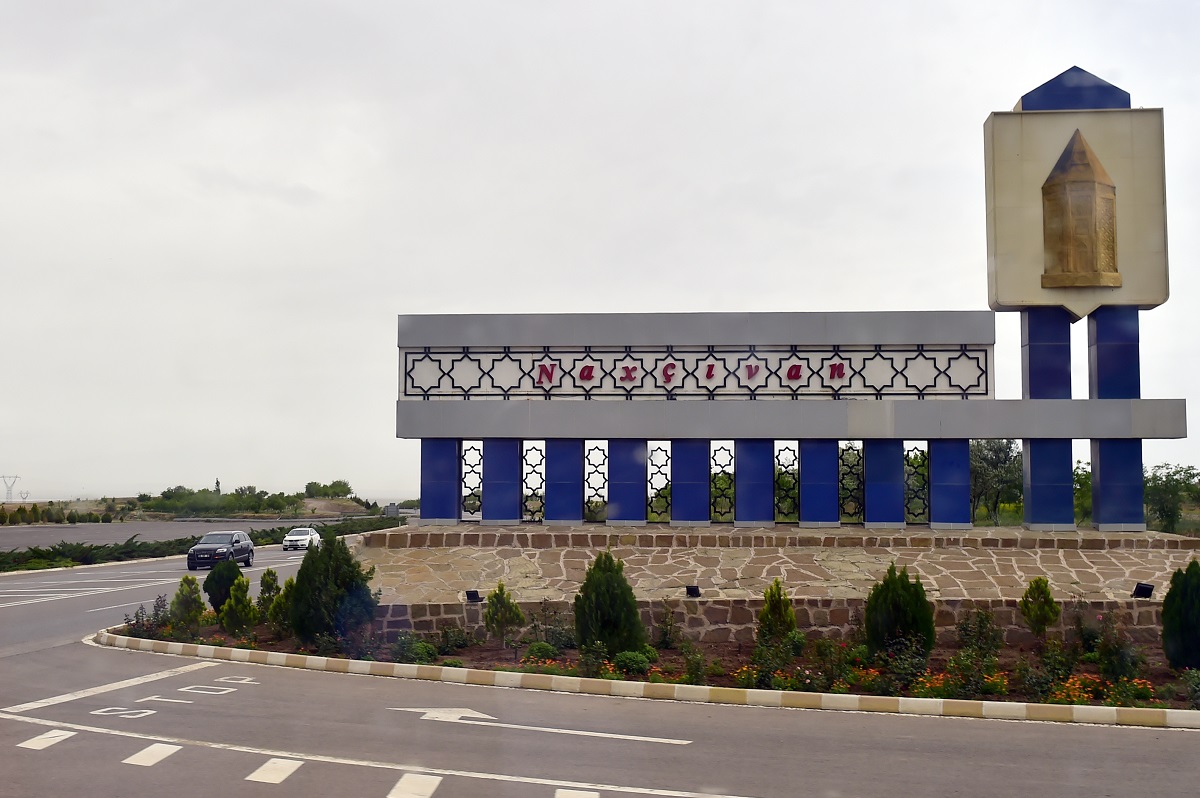
According to the Russian-negotiated agreement from November 10th 2020, Azerbaijan should be allowed to develop a land transportation link with the Nakhchivan Autonomous Republic – a territory of Azerbaijan not connected to the rest of the country. Photo: Thomas Koch / Shutterstock


This year, Iran also plans to complete the construction of a railway line connecting the cities of Anzali and Rasht. Before the 44-day war between Azerbaijan and Armenia last year, the Iranian and Azerbaijani railway connection was also considered by Baku to be an economic opportunity for the Nakhchivan Autonomous Republic (this territory of Azerbaijan is not connected to the rest of the country – editor’s note). According to the Russian-negotiated ceasefire agreement from November 10th 2020, Azerbaijan should be allowed to develop a land transportation link with Nakhchivan, while Armenia is allowed the possibility of a land link with Russia. In the future, if transportation is fully restored, Armenia should also receive the possibility of a railway link with Iran.

Unique opportunity

The territory in the south of Armenia through which these transport lines will pass has recently been dubbed the “Zangezur Corridor”. In Armenia many do not agree with this term and call it the “Meghri Corridor” but that does not really change anything. It is worth noting that back in Soviet times, railways and roads passing through this territory provided links between the Nakhchivan Autonomous Soviet Socialist Republic and the Armenian and Azerbaijani SSRs. With the outset of the Karabakh conflict, these lines were blocked. The end of the 44-day war in 2020 presented a unique chance to unlock some of these links in the region. The Zangezur corridor will allow Armenia, which was previously isolated from regional logistics projects, to become part of a logistics hub, thereby expanding its export opportunities and receiving income from the transit of cargo.

However, not everything is as simple as it might look at first glance. Although the creation of such a corridor can bring benefit to the entire region – including Iran, Turkey and Russia – there is also serious opposition to this project. For example, despite the fact that the ceasefire agreement of November 10th was signed by Vladimir Putin, some circles in Russia do not approve of this initiative. In their opinion, the corridor would physically unite the Turkic world and this could undermine Russia’s position in the South Caucasus and Central Asia. Some circles in Iran also hold a similar opinion. A little fuel to the fire was added by Turkish officials who have claimed that Central Asia is a growing priority for Ankara.

Despite the potential benefits it could bring to Armenia, the idea of ​​the corridor is also not fully welcome, especially among the opposition to Prime Minister Nikol Pashinyan. Some Armenian experts believe that the benefits of the corridor are imaginary and that it may bring more harm than good. At the same time, it should be noted that of the three republics of the South Caucasus, Armenia is the most isolated and restricted in terms of logistics. Moreover, it is also worth noting that Armenia’s railways no longer belong to the Armenian state and are instead controlled by Russia. Any potential corridor will be guarded by Russian border guards. As a result, the fate of the corridor will ultimately be decided via discussions between Baku, Moscow and Ankara.

Other perspectives

In Georgia, the corridor has also raised some concerns. Some Georgian experts believe that the opening of the Zangezur corridor may reduce the logistical attractiveness of Georgia overall. There are some grounds for such concerns but it is worth paying attention to a couple of very important points. In particular, Georgia is an important partner and an important link in the delivery of Caspian oil and gas to the European market. It is quite unlikely that these projects would simply be shut down and relaunched via Armenia. This is especially true as billions of dollars were invested in these projects and their implementation took years. Moreover, if at least some amount of gas from Central Asia passes through Azerbaijan and Georgia, then Tbilisi’s revenues from the transit of energy resources will only increase.

Transit from Central Asia to the Black Sea coast (and vice versa) will continue to follow the same routes. The road and rail traffic on the Baku-Tbilisi-Kars railway may be slightly reduced but this will not cause any considerable problems. In addition, the BTK railway has decent potential in terms of carriage of passengers, in particular during the summer holiday season. Of course, this will become relevant only after the end of the pandemic.

It is also worth stressing the role and interests of Turkey in this issue. In the case of the full-scale functioning of the Zangezur corridor, Turkey would receive logistical opportunities for its exports to Central Asia. Currently, most Turkish exports to Central Asia are transported via Iran. However, since Turkish goods compete with Iranian producers on a range of items, the Iranian side gradually raised tariffs for the transportation of goods from Turkey to Central Asia. Hence, the opening of a shorter and more reliable route to Central Asia and Russia, and even further to China, could serve as a good incentive for Turkish exporters and increase the competitiveness of Turkish goods in these markets.

Naturally, the Zangezur Corridor is also of interest to Beijing. Through this corridor, China can receive cargo from the West and also send its exports to Turkish ports on the Black, Aegean and Mediterranean Seas. In an interview with the Azerbaijani Baku Tribune, Chinese Ambassador to Azerbaijan Guo Ming recently stated that China is willing to cooperate with all parties and seeks to connect the new corridor with its Belt and Road Initiative.

Lastly, it is important to remember the role of Russia in the development of the corridor. The Russian Federation actively uses opportunities offered by the north-south transport corridor. For example, the volume of freight traffic along this corridor increased by 15 per cent last year despite the pandemic. In the first quarter of 2021, growth was measured at 23.5 per cent. The new corridor could increase the importance of the north-south corridor for Russia and its trading partners. In this regard, its economic feasibility could compete with the “geopolitical risks” voiced by some Russian experts.

Ali Hajizade is a political analyst and the founder and director of The Greater Middle East analytical portal, www.tgme.org.  

, ,

Partners

Terms of Use | Cookie policy | Copyryight 2025 Kolegium Europy Wschodniej im. Jana Nowaka-Jeziorańskiego 31-153 Kraków
Agencja digital: hauerpower studio krakow.
We use cookies to personalise content and ads, to provide social media features and to analyse our traffic. We also share information about your use of our site with our social media, advertising and analytics partners. View more
Cookies settings
Accept
Decline
Privacy & Cookie policy
Privacy & Cookies policy
Cookie name Active
Poniższa Polityka Prywatności – klauzule informacyjne dotyczące przetwarzania danych osobowych w związku z korzystaniem z serwisu internetowego https://neweasterneurope.eu/ lub usług dostępnych za jego pośrednictwem Polityka Prywatności zawiera informacje wymagane przez przepisy Rozporządzenia Parlamentu Europejskiego i Rady 2016/679 w sprawie ochrony osób fizycznych w związku z przetwarzaniem danych osobowych i w sprawie swobodnego przepływu takich danych oraz uchylenia dyrektywy 95/46/WE (RODO). Całość do przeczytania pod tym linkiem
Save settings
Cookies settings