
Text resize: A A
Change contrast

The power of internet as a game changer for Belarusian protests

The Telegram platform and online news outlets have succeeded in covering the events of 2020 and 2021 very well and they were used to announce demonstrations during the peak of the protests. Thanks to them, the sense of unity and solidarity disseminated quickly among Belarusians inside the country and the diaspora abroad.

When the 2020 presidential election campaign launched in Belarus, the government authorities did not pay much attention to the enormous popularity of the online media, especially social media. Being confident in his “elegant victory” (this was the term used by the long-term head of the Belarusian Central Election Commission, Lidziya Yarmoshyna), Alyaksandr Lukashenka did not invest much effort on any inventive campaign tools. His campaign team mainly relied on the monopolised television and radio channels, and state financed newspapers.

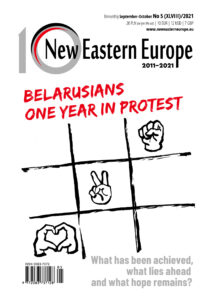
September 12, 2021 - Veranika Laputska - Hot TopicsIssue 5 2021Magazine

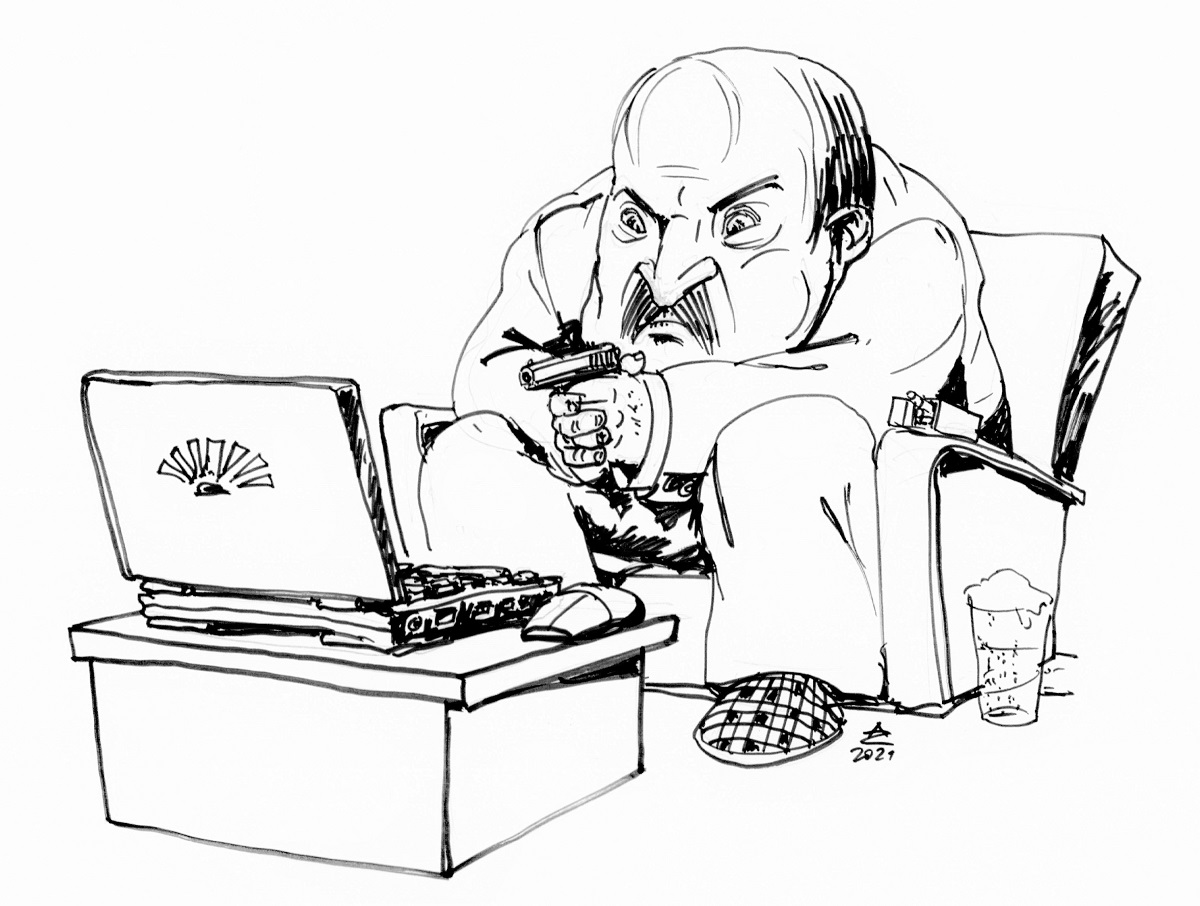
Illustration by Andrzej Zaręba

In contrast to this, Lukashenka’s opponents in the presidential race were largely relying on new media. Unregistered presidential candidate, Siarhei Tsikhanouski, gained his popularity thanks to the YouTube channel Country for Living (Strana dlya Zhizni), and later during his campaign (which was taken over by his wife Sviatlana after his arrest), he became recognisable in many Belarusian cities and towns. Presidential candidate Viktar Babaryka was extremely active on Instagram, similarly to his counterparts, Andrei Dzmitryieu and Hanna Kanapatskaya.

Trusting bond

Following the arrests of Siarhei Tsikhanouski and Viktar Babaryka, Sviatlana Tsikhanouskaya, Maryia Kalesnikava (from Viktar Babaryka’s election headquarters) and Veranika Tsapkala (the wife of another candidate Valery Tsapkala denied registration) as a trio became media sensations. The three women toured around the country holding massive rallies – something not seen in Belarus since the 1990s.

Kalesnikava, Tsapkala and Tsikhanouskaya were actively using social media to share insights from their election campaigns, often doing live streams from their meetings with citizens. This was so unusual for the people of Belarus who could finally comment on videos and photos shared by their favourite candidates and see, on a daily basis, the work they were doing. This created a sense of bond and trust between the three women and their supporters. Belarusians appreciated the fact that through social media Maryia, Veranika and Sviatlana seemed to be very down-to-earth and genuine, unlike politicians of the previous generations.

All major independent media channels and websites enabled live streams using Instagram, Facebook and YouTube – channels most suitable for live transmission. Such images not only provided Belarusians with the most recent news updates, they also contributed to Belarusians’ emancipation. It encouraged more people to come out onto the streets when online they could see supporters of oppositional candidates participating in the rallies. By August 2020 Telegram became the crucial source for news in Belarus, given the condition of information vacuum and dominance of state propaganda on the main television channels. In the spring of 2020, when the COVID-19 pandemic reached Europe and Belarusians were desperate to find out about the real health situation in the country, the authorities remained unwilling to publish figures on infection numbers and death rates. However, Telegram news channels enabled anonymous accounts to share leaked information from state institutions and hospitals about the real pandemic situation.

When the election campaign started, major channels on Telegram – such as NEXTA, Belarus Golovnogo Mozga, Maya Kraina Belarus – were already trustworthy news sources in the eyes of Belarusians. These channels became the driving force that called for anti-government protests in case the victory of Tsikhanouskaya was not recognised. Thanks to Telegram people were able to follow the dramatic events unfolding on the streets of Minsk. Independent Telegram channels also shared instructions how to avoid the internet blockage which the authorities imposed a couple of days after the election.

Marches via Telegram

After August 12th 2020, when the internet was unblocked, millions across the world witnessed the brutal scenes of violence against the citizens of Belarus; giving a new level of protest potential. People began to self-organise through Telegram chats and attend protests together. It felt safe for participants to be in such chats as it allowed partial anonymity and made it easy for users to create a specific chat and invite participants. Belarusian women wearing white clothes went out to protest carrying flowers and calling upon the authorities to stop the violence.

Day after day more people joined. First, doctors stood against the violence after seeing thousands of injured in the hospitals. Then employees of the Belarusian State Television and Radio Company went out to protest as they refused to broadcast the lies on TV and radio. Workers of major Belarusian factories and companies left their workplaces demanding the authorities to stop the violence and for Lukashenka to resign. Musicians, actors, pensioners, students, persons with disabilities, women, drivers, athletes and other groups were uniting thanks to Telegram and organising their protest activities there.

Telegram news channels succeeded in covering all these events. The sense of unity and solidarity disseminated quickly among Belarusians inside the country, as well as the Belarusian diaspora. On Sunday, August 16th 2020, hundreds of thousands of people marched in a peaceful demonstration called the March of Freedom. In cities and towns across the country, and indeed around the world, people demonstrated their support.

Since that Sunday, every Sunday was given a special name by leading Telegram channels – such as the march of wisdom, the march of the people’s tribunal, the march of the brave, unity march, and the peace march. In addition, Telegram channels were announcing marches of various societal groups – women’s marches for every Saturday, pensioners’ march for every Monday, and so on. On the day of demonstrations Telegram channels were updating users about the location, sporadic detentions of protesters and change of routes. The significance of Telegram’s role in the protests led to the international scandal in May this year when one of the former editors-in-chief of NEXTA, Raman Pratasevich, was detained in Minsk by the Belarusian authorities after forcefully diverting a plane he was on from Athens to Vilnius.

The self-organisation of the protesters took on a horizontal approach. Neighbours would organise special chats, via Telegram, in their local area, and then would gather nearby before heading towards the main protest. Local chats then transformed into “yard chats” where those living nearby would gather in common yards to drink tea together, watch films or listen to local musicians. This started happening in most cities and towns across the country.

The “yard chats” became a unique phenomenon for the protests of 2020. The website Dze.chat accumulated all such chats inside and outside Belarus on its platform. Later in 2020, when the Belarusian authorities started to identify and detain those active in their local chats, others often pulled back from neighbours’ activities. The death of Raman Bandarenka, who was beaten to death after his detention in a famous yard called “The Square of Changes”, last November terrified many Belarusians. With the beginning of winter and further repressions and emigration of many yard activists, the chats became less active. Since the spring of 2021 the Belarusian ministry of information has named most yard chats as “extremist” activities; thus imposing potential criminal charges on participants and further discouraging people from active participation.

The power of YouTube

Most independent Belarusian media have been using YouTube for many years before the 2020 elections. Some channels, such as Belsat TV – the only independent TV channel broadcasting from Poland – had only been able to operate either via a satellite or YouTube. Other outlets like NEXTA initially started by hosting content on YouTube and then established a Telegram channel following its development and the new possibilities the platform was providing.

At the beginning of 2021 NEXTA Live announced that they would focus on international news with special attention on the post-Soviet countries, whereas NEXTA would remain devoted to domestic news. However, NEXTA revived its activities on YouTube this autumn with a number of live streams discussing the protests and major events in Belarus and abroad. In March NEXTA’s YouTube channel premiered a film titled, Lukashenka. The Golden Bottom, about Lukashenka’s alleged corruption schemes, his family’s wealth and his close ties. This, in a way, was a response to the film by Alexey Navalny, premiered in January, about Russian President Vladimir Putin and his alleged palace. Later NEXTA continued to produce documentaries and regular live streams to discuss hot Belarusian topics.

Many active figures maintained their YouTube presence. The important YouTube channel – The Country for Living – previously led by Siarhei Tsikhanouski still functions. Pavel Latushka, a former politician and former minister of culture and ambassador, established his own YouTube channel to stay connected with his supporters.

Many prominent initiatives such as Kupalaucy, actors who left the most prominent Belarusian Kupalauski theatre after August 2020, and Volny Chor, composed of musicians and singers who left the Belarusian Philharmonic, created YouTube channels to share their performances no longer possible in Belarus. The Volny Chor (Free Choir) became famous when they started to emerge in different places in Minsk, including shopping centres and on regular streets, singing Belarusian folk songs and songs associated with the Belarusian anti-Soviet opposition.

An important YouTube trend was the emergence of interviews of Belarusian protests leaders and activists given to Russian, Ukrainian and Belarusian bloggers and journalists. Thus their personalities became known among Russian-speaking YouTube audiences. In September 2020 the famous Russian journalist and blogger Yury Dud published his interview with Stsiapan Putsila, founder of NEXTA. In October another Russian blogger and journalist, Irina Shikhman, interviewed Sviatlana Tsikhanouskaya about her new role as representative of the Belarusian people. In February 2021 Ukrainian journalist Dmitry Gordon also published his interview with Tsikhanouskaya.

A new YouTube project created in June 2020 by Mikita Melkaziorau, called Zhizn Malina (in English, Raspberry Life, meaning, Dolce Vita), features interviews with key leaders and activists connected with last year’s election and the protests that emerged afterwards. This includes many who were imprisoned or were forced to leave the country.

Without a doubt, social media’s influence on the protests continues to grow and evolve despite the massive scale of emigration and the ongoing repressions and imprisonments taking place within the country. With a new wave of anti-media campaigns and the inability of citizens to organise street demonstrations, the virtual space has become the only field to express discontent with the Belarusian regime. As long as the regime remains brutal and unchangeable and as long as the protest determination and anti-Lukashenka sentiment does not disappear, this trend will remain in place and continue.

Veranika Laputska is a co-founder of the EAST Research Center, a CEE.Fellow at the German Marshal Fund of the Unites States, and a PhD candidate at the Graduate School for Social Research, Institute of Philosophy and Sociology, Polish Academy of Sciences. Her research interests include media, visual and Jewish studies as well as the study of the nationalism and politics of memory.

, , , , ,

Partners

Terms of Use | Cookie policy | Copyryight 2025 Kolegium Europy Wschodniej im. Jana Nowaka-Jeziorańskiego 31-153 Kraków
Agencja digital: hauerpower studio krakow.
We use cookies to personalise content and ads, to provide social media features and to analyse our traffic. We also share information about your use of our site with our social media, advertising and analytics partners. View more
Cookies settings
Accept
Decline
Privacy & Cookie policy
Privacy & Cookies policy
Cookie name Active
Poniższa Polityka Prywatności – klauzule informacyjne dotyczące przetwarzania danych osobowych w związku z korzystaniem z serwisu internetowego https://neweasterneurope.eu/ lub usług dostępnych za jego pośrednictwem Polityka Prywatności zawiera informacje wymagane przez przepisy Rozporządzenia Parlamentu Europejskiego i Rady 2016/679 w sprawie ochrony osób fizycznych w związku z przetwarzaniem danych osobowych i w sprawie swobodnego przepływu takich danych oraz uchylenia dyrektywy 95/46/WE (RODO). Całość do przeczytania pod tym linkiem
Save settings
Cookies settings