
Text resize: A A
Change contrast

Georgia and the EU need to stay focused on integration

The Eastern Partnership can boast a list of accomplishments for Georgia and Georgian society. Yet, it seems clear that the Eastern Partnership was never really considered as a path of membership to the European Union. Georgia’s government and civil society now need to focus on what the next steps in European integration should be.

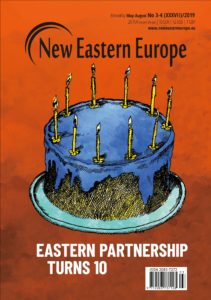
“Georgia has one of the highest EU support in the world,” said EU Ambassador Carl Hartzell in interview for Georgian TV Formula’s “Droeba” programme. The ambassador added that: “About 250 million euros have been allocated for Georgia in the form of grants. These are new grants and new funding. If we talk about rough numbers, the European Union will allocate about 1.5 billion Georgian lari [nearly 415,000 euros] for Georgia”. It has been eleven years since the Eastern Partnership Programme, suggested by Poland and Sweden, was launched. Georgia, as one of the beneficiaries and one of the leaders of the Eastern Partnership programme, showcases more ambition and put great effort towards its European integration. Today, the Eastern Partnership faces new challenges: What will its future be and what will be the new steps in the process of EU integration for these countries? Any decision regarding future challenges remain very important for Georgia.

September 4, 2020 - Nugzar Kokhreidze - AnalysisIssue 5 2020Magazine

Photo: Adam Reichardt

Benefits and opportunities

The Eastern Partnership plays an important role in Georgia because it is the main vehicle for the country’s European integration. Since 1990, when Georgia set out on its Euro-Atlantic path, it made significant steps towards democratic progress. Moreover, Georgia has benefited from the EU Association Agreement, as well as the Deep and Comprehensive Free Trade Area (DCFTA). More tangible benefits for citizens of Georgia were brought by visa-free regime with EU and Schengen Zone.

In order to see an even fuller picture of the integration process, it is important to understand that the relationship with the EU began back in 1996, with the signing of the Partnership and Cooperation Agreement which entered into force in 1999. This was followed by the Association Agreement and the establishment of the DCFTA in 2014.

For Georgia the EaP became an opportunity to intensify the process of political and economic integration via bilateral and multilateral instruments. It also provided the possibility to solidify the already ongoing processes taking place in Georgia, which can be broken down into two aspects when considering EU integration: First, is the process on intensifying reforms; and, second, is the important role given to civil society. With the support of a multilateral policy component – which encourages EaP states to co-operate amongst each other – the EU stimulated an additional opportunity to accelerate reforms, establish a forum for the six partner countries and four thematic platforms to share experiences with each other.

National platform

In 2010, the Eastern Partnership Civil Society Forum Georgian National Platform was established within the framework of the European Union-initiated program, which currently unites around 200 civil society organisations. The national platform facilitates the goals of Eastern Partnership policies in each of the EaP countries by ensuring active involvement of each partner-country’s civil society in the reform process. The national platform is also a stakeholder in the policy dialogue within each country.

The strategic objectives of the Georgian National Platform (GNP) include monitoring and advocating for the implementation of Georgia’s Association Agreement on the national and EU levels. It supports dialogue between the authorities and the private sector and civil society; to communicate the importance of Georgia’s European Integration efforts to the wider public and to ensure the effective functioning of the platform for the achievement of its mission and objectives. The main aspects of the GNP functioning are related to the promotion and realisation of the Eastern Partnership goals. The establishment of the Georgian National Platform has contributed to the institutionalisation of structural dialogue and civil society becoming an important instrument of dialogue with the government. Meetings of the GNP’s coordination council, working groups and its subgroups regularly take place.

According to the EU Roadmap for Engagement with Civil Society in Georgia (2018-2020), the Georgian National Platform of the Eastern Partnership Civil Society Forum seeks to improve the structural impact of the institution: “Not all leading CSOs are members anymore, reflecting divergent views within the CSO community. Part of this divide comes from the fact that those CSO promoting human rights and good governance are more exposed to disagreements with the government whom they try to hold accountable; on the other hand, the CSOs more active in the regions and focused more on service provision exercise less of a role of watchdog therefore are less likely to enter into rows with the government (but still face difficulties with local authorities)”.

At the same time, civil society organisations need more financial support to organise activities and work for having a relevant voice in the decision-making process. Yet, financial assistance for the Georgian National Platform is and new ways need to be found to solve it. The new EU roadmap outlines the current status of civil society in Georgia, reviews priorities set out in the period covered by the previous roadmap, and sets out new priority areas for future engagement along with a sectoral approach. The roadmap is the result of the EU Delegation and EU Member States’ input, comprehensive consultations with civil society organisations in Tbilisi, Kutaisi and Telavi (the latter two representing two of the four focal regions in the next EU programming exercise), as well as external assessments of indicators and of the enabling environment for civil society.

Accomplishments

The Eastern Partnership can boast a list of accomplishments for Georgia and Georgian society. Thanks to the EaP, more than 300,000 Georgian nationals travelled to the Schengen area without a visa since the introduction of the visa-free regime. According to an April 2019 survey, at the start of 2017, around 90 per cent of Georgia’s population never travelled to any EU or Schengen zone country, while five per cent only travelled once, and only three per cent travelled multiple times. In 2015-2018 Georgia received 25 per cent of the total budget from the EaP’s international credit mobility regional budget. 3,613 Georgian citizens were granted Erasmus Mobility Scholarships during this three year period. Over the past two years, 26 academic organisations from Georgia have been involved in 21 international research projects and received 2.2 million euro in research grants.

Since the signing of the Association Agreement, including the DCFTA, there has been a significant increase in trade with the EU. Georgian exports to the EU grew from 624 million US dollars in 2014 to 730 million dollars in 2018. Trade growth did not have a positive effect on the export of Georgian agricultural goods to the EU. However, the European Neighbourhood Programme for Agriculture and Rural Development (ENPARD) assists many farmers in Georgia. The total budget of the programme in the period of 2013-2022 is 179.5 million euros. The important challenge is to reassess the effectiveness of EU support, revise outcomes and define more measurable indicators.

According to the data from 2019, the EU has allocated 120 million euros to Georgia annually (32 euros per capita annually) to promote reforms in public administration, justice, and support for agriculture. Forty-one per cent of Georgians would like to see the EU play an even greater role in sectors like healthcare, education and employment.

In terms of democratic development, according to the Economist Intelligence Unit’s Democracy Index, during the last 11 years, the democratic performance of Georgia has varied only slightly. Georgia has only managed to improve its score from 4.62 to 5.5 on a 10-point-scale. Georgia remains in the “hybrid regime” category, which means the state needs to focus more on the democratic transformation. Today, Georgia is preparing for parliamentary elections which are scheduled to be held this coming October. This election will be important test for Georgian democracy.

In his article “Eastern Partnership: What’s next for Georgia?”, Vano Chkhivadze, the EU Integration Program Manager at the Open Society Georgia Foundation, mentioned the necessity to “urgently require deep and comprehensive reform, internal diversification and a tailor-made approach to respond to the ambitions of EaP front-runner countries. Otherwise, there is a risk that the EaP countries could lose their enthusiasm and the EU’s ability to promote the democratisation process within the Eastern Neighbourhood may weaken. The EU might consider maintaining the EaP format. However, there is a need for internal restructuring, providing more incentives to the EaP states that are keen on moving closer to the EU, together with setting up an institutional mechanism of co-operation.”

What’s next?

It is clear that the Eastern Partnership was never really considered as a path of membership to the EU. The stated goals were only about economic integration and political association. The EU has made it clear that it will not consider any new role (especially the status of a candidate country) to its Eastern Partners in the near future, or using any new tools to support them. However, the EU’s Global Security Strategy states that the EU may reconsider its sectorial and regional strategies in the near future.

One important document about recommendations regarding the Eastern Partnership –titled “Proposal of Georgian Think Tanks on the Future Strategic Direction of the Eastern Partnership” – was prepared by six Georgian think tanks: the Georgian Center for Security and Development (GCSD), the Georgian Foundation for Strategic and International Studies (Rondeli Foundation), the Georgian Institute of Politics (GIP), Georgia’s Reforms Associates (GRASS), and the Levan Mikeladze Foundation, with support of the Open Society Georgia Foundation. The authors in the proposal describe all fields of EU-Georgia co-operation: economic prosperity and human capital development, good governance, rule of law, security (conflict transformation), inclusiveness and differentiation, trade and economic Links, and civil society involvement.

The document suggests ways to renew and target EU investment in support of the political project, namely to prioritise human rights programmes and civil society development. It also proposes more investment in human capital (e.g. education and life-long learning), mobility (legal migration partnership) and infrastructural development. It noted a greater need for security co-operation in the fight against radicalisation, as well as more proactive EU engagement in transforming protracted conflicts in the region. Support for regional connectivity across new sectors such as information and communication technologies and, where relevant, trade and energy policies, could foster job creation and sustainable development, as well as much needed intra-regional co-operation in a contested and fragmented region.

The authors of the document also argue that the EU should explicitly tailor the incentives offered, as well as the format and structures of the partnership. An EU membership perspective may be a distant prospect for now, but it should not be taken entirely off the table. Trade and security policy can be addressed through a two-layered approach involving specific configurations for the three frontrunner countries. A DCFTA area, with a view to developing a European Economic Area is suggested on the former. On the latter, the document acknowledged that these countries are current or potential strategic allies and security partners for the EU, whereas there are barriers to CSDP co-operation with CSTO member states. They conclude that the EU should strike a balance of differentiation and inclusiveness among the six partners. Ultimately a new approach should complement the existing multilateral track rather than replace it completely: the “more for more’’ incentive should remain for Armenia, Azerbaijan and Belarus to come closer to the EU – contingent on them implementing necessary democratic and structural reforms.

Georgian society, especially non-governmental organisations, expect that in the future the EU will focus on empowering civil society organisations, involve them in policy composing and assessment and monitoring process of EaP implementation. The EU and Georgia have to agree on a clear vision about their relationship by 2030. The Georgian government should demonstrate clear progress in the implementation of the Association Agreement, especially in the area of judiciary, high-level corruption and social issues; and it should concentrate on the long-term policy planning process and fulfil a more detailed cost-benefit analysis.

The EU, in turn, needs to take into account the role of Russia in weakening the integration process of Georgia with Europe, and it should assist to reinforce European values and provide peace, security and prosperity. In the end, the EU should not abandon the idea of the Eastern Partnership and should motivate and reward the efforts that have been made by Georgia.

Nugzar Kokhreidze is a PhD student at the Georgian-American University and co-coordinator of Working Group Five of the Eastern Partnership Civil Society Forum’s Georgian National Platform. He is the co-founder and chairman of the Research-Intellectual Club “Dialogue of Generations” (RICDOG).

, ,

Partners

Terms of Use | Cookie policy | Copyryight 2025 Kolegium Europy Wschodniej im. Jana Nowaka-Jeziorańskiego 31-153 Kraków
Agencja digital: hauerpower studio krakow.
We use cookies to personalise content and ads, to provide social media features and to analyse our traffic. We also share information about your use of our site with our social media, advertising and analytics partners. View more
Cookies settings
Accept
Decline
Privacy & Cookie policy
Privacy & Cookies policy
Cookie name Active
Poniższa Polityka Prywatności – klauzule informacyjne dotyczące przetwarzania danych osobowych w związku z korzystaniem z serwisu internetowego https://neweasterneurope.eu/ lub usług dostępnych za jego pośrednictwem Polityka Prywatności zawiera informacje wymagane przez przepisy Rozporządzenia Parlamentu Europejskiego i Rady 2016/679 w sprawie ochrony osób fizycznych w związku z przetwarzaniem danych osobowych i w sprawie swobodnego przepływu takich danych oraz uchylenia dyrektywy 95/46/WE (RODO). Całość do przeczytania pod tym linkiem
Save settings
Cookies settings