
Donbas veterans establish their place in Ukrainian society
An interview with Anton Kolumbet, the (former) first deputy minister for veteran affairs in Ukraine. Interviewer: Kateryna Pryshchepa
ANTON KOLUMBET: The problem stems from the fact that the current social guarantees and services for war veterans in Ukraine are still regulated by the law adopted in 1992. That law basically replicates the norms of Soviet legislation regarding the Second World War and Afghan war veterans. In the USSR the state was the principal property owner and the manager of social services: under our current free market economic conditions, some of those old benefits simply cannot be offered by the state anymore.
April 7, 2020 -
Anton Kolumbet
Kateryna Pryshchepa
-
Hot TopicsIssue 3 2020Magazine
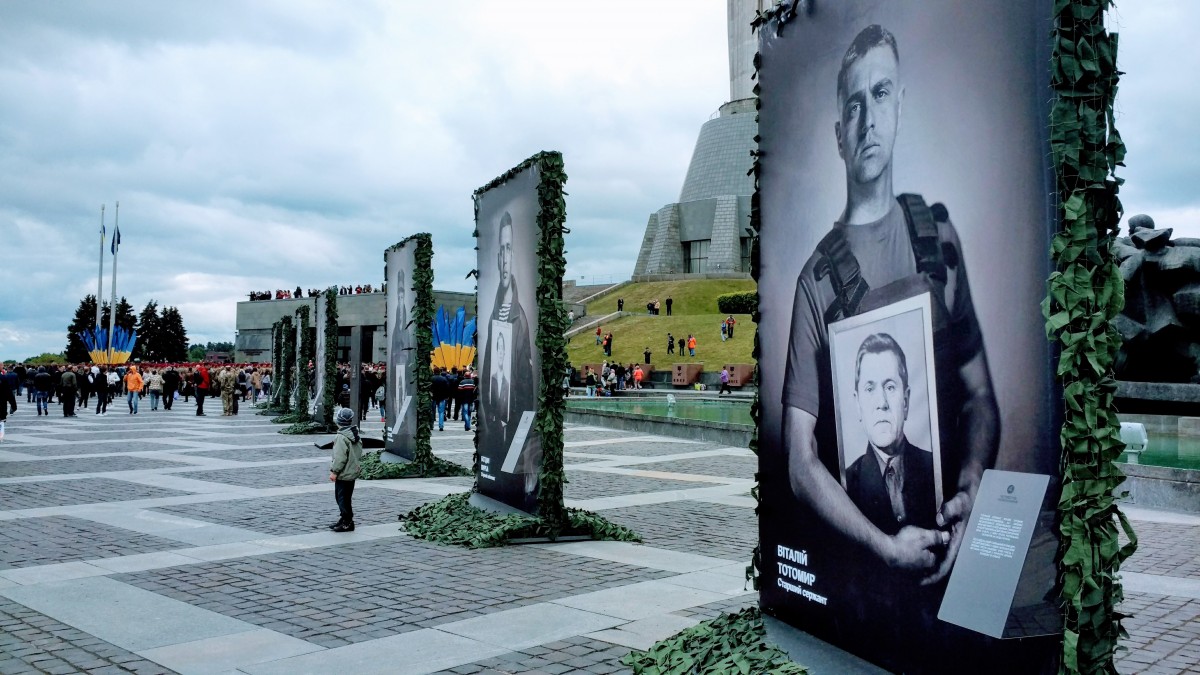
Photo (CC) https://pxhere.com/en/photo/1402214
Some of the formal benefits are anachronistic – for instance, the offer of wired radio instalments in apartments. Some of the benefits are also too expensive for the present day state budget in Ukraine. The state does not have the means to provide free housing to 400,000 veterans of the current war. Moreover, the state generally does not have the power to implement certain benefits anymore. The local authorities, for example, have become owners of state land and therefore the right to give plots of land to veterans is now dependent on local councils, which complicates the situation. Overall, these factors create a feeling of frustration among some veterans which we still cannot ease.
Also, for the last five years, communication between some of the veterans and state institutions has been maintained in this old paternalistic tone. The state is interested in having citizens serving in the armed forces. But when the service ends, the state has much less interest in them. Some citizens think of ways to maximise the benefits and services they can receive from the state after the end of their military service. This is a negative self-interested attitude. But we are not in a position to change it at the moment because any movement towards official reduction of state-offered benefits always leads to a public uproar. However, we will have to do it sooner rather than later because honesty should be the basis of state policy. Thus, as the ministry, we openly declare that the state just cannot pay for all of these benefits. That is why we propose to change the paradigm and introduce a social guarantee instead of benefits for veterans, in order to change the tone of the discussion.
Does “social guarantee” mean that veterans will get assistance based on individual needs?
Not exactly. We are just saying that the very term “benefit” is paternalistic, and its meaning in Ukraine is so denigrated that any tax payer just hates the very notion.
To clarify the term “social guarantee”, we know that the majority of war veterans luckily have not been wounded in service and managed to find employment after they returned to civilian life and consequently do not require extensive assistance. Who will be entitled to these social guarantees? Will this guarantee be only for veterans who need special assistance due to injuries or psychological conditions?
Not really. The veterans who need special assistance are covered by different programmes, as they belong to specific categories. The changes that we are introducing aim at changing attitudes. What we say to the public are two things. First, the veterans deserve respect and gratitude for their service at war. Second, as I have already said, we want to change the attitude towards benefits. That is why we are switching to the notion of social guarantees and say to people: “As tax payers we need to provide for the veterans, for their medical and psychological support, their training and employment orientation, because the veterans are the priority reserve for the armed forces.”
So basically you are re-branding…
Yes. What we are saying is that all the veterans who were discharged from military service still have an insert in their military ID which states that, when their military unit requests them, they are obliged to report to duty in less than 24 hours and should be treated as such.
But this re-branding will not increase the funding available for veterans.
The availability of funding depends, in part, on public demand.
So you are trying to form the demand?
Precisely. Veterans have not finished their military service for good; they can still be called up in case of serious aggravation. Right now, about 100,000 of the 400,000 Donbas war veterans are active military. That is because veterans have not been fully discharged. The other 300,000 are part of the priority reserve of the Ukrainian army in case the situation at war aggravates, or Russia initiates a full-scale attack against Ukraine. Consequently, the state needs to ensure that people in the military reserve are ready for such an occurrence, in terms of training, health, well-being and motivation. This paradigm will be included in new legislation on the status of veterans, which has been drafted in co-operation with veteran organisations and will be soon submitted to parliament.
In addition to that, we need to think of financial support. We cannot just cancel the existing benefits because Ukraine’s constitution prevents us from doing so, and there can be resistance if we do so. But given the scarcity of resources, the new draft legislation proposes a new mechanism of support for veterans. For example, instead of totally free housing for veterans, we propose subsidised mortgage programmes and co-financing for housing schemes. In this way, the attitude shall change from consumerism to partnership. Overall, the new legislation aims at developing the social capital of our veterans – it is more modern and based on western models.
Which countries precisely?
The United States and the United Kingdom.
Will these schemes be administered by the ministry for veteran affairs?
No. By the ministry of communities and territories development.
So the different programmes addressed to the veterans will be run by different bodies?
Currently, the programmes are administered based on the sphere of policy and not according to the beneficiary. Therefore, we are negotiating to transfer some of the policies to the ministry for veteran affairs, but we are presently limited by the small size of our staff. In addition, the ministry has been undergoing a very complicated re-organisation. We were once merged with the ministry for occupied territory, but now the decision has been taken to divide the ministries again.
Going back to policies. Do you already have an ideal image of the process of veterans’ transition from military service to civilian life? What would it look like?
The transition should already start within the military unit. We are currently implementing a second project with the support of our Norwegian colleagues, which will develop a dedicated protocol on the transition to civilian life. According to the protocol, the preparations should start within the soldier’s military unit, about one or two months before the soldier’s discharge from the military service. The preparation should include an audit of future needs with questions about possible re-training, employment, rehabilitation or other social needs. The discharged veteran should return to his or her hometown where s/he will have to refer to the veterans’ space.
What is the veterans’ space? Will they be connected with the current enlistment offices?
No, because the enlistment offices are in charge of the needs of the current active military servicemen, when the veteran corps include not only military personnel but also officers of the ministry of interior, state emergency service and so on.
So there will have to be a new public service created to cater for all the veterans’ needs?
Yes. This new service should combine the functions of the local offices of the ministry for veterans’ affairs and community centres. What we have learnt during the last five years is that the best people to provide services for the veterans are the veterans themselves, and the veteran NGOs should be involved to achieve the best result. The plan is that every discharged serviceman/servicewoman will come to his/her local veteran centre, or space, where s/he will have a manager working with him/her personally to fulfil any needs.
Speaking of the need for psychological assistance, are there any statistics on those needs?
I cannot provide any hard statistics at the moment but the general tendency is that veterans are starting to ask for psychological assistance in greater numbers. Many decide to ask for it months or years after their discharge, due to the fact that asking for psychological assistance was not previously part of our culture. Now, following social campaigns, the number of requests is growing. Veterans can ask for help in different places, including the public health service and civil society. Unfortunately, there is no country in the world which has managed to resolve all the veterans’ problems. But we are using all the foreign experience available.
How long will it take to implement these plans?
We have an action plan for the next four years, but given public expectations we need results as soon as this year.
You mentioned veteran NGOs. Does the ministry co-operate with them?
We are open to all forms of contact with veteran organisations. The ministry for veteran affairs was in fact formed in response to requests by veteran NGOs, and with their active participation.
What is the typical request from veteran NGOs or reason to contact the ministry right now?
The two most common are requests for support from the ministry in organising events and proposals on policies or policy amendments.
Is there a regional diversity in the level of veteran NGO activity?
So far the most active veterans’ organisations are in central and eastern Ukraine. This is directly related to the number of veterans there. A majority of them are from the regions of Dnipro, Kharkiv, and Poltava.
What is the situation of veterans who live in places that are the closest to the line of conflict? According to opinion surveys, the attitudes towards the Ukrainian state there are the least supportive. Can the veterans face problems because of their service?
We do not notice any rise in the number of conflicts with veterans in Donetsk and Luhansk oblasts. In fact, we cannot say that a majority of residents of those oblasts have a clear unfavourable opinion towards the Ukrainian state. The majority of local residents are mostly concerned about their everyday lives. I myself witnessed a shift in public attitudes which occurred after Russian TV was blocked; it only takes a few weeks for people to return to their normal state of mind. As an example, a Donetsk veteran union holds an annual event dedicated to the liberation of Karachun. It gathers veterans from all over Ukraine. No incidents have been registered so far.
There have been a lot of public speculation and hope regarding the political engagement of the veterans. What is your opinion on veteran’s political activities?
There are a lot of highly motivated people among the veterans who feel a connection with the active servicemen. Having served in the war, they naturally follow political developments in Ukraine closely because the war and domestic politics are connected. I believe they will continue to be highly active in public life.
Editor’s note: On March 10th Anton Kolumbet posted a statement on his Facebok profile announcing his intention to leave the post as first deputy minister for veteran affairs due the change of government which took place on March 4th. In his statement Kolumbet said “I continue my work for the moment and wait for my successor from the next team to transfer the work and wish him or her success. I shall also prepare the full report on the completed work for the community. My decision has been consulted with the Veteran’s Movement of Ukraine. The instruments of public control available at the moment will provide for the continuous work of the ministry.”
Anton Kolumbet is a Donbas war veteran who served in the army in 2014 and 2015. At the time of the interview he was the first deputy minister for veteran affairs.
Kateryna Pryshchepa is a Ukrainian journalist, PhD candidate and frequent contributor to New Eastern Europe.