
The price of power
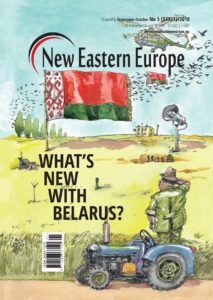
For the last 25 years the Belarusian society has been living under an authoritarian regime led by Alyaksandr Lukashenka. Even though the Belarusian leader is no longer perceived as the “last dictator in Europe”, he is the post-Soviet leader who has held onto power the longest.
Many of the post-Soviet countries, especially in Eastern Europe, experienced revolutionary moments after the collapse of the Soviet Union. Some saw them more than once: Ukraine, Moldova, Georgia, Kyrgyzstan and Armenia. Almost all of these states have tried to implement the difficult, and at times dramatic, process of establishing democracy and getting closer to the European Union and other western structures. In Belarus a fossilised conservative system, which impedes its political and economic development, has been preserved, maintaining the republic in Russia’s sphere and under its influence.
April 6, 2020 -
Pavel Usau
-
AnalysisIssue 3 2020Magazine
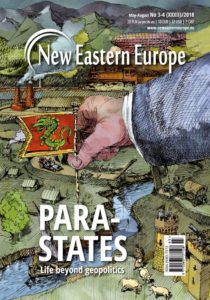
Illustration by Andrzej Zaręba
Integration or incorporation
Since the beginning of Lukashenka’s rule his pro-Russian positioning has become one of the main conditions of the stability of Belarus’s authoritarian regime. It has also limited the influence of the EU which has been sharing a border with Belarus for 16 years. Non-democratic rule, the destruction of national sectors, and the rebirth of Soviet traditions in social and political life have secured the Kremlin’s long-term control over Minsk. In other words, by supporting the authoritarian system in Belarus, Russia is consistently protecting its own interests. As a result of this symbiosis, the Union State, linking the two states together, was established in 1999. This initiative became the Kremlin’s first successful integration project in the post-Soviet space. It foresees not only intensive economic co-operation, but also strategic integration, for example in the functioning of the regional group of Belarusian and Russian military, or unified anti-aircraft weapons systems.
In the early stages of the Union State, Lukashenka perceived it as a source of income which he could drain from Russia and which would help his regime function. Yet in recent years the authorities backed away from this approach since real integration has become an important element in the Kremlin’s imperialistic establishment. In 2019 Moscow started to impose its vision of deeper integration which foresees the establishment of supranational political institutions. This, in fact, would mean the end of Belarus’s independent statehood and would turn it into a puppet state, similar to the Belarusian Soviet Socialist Republic.
Lukashenka and his close circle has recognised this threat. However it needs to be kept in mind that the priority of the Belarusian president is his own power, even over the country’s independence. This explains his reservations and lack of political will to take any systemic steps that would ensure Belarus’ security. Such steps would entail engaging in dialogue with the civil society, the social mobilisation of Belarusian citizens, as well as freezing talks with Russia on the integration agenda. Yet taking steps in this direction would, unavoidably, lead to the weakening of Belarus’ political system and – as a result – regime transformation. Lukashenka’s determination to retain power at all costs explains why Minsk is waiting for Moscow’s decisions regarding integration as well as the Belarusian government’s repressive actions against mass protests in opposition to integration at the end of last year.
Hybrid society
One would assume that over the almost three decades after independence we would see the emergence of a modern state which is able to consciously articulate its interests, needs and values. Yet implemented for many years now the policies of authorities have led to a political and cultural deconstruction of Belarusian society. Today, we can say that this society is in a hybrid state, which makes it weak and susceptible to external influence. This is a result of a thought out policy of the de-Belarusianisation and re-Sovietisation of Belarusian society.
Even today when Russia’s geopolitical goals towards Belarus seem obvious, majority of its public still seem to be immersed in the Russian world. The Russian language continues to dominate in the social sphere and public life. Russian media remain an effective source of propaganda. They influence the viewpoint and preferences of the Belarusian public both in regards to events that take place inside the country, as well as the state’s foreign policy. As a result, the majority of Belarusians have a positive assessment of Russia.
It is worth pointing out that the Belarusian education system, state media, state ideology, and propaganda are not aimed at enforcing citizens’ national identity. Their main role is to build support for the president and his policies. Recently some significant resources have been assigned to the modification of the newest history of Belarus. The essence of this policy is to attribute all merits for building Belarusian statehood and independence around Lukashenka, shaping him not only as a regional leader, but the actual “father of the nation”. In this vein, Belarusian state media started a project called “A quarter century of Belarusian statehood”, suggesting that Belarus’ statehood began with Lukashenka coming to power. Events like this have a practical goal. They are aimed at convincing the Belarusian public that their president is a guarantee of statehood and stability, and undermining his rule would lead to chaos and collapse.
The hybrid-like nature of Belarusian society as well as the neutralisation of its national identity is maintained by the continuation of Soviet traditions and symbols. This tradition is deeply rooted in the consciousness of the ruling elite and has an impact on the country’s politics. Belarus probably remains the only state where no attempts were made at de-communisation and de-Sovietisation.
The implementation of these processes is not possible in a system where the president calls himself a “devout Soviet man”. There are still around 100 Lenin monuments in the country, and many streets and squares are named after notable communist and Soviet figures – Felix Dzerzhinsky, Karl Marx and Friedrich Engels. November 7th, which commemorates the October Revolution, remains a national holiday. The Soviet model is also replicated in youth organisations, such as the Organisation of Pioneers and the Republic’s Union of Youth (a counterpart of the Komsomol). These organisations have not only been engaged in ideological exercises with the youth, but also provide support during elections and other political campaigns.
The re-Sovietisation is related to an instinctive understanding by the elite that the rebirth of national awareness will automatically lead to an increase in pro-democratic attitudes and a desire for change. For the political elite “national” and “democratic” are synonymous. Hence, keeping the public indifferent to historical and national factors guarantees its weakness and passivity, and at the same time it ensures the stability of the current system.
Stability above all else
Lukashenka has built a relatively stable authoritarian system which is able to respond to internal and external political challenges. The system is built largely thanks to Moscow’s support and the conservative-patriarchal culture of the country, as well as the public’s scepticism of democratic reforms and social policies that were introduced elsewhere in the region. All of this has influenced stability in the country. When compared with other post-Soviet states, Belarus looks quite attractive. Indeed, after the events of 2014 in Ukraine the Belarusian authorities gained more internal legitimisation. The narrative has also changed towards Belarus from the outside. The state is no longer called “the latest dictatorship in Europe” and is now often presented as “authoritarianism with a human face”.
This however does not change the essence of Lukashenka’s government, which is still based on strict political control and obstructing any real political alternative. Every attempt in this direction ends with arrests, showcase trials and severe punishment. Thus, you can see that people in Belarus are tired and often irritated with the government. Within the political system itself there are more and more signs of open nepotism which rewards people not on merit but on loyalty. And even though there are many signs of fatigue, no mechanisms to implement social change have emerged.
The psychological barriers to social and political mobilisation come from the difficulties that emerged from the reform periods in neighbouring states, the war in Ukraine, and the Kremlin’s aggressive policies vis-à-vis the EU’s weak influence. In the context of economic tensions and a reduced level of social well-being, there are more and more reasons for social flare-ups. Mass protests took place in many Belarusian cities in 2017 against the so-called parasite law, which called for an additional tax on the unemployed.
Nevertheless, the sources securing Belarus’s internal stability are slowly running out and revolutionary responses seem inevitable. The best scenario would be evolutionary socio-economic changes and political reforms initiated by the authorities with the support and co-operation of the public. However this possibility seems very unlikely. Clearly Lukashenka’s main goal is to retain power, even at the cost of Belarus’s sovereignty and the well-being of its citizens.
While analysing these trends we can conclude that political events in Belarus in the near future will be determined by Lukashenka’s aspirations to create the conditions to transfer power to one of his sons. It is quite obvious that the declared changes in Belarus’s constitution this year will directly regulate the mechanisms of the transfer of power. That is why the presidential elections, which are planned for August this year, will not only take place in the new “constitutional reality” but also enforce the new power structure. We should also consider that constitutional changes in authoritarian states have not been linked to any decentralisation process, the introduction of political pluralism, the weakening of the executive, or shortening of the term of the head of state. In fact, it is usually the opposite. Changes to the constitution are usually made to strengthen authoritarian tendencies and legitimise the usurpation of power.
Succession
In Belarus the nature of constitutional changes will depend on the age and physical condition of the president himself, as well as his political preferences. Lukashenka, now 65, is aging and so is the Belarusian political system. It has already expended its resources which can be seen in the permanent economic crisis. The geopolitical context has also changed and Belarus is now under permanent pressure from Russia, which increases tensions within society. This year’s presidential election is a challenge for the regime which needs a comprehensive mobilisation. That is why, in the name of stability and to reduce political risk, the presidential term may be increased from five to seven years.
While taking a guess on who could be a potential successor – from hints given in Lukashenka’s speeches – the most probable candidate would be Lukashenka’s youngest son, Mikalai, who is 15 years old. To “ensure” that he would receive the office of the president, according to the Constitution of Belarus, Lukashenka should remain in power for 20 more years (in Belarus only those who are 35 or older can run for president). But this is very unlikely to happen. That is why there needs to be a succession, and to ensure it Lukashenka needs to introduce changes to the constitution that will lower the age requirement.
Lukashenka’s other son, Viktar, also plays an important role in Belarus’s system. He co-ordinates the activities of security services. Should Lukashenka senior face any serious health problems, only this son could ensure the continuity of his blueprint. Viktar, however, has no constitutional right to take the seat of the president. According to the constitution, in the case of the president’s inability, his prerogatives are transferred – until pre-term elections take place – to the prime minister. That is why in order to eliminate such loopholes in the process of transferring power, a new position of vice president may be introduced.
Lukashenka’s policies aimed at preserving the current regime are having a destructive impact on Belarusian society as well as the state. Yet nothing indicates the prospect of economic or political liberalisation anytime soon.
Translated by Maxim Rust and Iwona Reichardt
Pavel Usov is a Belarusian political analyst and expert specialising in the study of authoritarian regimes, their modification and transformation. He is author of the book: The forming, consolidation and functioning of the neo-authoritarian regime in Belarus.