
What’s next for Ukraine’s oligarchs?
Ukraine’s oligarchs have established themselves as an independent component of the socio-political and economic system, whose lack of interests has become impossible in current times. The challenge for Volodymyr Zelesnkyy is how to confront the influence of the oligarchs. Current developments suggest three scenarios between the oligarchs, the new political elite, and civil society.
The collapse of the Soviet Union opened up opportunities for Ukraine to implement economic reform, democratise state institutions and shape the country around liberal values. The experience of post-war western democracies appeared as successful cases for Ukraine since the collapse of the USSR.
January 28, 2020 -
Anton Naychuk
-
Hot TopicsIssue 1-2 2020Magazine
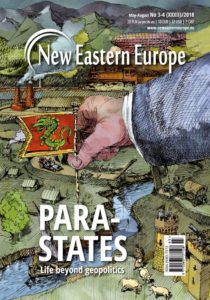
Illustration by Andrzej Zaręba
However as often happens, the adaptation of best practices from other countries has undergone some transformation under the influence of specific factors inherent in the post-Soviet space. As a result, we became witness to a largely negative trend – namely, the formation of an independent class in Ukraine known as the oligarchs.
Coincidentally, privatisation, a reduction of state regulation and the liberalisation of the economy became the drivers of this development. At the initial stages of the transition, the political establishment failed to create effective legal control over the economic processes. It is believed that the starting point of this was Leonid Kuchma’s presidency; he intended to develop common rules of the game and saw economic support in the oligarchs acting in accordance to these rules.
Growing power
Kuchma was able to establish effective communication with the oligarchs and managed to co-operate with them relatively effectively. After his term in power, however, the situation began to get out of control. The most influential economic groups came to understand that their resources allowed them to play a more important role in the state-building process: instead of adapting to the political conditions, they could shape the country’s policies on their own. Gradually, the term “oligarch” appeared in the Ukrainian narrative and, in accordance to Ukrainian political tradition, it meant a representative of big business and spreading its influence through integration into politics.
The new economic class concentrated its efforts on deepening control over political life in the country. The oligarchs began to fund political parties and politicians in the sphere of their influence. After receiving financial support, they were requested to represent big business interests in the corridors of the policy-making world. A side effect of this was the growing problem of corruption, which hampered the reform process and stimulated the development of a shadow economy. The oligarchs were particularly interested in this state of affairs since the unattractive business climate, lack of competition and corruption of the political system allowed them to monopolise important sectors of the economy. The entry of capital into politics has become a daily occurrence. A lot of politicians actively worked in the interests of the privileged groups, drafting legislation in favour of the oligarchs.
In terms of artificially-created favourable conditions, the oligarchs managed to gain a foothold in strategically important sectors of the Ukrainian economy – metallurgy, energy and transport. These sectors are of particular importance as they allow the oligarchs to use their resources as an element of pressure on political authorities. By ousting smaller players from the market, restricting access to foreign investors and influencing political decision-making, the oligarchs have expanded their control of the information space. Media resources have become an important attribute of big business. Access to television, the internet and print media allows the oligarchs to shape public opinion to provide a platform for popularising certain politicians, while criticising opponents.
Last but not least, it was due to the oligarchs that the media became a source of the politicisation of public consciousness and the manipulation of public opinion. Although the media is not very profitable in Ukraine, business groups and oligarchs continue to fund media projects – the main value of which is to obtain political capital. Gradually, the information space became a platform for the economic elite to compete, broadcast their messages and consolidate the electorate around the political establishment affiliated with the oligarchs. Moreover, in the struggle for their own ratings, politicians are proactive in trying to reach out to the TV channels, especially during election campaigns, which allows the owners to dictate terms.
Confronting the oligarchs
Accumulating numerous resources, the oligarchs have established themselves as independent of the socio-political and economic system, whose neglect of interest has become impossible in current times. This is a problem facing President Volodymyr Zelenskyy and his party, Servant of the People, who came to power in the wake of unprecedented popular support. Despite the formation of a majority in parliament and the gaining control of the executive branch, the dynamics of the renewed Ukrainian authorities is not high enough. Even with a convincing election victory and a 73 per cent credibility loan, Zelenskyy has to deal with numerous circumstances that hold back the reform process.
Confronting the influence of financial and industrial groups compels the new Ukrainian government to form a clear model of behaviour and to develop mechanisms for overcoming of this problem. Taking into account the peculiarities of the Ukrainian socio-political system and its international experience, several scenarios are likely to be considered. There is a high probability that the government, civil society and oligarchic groups will interact in this triangle which will determine the success or failure of Ukraine’s domestic and economic policy in the near future.
The most radical, and difficult to implement scenario, is one which drastically reduces the influence of the oligarchs. However this requires several components to be in place, including an independent functioning of the judicial branch, the establishment of independent and effective law enforcement agencies, support from external partners and political will.
This option will be based on the reluctance of the new Ukrainian authorities to seek compromises with the economic elite, to strengthen the state’s importance as a key player in determining the political course and to offset the oligarchs’ influence. A large-scale campaign to oust the oligarchs requires not only large public support but also an effective operation of law enforcement agencies. The Ukrainian experience has shown that even creating effective mechanisms for combating corruption will not produce practical results without defining a clear model for their application. An important role will be played by civil society, which must use all available channels of communication to articulate its own needs for change. In terms of the experts, the public needs to be constantly involved in civic oversight over the implementation of reforms. The first step for Zelenskyy is to indicate his attentive attitude to public opinion and a desire to maintain a high electoral rating.
The likelihood of a scenario that radically diminishes the oligarchs will increase if western partners are actively involved in the process and if Ukrainian authorities can gain their support. In this case, EU and US assistance will not be limited to facilitating the implementation and monitoring of economic reforms. Given the radical nature of the scenario, there will be a need to apply more point mechanisms, including the freezing of foreign oligarchs’ assets. Some parallels can be drawn with the events that unfolded in Moldova over the summer of 2019, when oligarch Vladimir Plahotniuc was forced to leave the country after pressure from political opponents and foreign players. Of course the implementation of such a scenario in Ukraine will require a lot more effort and it may have unforeseen consequences. However, further difficulties do not exclude this scenario, when business and industrial organisations which are under the influence of the state may be forced to limit their ambition.
An agreement with the oligarchs
Another scenario would see Zelenskyy developing new rules in the game for the oligarchs. Theoretically, a scenario like this would be aimed at overhauling the current spheres of influence, where the economic elite would be guaranteed the preservation of their assets in exchange for limiting their expansion into politics and increasing investment in the country’s economy. Today, developments in this area appear to be no less difficult, although it seems like a possible compromise. But a scenario like this is problematic for several reasons, including differences in domestic policy visions held by business groups and civil society.
First, the Ukrainian leadership will have to justify a potential alliance to the public and strike a fragile balance between further liberalisation of the domestic market and taking into account the oligarchs’ interest in limited business competition. The potential dissatisfaction of western partners with such solution should not be ruled out either. European and American diplomacy have repeatedly hinted at the need to distance themselves from the odious oligarch, Ihor Kolomoiskyy. The compromise between him and the authorities could provoke more negative reaction from the international community.
Second, the state acting as an arbitrator and agreeing with the oligarchs on a limited distribution of influence could be substantially corrected if political configurations in the country change. In other words, even if Zelenskyy manages to build an effective dialogue that does not violate the “red line” of national interest and take into account the demands of big business; this could still end abruptly in the future when the authorities change. Hence, there is a high risk of failure with this conditional agreement.
Preservation of oligarchic domination?
The most destructive scenario for Ukraine’s future has sufficient prerequisites for its own implementation. This is one which sees failure in attempts to effectively reform the legal system, essentially keeping the oligarchs in control of the political processes. In the short term, this would involve failure of the anti-corruption policy of the new Ukrainian leadership, the loosening of balance within the Servant of the People party, and the rise of ad-hoc alliances between critically-minded oligarchs and political opposition. In the long term, however, this would allow the oligarchs to retain a system where the political course is not formed on the basis of public expectations and the sole initiative of the governing bodies, but on the interpersonal competition of business groups.
Taking into account all possible scenarios, the further positioning of Ukraine directly depends on counteracting the expansion of big capital into the political process. The current leadership cannot postpone tackling this problem, because the oligarchs will increasingly expand their position as an alternative to the government.
Anton Naychuk is the director of the Civil Diplomacy Fund, an NGO based in Kyiv.