
Text resize: A A
Change contrast

Hostage to the generals

Had it not been for the huge effort of the German military who carefully considered the experiences of the First World War and a wide support for Reichswehr military concepts in the Weimar Republic, the Nazi regime would not have transferred into an effective military machine. One that posed a serious threat to Europe’s peace.

On November 9th 1918 a republic was established in Germany. It was one of the unintended outcomes of the First World War. The Hohenzollern family, which ruled Germany since 1871, lost power as a result of the war. It is difficult to fully understand the 14-year long history of the interwar German republic without looking at the causes which brought it to life. The same factors, in fact, are the ones which brought it to an end. Had it not been for the madness of Emperor Wilhelm II, Germany would have probably remained one of European constitutional monarchies. The sudden and unexpected abdication of the emperor in 1918, as well as his unexpected call to make peace with the Allied Forces, truly shocked the German public. Its citizens experienced four years of sacrifice to face a disgraceful capitulation in the end.

November 12, 2019 - Andrzej Zaręba - History and MemoryIssue 6 2019Magazine
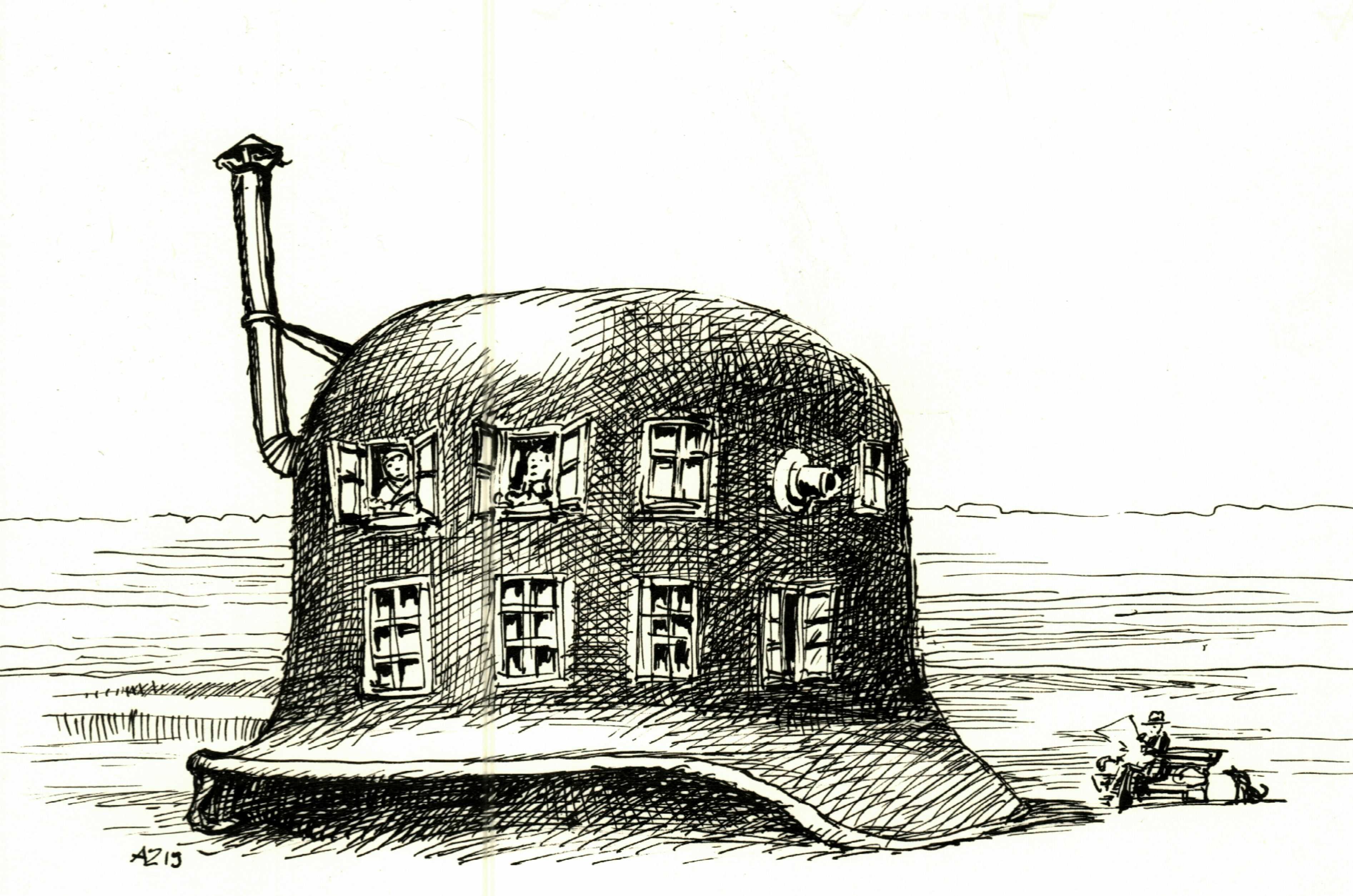
illustration by Andrzej Zaręba

On the other side, the Allies were deeply hurt and wanted revenge – at any cost. Yet the humiliation that they inflicted on Germany in the aftermath of the war omitted those who were actually responsible for the German national tragedy. Instead it hit, with full force, the new republic.

Fruitless attacks

The fatal outcome of the first German republic was, just like the republic itself, rooted in the emperor’s boyish fascination with war, which he apparently treated as a nourishing activity. This attitude obviously did not take into account that in the industrial era, war had nothing in common with duelling knights. Thus, while deciding on the Clausewitz-like tactic to use military force in 1914, Wilhelm II and his circle of generals showed that they were willing to abandon the old Bismarckian principle of showing some degree of decency in combat. For Germany, the war began with its invasion of Belgium. This horrendous act, planned by Wilhelm II and his military advisors, was immediately condemned by other neutral states and under the leadership of the Belgian king, Albert I, a consolidation of otherwise conflicted ethnic groups in Belgium took place. Britain, which until then remained a passive observer, declared war on Germany which was already experiencing terrible losses trying to take over the Belgian fortresses.

Such was the cost of Wilhelm’s rapid decision to enter into war with France, the emperor’s illusions about warfare did not pass the reality test and his army was defeated at Marma in September 1914. By late autumn imperial forces were also stuck on the frontlines, which spread from the Baltic seaside to Switzerland’s border. Instead of proudly marching in a military parade at Paris’s Elysian Fields, where they were supposed to be celebrating German hegemony over the continent, recruits were dying in fruitless attacks against the Brits, French and Belgians.

On the battlefields everything was permitted. The war brought about a chronic catastrophe of civilisations. Its brutality left no room for compromise, truce or territorial concessions. Most importantly, the war led to a humanitarian tragedy that was unimaginable to the societies which understood it only from the newspapers. The number of victims was unprecedented.

The desire for absolute victory pushed the Germans onto the path of war crimes. In April 1915, in an attempt to break the western front, the imperial army used the forbidden chlorine gas and without any warning sunk enemy fleets with its submarines. In both cases, international law proved to be useless. By the end of 1915, Turkey (which was Germany’s ally at the time) committed genocide against the Armenian population whom it accused of collaborating with Russia. The Austrians in Serbia “avenged” the failure of the Belgrade attack by performing massive executions. The war continued without a strategy on how to end it. With propaganda messages issued by the Allies, Germany was presented as a dark force.

Nothing changed in the first days in the 1916 Battle of Verdun. This confrontation between Germany and enemy forces had been carefully planned by the head of the German army, Erich von Falkenhayn, and assumed Germany’s usage of chemical weapons. From this moment, soldiers in the war zone were both at risk of suffocation and burning of their respiratory systems. The new chemical weapons used were popularly known as mustard gas. It had a distinct odour which resembled garlic. Even though it was also used by the Allied forces, it became a stigmatising mark against the German army.

New tactics

In 1917 a new military elite emerged in Germany – the Stormtroopers. Soldiers of this type were unknown before. Their crest was a skull with two bones, which was on the sleeves of the uniforms. As personal weapons, these military men used knives, which were usually found among those engaging in criminal activities, not members of a civilised army.

The imperial air force also made attempts to defeat the enemy, using surreal-looking Zeppelins attacking London by night. However, since the British king, George V, was Wilhelm II’s cousin, the hideous activities that Germany were directing against Britain can be seen as a continuation of the feudal tradition of inflicting terror on the subjects of another feudal. That is why, in addition to sending in its air fleet, Germany was also using its navy to attack the British coast.

In 1918 the German army made its last attempt to reverse the course of the war. At that time, the Bolsheviks had already come to power in Russia, and with the help of German intelligence settled in St Petersburg. In a gesture of co-operation, German and Austrian soldiers in Russian prisoner camps were allowed to join the fight elsewhere in the West. In February 1918, Germany signed a treaty with Russia in the city of Brest. As Russia was still undergoing a civil war, the imperial German army began its final offensive attempt. Pompously called Kaiserschlacht, it was a highly risky move. Its success, had it occurred, would have been attributed to Wilhelm, while failure (which was highly probable) would have only further deteriorated the empire’s tarnished image. The sacrifice of the Stormtroopers almost brought the war to the end – the word “almost” is the key here.

In the summer of 1918 the Allied forces had to face the German infantry again. The Hohenzollern empire was losing the war. On the other side, the US army started to take the military lead against Germany. German generals, under the leadership of Erich Luddendorff, prepared for defeat, although nobody at that time could predict its scale. The Allied Forces were accelerating their war machine and a scenario of Berlin’s occupation was becoming more realistic. From today’s perspective, the plan to survive the disaster, coined by German generals, can probably be seen as Germany’s greatest military success. By asking the government to sign the armistice, the military leaders hid the scale of the defeat from the public. It is important to keep in mind that the army at this time was no longer listening to its generals. The rank and file soldiers had already accepted defeat, while German cities and villages were struggling with hunger. The emperor’s beloved fleet was taken over by revolutionaries.

Dismayed by the army’s refusal to pacify Berlin, Wilhelm resigned and found exile in the Netherlands where he moved with his family. A new political system was introduced in Germany, and a democratic government was formed. The courage of its creators to make difficult decisions impressed the army generals who offered the new establishment their assistance. The former, fearing a radical social revolution, had no choice but to agree to the generals’ proposal. This precedent, in turn, led to the creation of the myth that assumed a special role of the army in German politics.

Humiliation

On June 28th 1919 Germany ratified the Treaty of Versailles. The signing of the peace agreement was a moment of great humiliation for the once most powerful empire in Europe – one that held this status since 1870. Overall, the provisions of the treaty were perceived as a death sentence to the now much smaller German state. As a result of the treaty, Germany not only lost some of its provinces (Alsace and Lorraine among others), but also saw a new state emerge on its eastern border – Poland. Internally, Germany was going through a revolution, which, this time around, was led by the extreme right. Irregular volunteer military units, known as Freikorps, were fighting against the Soviet-backed German communists in the east.

Thousands of veterans had returned from the frontline. Morally decimated, they had been well-trained killers. Depending on their temperament or worldview, many of them willingly joined radical groups – either the leftish revolutionaries or the rising nationalist movement. The role that was played by the voluntary military units, which were supported by the republic’s authorities, led Germany to another disaster. They could be seen as the precursor that gave rise to the Nazi myth of permanent military service. This myth perceived Germany as an ethnic community which fulfilled the dream of heroism on the permanently bleeding eastern border. There the dirty guerrilla war emotionally united its fighters more than the experiences of the regular army.

Europe, deprived of political role models after the collapse of the three empires, was hungry for saviours – men of the moment. It found them with a new generation of orators – self-proclaimed geniuses, cynical technocrats or visionaries of the brave new world. Characteristically, they operated in different areas of contemporary social life.

Dangerous genius

The problematic “treasure” of the new German republic was found in the military which became a guarantor of political security. Such services were provided by professional officers who had survived the First World War. Among them was General Hans von Seeckt who was a man of many talents. His skills included historical analysis and a good intuition of the future. All in all, von Seeckt had all the features of a dangerous genius who found himself in the right place at the right time.

Most importantly, von Seeckt managed to inflict some hope into the defeated and humiliated German army. He believed in a revival of the German army which would not repeat mistakes of the past should a new war erupt. As the basis of a new military force, he saw the Reichswehr, which in the eyes of the army was a temporary organ, just like the republic. Their ambition was not to have a military that was capable of defending Germany’s independence, but to revise the outcome of the First World War. That is why military theoreticians only showed interest in an offensive war.

The winners of the First World War soon lost their gift of foresight. The French may have deprived the Germans of their outdated equipment, but they did not recognise the speed of technological development. At the time, when the Allies were investigating old German airplanes, outdated engines or submarine constructions, right-wing radicals were raising the issue of tarnished German dignity. This was something that was well understood by van Seeckt and his men. We can only imagine their laughter when sweaty French commissionaires were fulfilling their Versailles obligations and announcing the destruction of the old imperial power.

Out of sight

In 1922 the German republic approached the Soviet Union (its ally) with a proposal to establish inter-state relations. At first, the treaty that was signed by both parties in Rapallo did not raise any concerns. The Soviet Union was then entering a stabilisation period and needed a new technological opening. Its leaders knew all too well that peace was just an opium for the masses. Fate thus came to Lenin and he found a new ally in the form of Germany. At that time German engineers had already acquired almost magical skills in constructing state-of-the-art war machinery, something that was really appealing to the Russians. Thus, Russia offered the Germans what they needed the most – a military base that was out of the sight of the French controllers.

A secret air base was created in the city of Lipetsk, which is located in the Don basin. It served as a site for training pilots as well as performing operational and technical experiments with air bombing. The latter included the application of weapons of mass destruction. In this way, Russia and Germany, officially two enemy states, established co-operation in a very sensitive area of offensive warfare. In 1932 this fruitful and far-reaching co-operation ended. Its final moments overlapped with such events as Stalin’s dictatorship in the Soviet Union and the collapse of the Weimar Republic, which came to an end upon the failure of the German democrats and the coming to power of Adolf Hitler.

Unquestionably, the unexpected end of democracy in Germany allowed the Nazi revolution to take place. In its aftermath the new, aggressive regime took control over all state institutions, including the army. Its personnel, pretending to be apolitical, pled their subordination to Hitler. The history of this period shows us that had it not been for the huge effort of the German military, who had carefully considered their defeat in the First World War, the Nazis would not have managed to create an effective military machine, which ultimately destroyed Europe’s peace.

Translated by Iwona Reichardt

Andrzej Zaręba is completing his PhD in military history at the Jesuit University Ignatianum in Kraków. He is also the illustrator for New Eastern Europe.
, ,

Partners

Terms of Use | Cookie policy | Copyryight 2025 Kolegium Europy Wschodniej im. Jana Nowaka-Jeziorańskiego 31-153 Kraków
Agencja digital: hauerpower studio krakow.
We use cookies to personalise content and ads, to provide social media features and to analyse our traffic. We also share information about your use of our site with our social media, advertising and analytics partners. View more
Cookies settings
Accept
Decline
Privacy & Cookie policy
Privacy & Cookies policy
Cookie name Active
Poniższa Polityka Prywatności – klauzule informacyjne dotyczące przetwarzania danych osobowych w związku z korzystaniem z serwisu internetowego https://neweasterneurope.eu/ lub usług dostępnych za jego pośrednictwem Polityka Prywatności zawiera informacje wymagane przez przepisy Rozporządzenia Parlamentu Europejskiego i Rady 2016/679 w sprawie ochrony osób fizycznych w związku z przetwarzaniem danych osobowych i w sprawie swobodnego przepływu takich danych oraz uchylenia dyrektywy 95/46/WE (RODO). Całość do przeczytania pod tym linkiem
Save settings
Cookies settings