
German-Polish cultural dialogue in former East Prussia – a success?
The fall of the Iron Curtain in 1989 allowed new memorial works to begin for both Polish and German population groups in the Warmian-Masurian Voivodeship in Poland. Today, German heritage is present again, and perceived positively throughout.
My grandmother Cilly never spoke badly about Poland and the Poles. When she spoke about her home in former East Prussia she never specifically mentioned the nationalities there, maybe because she came from a family with a dual identity where both Polish and German languages were spoken. Or maybe it was because nationalities never really played a role in everyday life in the region of Warmia before 1933.
November 12, 2019 -
Marcel Krueger
-
History and MemoryIssue 6 2019Magazine
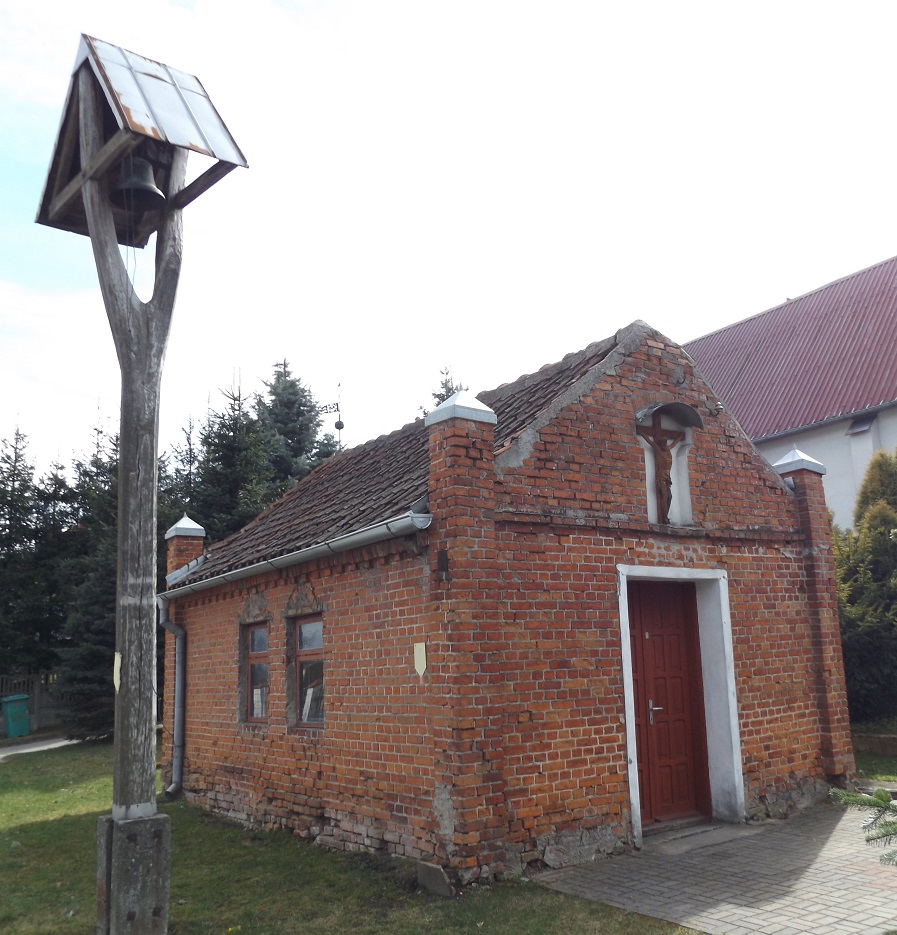
The old chapel with a wooden bell tower in the village of Łęgajny (formerly known as Lengainen) . Photo: Krzysztof Rakowski (CC) commons.wikimedia.org
Even though she identified as German, her brother Franz felt more Polish and was very active in the cultural life of the Polish minority before 1939 and even became a spy for the Second Polish Republic in 1935, for which he was executed in 1942.
The legacy of the Second World War, the subsequent westerly shift of the Polish border, the flight and expulsion of the local German population followed by the resettlement of Poles from the eastern parts of the former Second Republic are challenging topics to talk about to this day in the Warmian-Masurian Voivodeship. But what about the multi-ethnic reality of the region before the war? When I began my residency as the official writer-in-residence in Olsztyn, the capital of the voivodeship and thanks to a scholarship by the German Cultural Forum for Eastern and Central Europe, I was interested in finding out how the complex and conflicted German past is perceived and potentially preserved there, and how other areas in Germany, Poland and all over Eastern Europe might benefit from this example.
Engaging with the past
Upon first glance, the multi-cultural and multi-ethnic society, with its large Jewish, Polish, German and Tatar populations, changed radically after 1945 with the arrival of the population exchange between Poland, Lithuania and Ukraine. But the level of (ex)change differed significantly between the different areas of former East Prussia. Whereas in the former Protestant Mazury the German population left in droves, in Warmia, where many people spoke Polish and were Catholic despite identifying as German, it was different. In my own family we have surnames like Pomaska, Nerowski, Schnabach, and many family members stayed here even after the war ended, the last leaving in 1963.
Any attempt of preserving German identity or heritage was ignored or repressed by the communist government. At the same time, there was the influx of new Polish settlers who had to adjust to the situation of forced settlement in a culturally and topographically very different “reconquered” land, as the communist authorities called the newly acquired former German provinces of Silesia, Pomerania and southern East Prussia. They were equally and actively prevented from any open memorial work from the homelands they left. Only the fall of the Iron Curtain in 1989 allowed this memorial work to begin for both groups. Today, German heritage is present again and perceived positively throughout. There are three levels of engagement: cultural, academic and local grassroots engagement.
One of the key aspects of the cultural work (which also has a touristic aspect) is its engagement with the aristocratic past of East Prussia. Culturally, this may be best represented by the preservation of places like the former hunter’s mansion of the Lehndorff family in Gałkowo, and the family palace of Sztynort in Mazury. They are now owned or administrated by a mix of private and public institutions, like the Marsch-Potocka family who have restored the former mansion and turned it into a restaurant and museum dedicated to Countess Marion von Dönhoff. The Sztynort restoration is financed and supported by shared German-Polish institutions and carried out by groups of dedicated volunteers. They not only carry out the necessary work at the castle, but also organise an annual arts festival in the half-ruined palace, which draws in more visitors and offers local communities a change to engage with the place and its history in a playful way. The role of the local communities is important for these activities – theatre groups from nearby Węgorzewo are now participating in the festival for the third year in a row.
No fear of the past
A German-Polish heritage or identity does not play a big role with the younger generation of those living in Warmia and Mazury; but that is not necessary a bad thing. Like many young people around the world, their view is turned outward – they speak English and naturally engage with visitors. Another example of this positive engagement is the local social entrepreneurs of Olsztyn 2.0, a group of young people between 15 and 21 who publish an English-language map of the city for visitors, which proudly displays German celebrities next to Polish artists like Maria Zientara-Malewska. For these young people, the past is nothing to be feared or to be abused for political gain. They are aware of and cherish the cultural contributions of the Germans.
There are the cultural big hitters like the Borussia Foundation in Olsztyn which has been active for almost 30 years now. Not only does it focus on keeping the memory of the German heritage alive through print publications which makes German Warmian literature available in Polish, by preserving the world famous Mendelsohn-House as a centre for cultural dialogue, and by organising international youth group work, they also help preserve the memory of the vanished Jewish life in Olsztyn – crucial for both cultural and academic engagement with German cultural heritage.
Borussia is a group of local writers, artists and teachers founded in 1990 and dedicated to the research of East Prussian heritage and cultural dialogue. The restoration project was realised with the support of EU funds and the building and adjacent cemetery were acquired by the Foundation for the Preservation of Jewish Heritage in Poland. Since March 21st 2013 (the 126th anniversary of Mendelsohn’s birth) the building has been used as a centre for intercultural dialogue by the Borussia Foundation and was named the Mendelsohn House (Dom Mendelsohna) in memory of Erich. Borussia does not only engage with the German past, but also organises a variety of contemporary cultural activities. The Mendelsohn house is actively used a place of cultural dialogue and hosts readings, concerts, and exhibitions – all free and open to the public. Recently, there was a series of acoustic cross-border concerts featuring musicians from Brittany and Ukraine.
Another series of activities include youth camps which bring together young people from all over Europe for a series of themed workshops, sometimes structured around the restoration of old German (Protestant) cemeteries, or German-Russian war cemeteries from the First World War where young people from Ukraine and Russia (often meeting in Poland for the first time) actively encounter the violent past of the region. That, of course, does not mean all is well. Borussia is mostly relying on project funding for its operations which comes from EU programmes, the Goethe Institute and private foundations. The funding coming from the cultural ministry in Warsaw has been significantly reduced in the last number of years.
Advances in research
Academic engagement is represented by the Wojciech Kętrzyński Northern Institute in Olsztyn. Originally set up as a communist institute to explore and create an artificial Polish cultural link to the region in order to symbolise a direct continuation of Polish identity throughout the German times, it has now set out to explore and document the overall history of the region. The original goals of the institute, which is active since 1943 under a variety of names, was research in the field of cultural, social, historical and political relations of Warmia and the Masurian Lake District, as well as running a regional library and regional museum which include German collections that survived the Second World War. Since 2001 the institute is part of the Polish Ministry of Culture and National Heritage.
The headquarters of the institute are located in a building that my granduncle Franz knew well: located on Partyzantów Street in Olsztyn, this building was the headquarters of the Polish authorities during the 1920 East Prussia plebiscite, where both German and Polish inhabitants overwhelmingly voted to remain part of Germany. After that the building was used by the Union of Poles in Germany as a cultural and administrative centre where they organised the work of Polish-language schools across Warmia (which existed until 1939) and organised poetry and singing competitions; it also housed a Polish bank where my granduncle worked.
Today, after restoration in the 1970s, it has a reading room, a library and four research offices. The Centre, together with the Scientific Society of Wojciech Kętrzyński, also established the Wojciech Kętrzyński Award for the best works of young local academics and researchers, and publishes its own academic publications. There are plans to make their vast archive and collections widely available to the public through a series of readings and exhibitions.
Maybe the main disadvantage at the moment is that there is no centralised memorial work in Warmia-Mazury, no central database or even website aimed at visitors or researchers that might give the Polish and German past ample space. Despite that, there are many opportunities to learn about the past of Warmia-Mazury. And maybe this decentralised work is actually to the advantage of those, including myself, hoping to engage with the past.
Connecting with the past
An example of the most important engagement with the past, however, can be found in the small village of Łęgajny (formerly known as Lengainen) where both Cilly and Franz were born. In the village, information displays are dotted around; two on the main street around the corner from the local church and school. There is another one in front of the local tomato farm, informing the reader that, in communist times, this used to be state-owned, and a fourth one just down the road in front of the surviving building on the local estate, telling the history of the family that used to live in Gut Lengainen. All those signs have been set up by the local community, who have also established an arboretum and gathering place with barbecue pits, a stage, and a playground by the lake where my ancestors used to swim.
For me, as a member of the generation of grandchildren, this is wonderful. It shows that for the local community there is no real connection to political events anymore; most German families with ties to the region have lost connection to the rural lifestyle, and for the Poles this is now their home, but not one that begins in 1945 or with some artificially constructed Polish heritage prescribed by the government. No, it begins with the celebration of the villages that have existed in the same place for 650 years, and where both Germans and Poles made a living from the rich soil and enjoyed the clear lakes in summer.
As an outsider who was allowed to live and observe this place, it all began with the acceptance of civil partnerships, contemporary and historical ones. There are, of course, many political conflicts, and with the current Polish government showing less interest in supporting an open engagement with the multi-cultural history of Warmia and Mazury – even cutting funding – there is a chance that the activities of organisations like Borussia will be further curtailed in the future. And, of course, many people here in one of the poorest voivodeships of Poland just get on with their life without the need to know about the German past. Those who are interested in it, however, engage with it positively and warmly – to the benefit of Germans and Poles alike.
Marcel Krueger is a German writer living in Ireland who writes about places, history and the journeys in between. His latest book Babushka’s Journey – The Dark Road to Stalin’s Wartime Camps explores the experiences of his grandmother and her journey to Russia in 1945.