
The Black Sea region. A complex and dynamic space
Countries in the Black Sea region remain hostage to geopolitics and history. The impact of various factors on the shape of relations on this area is still very noticeable. Thus, any examination of the geopolitical situation here that does not account for historical conditions may diminish the complexity of the situation on the ground.
The geopolitical rivalry and the clash of interests between the superpowers have been present in the Black Sea region for centuries. During the Cold War when the East-West divide was at its height, the Black Sea was “excluded” from geopolitical competition between the superpowers as it became the domain of mainly one player – the Soviet Union.
August 26, 2019 -
Tomasz Stępniewski
-
Hot TopicsIssue 5 2019Magazine
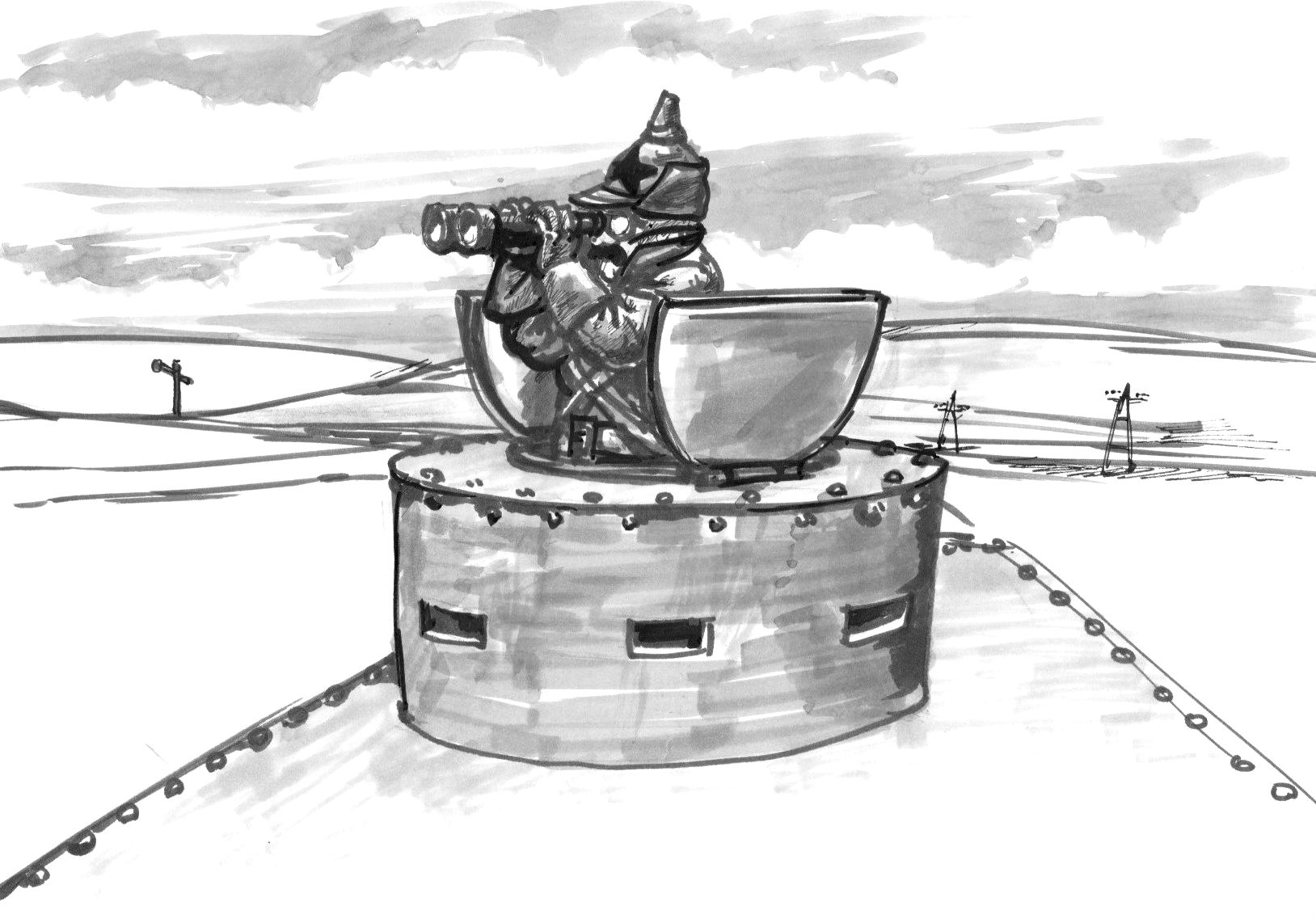
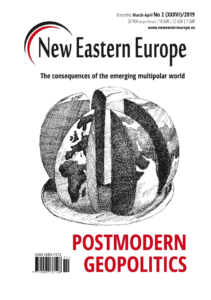
Illustration by Andrzej Zaręba
The dismantling of the Pax Sovietica and the subsequent collapse of the Cold War gave rise to a new geopolitical situation in the Black Sea region. The former USSR was superseded by the Russian Federation and other political entities independent from Russia, yet having strong bonds with the region both in terms of geography and their political and cultural interests. These were new states like Ukraine, Moldova, Georgia, Armenia and Azerbaijan, but also former Soviet satellite-states such as Bulgaria and Romania. In other words, the collapse of the USSR entailed the emergence of a new system of geopolitical power in the post-Soviet space.
A wider region
The post-Cold War transformation enforced a change in the political arena where new players appeared, ready and capable of effectively participating in the ongoing game. They immediately became an attractive subject of international relations with the existing superpowers striving to exert influence on them. This seems to be the case of the post-Soviet states of the Black Sea region, reborn in 1991, whose political existence produced (and is still producing) far-reaching changes in this part of the continent. The evolution involved such aspects as geography, politics, economy and military issues but also brought about changes of psychological and cultural nature.
In the early 21st century the importance of the Black Sea region has notably grown, which has led to, on the one hand, a fight for influence among the main global and regional players and, on the other hand, the uncompromising rivalry which reinforces the integrity of the region. An analysis of the specific character of the Black Sea region does not only concern its geographical problems, however. It frequently encompasses geopolitical, geo-economic, cultural, social and security issues as well. The literature of the subject fails to offer a clear definition of the geopolitical character of the region – it is assumed to cover the area of Bulgaria, Moldova, Romania and Greece in the west, Ukraine and Russia in the north, Georgia, Armenia and Azerbaijan in the east, and Turkey in the south. The inclusion of Armenia, Azerbaijan, Moldova and Greece in this zone is problematic as they have no immediate access to the Black Sea. Yet, in view of their historical, cultural and civilisational affinity and the geographic proximity, they do seem to belong to the region. This extended area – including third states and organisations and countries without a Black Sea coastline – has been referred to as the Wider Black Sea region. Its significance derives from the fact that it borders other areas strategic to contemporary international relations – such as Central Asia, the Caucasus, the Russian Federation, Central and Eastern Europe, the Balkans, the Mediterranean Sea (eastern part) and the Middle East.
The post-Cold War geopolitics of the Black Sea countries, and of the third party players in the region, are frequently analysed in the framework of three levels: 1/ the littoral states, 2/ the states affiliated with the region and 3/third countries and organisations attempting to exert influence and shape the balance of power in this part of the world. What’s more, any analysis of the geopolitical situation of the region without accounting for the historical conditions may diminish its complexity.
Three perspectives
As far as the first level of the analysis is concerned, that is the geopolitics of the littoral states in the Black Sea region, it needs to be said that they include six countries: Turkey, Russia, Ukraine, Romania, Bulgaria and Georgia. The first two, i.e. Turkey and Russia, can be regarded as both regional and external players, since their policies in the region are clearly an outcome of their foreign policy. Both of them enjoy an extremely strong geopolitical position and both are keen to maintain the status quo in the region. The difference between them lies in the fact that Turkey is a NATO member, while Russia seems to be the largest threat to the security of the region (as illustrated by the war with Georgia in August 2008 and the ongoing conflict in Ukrainian Donbas and the annexation of Crimea).
The policies of Bulgaria and Romania, as members of the European Union and NATO, are influenced largely by the interests of these two organisations. Ukraine and Georgia, meanwhile, are key transit states whose importance in the modern world has been growing along with the increase of their geo-economic positions. Additionally, Georgia is a state where conflicts escalate on a regular basis, resulting in the destabilisation of the situation throughout the region with Abkhazia and South Ossetia.
With regard to the second level of the analysis, that is the geopolitics of states affiliated with the region, it is agreed that they include: Greece, Moldova, Azerbaijan and Armenia. Greece is a member state of NATO and the EU. Understandably, it guards the interests of those bodies. However, due to its geostrategic position, Athens naturally controls the waters of the Aegean Sea and access to the Black Sea straits (which are under Turkey’s control). Moldova, Armenia and Azerbaijan (but also Georgia) play the double role of the “stakeholder” in the game between the parties concerned and, at the same time, are the “buffer zone” between the West and East. Moreover, since the end of the 1980s, the South Caucasus (i.e. Armenia, Azerbaijan and Georgia) has been beset by numerous ethnic, social and political conflicts which make it one of the least stabile post-Soviet areas. The instability and conflict-prone character of this part of the world is not only the result of a clash of political interests but also from specific historical factors. That is why the Black Sea region can be referred to as an ethnic, cultural and religious melting pot.
The final, third level of the analysis, namely, the geopolitics of key third-party players in the region, aims to examine the influences of the following superpowers: the EU, the United States, and NATO. In this respect, first the content of the EU’s policy needs to be looked at more closely. The shift of the EU border eastwards, which took place in 2004, and its expansion following the inclusion of Bulgaria and Romania in 2007 was particularly important for the Black Sea region; it brought about an undeniable change in the balance of power throughout south-eastern Europe. The eastern border of the EU came closer to the Black Sea region which automatically entangled the EU in the geostrategic rivalry of the area.
In this way, the Black Sea has become, to some extent, an internal basin of the EU. In other words, the shift in the balance of power within the region gave the EU new instruments of influence. In the 1990s the EU initiative in the Black Sea focused on financial and technical support for the union’s eastern neighbours. So far, despite successive attempts at changing the image of the EU in the Black Sea, via instruments such as the European Neighbourhood Policy, the Black Sea Synergy and the Eastern Partnership, the EU has failed to come up with a consistent and comprehensive strategy for this region in the 21st century. The interests of the United States here are seen mostly through the lens of America’s concrete geostrategic goals. The third player – NATO – has been shown as invariably placing the region in the “out of area” category, despite its direct involvement through the membership of Greece, Turkey, Bulgaria and Romania in its structures.
Growing significance
Nevertheless, the Black Sea states remain hostage to geopolitics and history. The impact of the factors outlined above on the shape of the relations in the region is still very noticeable. It has manifested in the activities of certain entities and the objectives and interests advanced in the foreign policy of other countries. Even today, the Black Sea region is “a stake” in the foreign policies of such superpowers as Russia, Turkey, the US, the EU and NATO. Moreover, the security of the region remains an extremely complex issue mainly due to its multidimensional nature (military, energy, ecological, political, etc.).
Given the growing geostrategic significance of the region, its security and stability will depend on tightening co-operation and integration with western structures and on the capacity of Black Sea states to actively contribute to the new architecture of security put into effect by NATO and the EU. Closer and more constructive relations between the countries of the region and the EU offer a chance for a successful implementation of democratic reforms in the area and a peaceful settlement of local conflicts. Future development will also depend on wider international factors which could influence what happens here. This refers to the bilateral relations between the EU and Russia, NATO and Russia, the EU and Turkey, and Russia and Turkey. It also takes into account the interactions between the above-mentioned players and the US, which has shown a keen interest in the state of relations in Black Sea.
Tomasz Stępniewski is an associate professor at the Institute of Political Science and International Affairs of the John Paul II Catholic University of Lublin, and the research director at the Institute of Central Europe in Lublin, Poland.