
Text resize: A A
Change contrast

The Eastern Partnership. Much accomplished, more to be done

After ten years of Eastern Partnership, the balance of success seems largely positive and heartening. The benefits of the initiative have been tangible and sizable. Yet there is still a long way to go to achieve stronger governance, especially concerning the strengthening of the rule of law, implementing key judicial reforms and reinforcing public administration.

“Launched in 2009 as a joint policy initiative, the Eastern Partnership (EaP) aims to deepen and strengthen relations between the European Union (EU), its Member States and its six Eastern neighbours: Armenia, Azerbaijan, Belarus, Georgia, the Republic of Moldova and Ukraine.” This is the official definition of the Eastern Partnership (EaP), a political and technical platform for dialogue that has been shaping the relationship between the EU and its Eastern bordering countries, including the Southern Caucasus. In fact, it is even more than that.

May 2, 2019 - Gabriele Bonafede - Hot TopicsIssue 3-4 2019Magazine

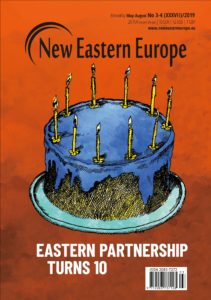
This year the EaP is celebrating its tenth anniversary with much of an accomplished and articulated system of dialogue. Organised in thematic sub-platforms, the dialogue has been developed with the contribution of all 27 EU countries, together with all six Eastern Partnership countries. It has increased mutual knowledge and understanding. And, maybe above all, it has permitted to increase shared familiarity concerning wide public issues as well as specific and technical matters. The Eastern Partnership dialogue has demonstrated to be a process combining different experiences along a common and converging roadmap, leading to a better future for all citizens of involved parties.

Platforms for change

The Eastern Partnership website officially declares that “The overall framework guiding relations between the EU and its six Eastern Partners is provided by the relevant bilateral agreements, such as the Association Agreements, as well as the Association Agendas and the Partnership Priorities…” Indeed, the most visible and important achievements of the process are the Association Agreements – signed by Georgia, Moldova and Ukraine – and the Association Agendas. These have shaped a tailored co-operation between the EU and each EaP country, contributing to streamlining specific technical issues within particular political, economic and cultural contexts.

Within the general framework, all partners agreed to deliver tangible benefits to the daily lives of citizens by focusing on achieving the “20 Deliverables for 2020” in the four priority areas. These have been organised up until 2017 in four platforms for dialogue:  Platform I – Democracy, good governance and stability; Platform II – Economic integration and convergence with EU sectoral policies; Platform III – Energy security; and Platform IV – Contacts between people. Since 2017 the platforms have been renamed and reshuffled with more focus on energy and infrastructure and, indeed, connectivity at large.

Since 2017 the four priority areas have been defined as Stronger Economy (economic development and market opportunities), Stronger Governance (strengthening institutions and good governance), Stronger Connectivity (connectivity, energy efficiency, environment and climate change), and Stronger Society (mobility and people-to-people contacts). Today, as we approach the 2020 deadline, progress has been impressive in some cases and limited in others.

First of all, co-operation between the EU and the partner countries features three cross-cutting issues: engagement with civil society, women’s empowerment and gender balance, and strategic communication. While progress has been achieved in the area of strengthening strategic communication, creating an enabling environment for civil society and independent media needs urgent attention. What has been achieved among the deliverables is, first of all, EaP citizens’ positive perception of the EU. This is increasing with the trust in the EU today higher than ever. According to surveys, 61 per cent of citizens of the six EaP member states consider the EU as the most trustworthy foreign institution. It is an impressive achievement as, in the same period, EU citizens’ own trust in their continental institution has been not performing so well.

Yet for the EaP member states much has to be done in key areas and cross-cutting goals, such as creating an enabling environment for civil society, supporting pluralism and independent media, and ensuring gender equality. Enormous efforts have been put into building stronger economies for the six EaP member states. “Building economic resilience is at the heart of the EU’s cooperation with EaP countries. The focus is on working together to develop stronger, diversified and vibrant economies. Significant progress has been made to help small and medium-sized businesses (SMEs) grow; to attract investments; to create jobs in new sectors; and to increase trade opportunities by supporting access to new markets.” Thus, for what concerns the broad goal of strengthening economies, more than half of the EU’s loans to small and medium-sized enterprises are now in local currency. Trade between all six partner countries and the EU since 2016 has been also growing: by 15 per cent with Armenia, 17 per cent with Azerbaijan, 19 per cent with Belarus, 6 per cent with Georgia, 20 per cent with Moldova, and 24 per cent with Ukraine.

In addition, consensus has been achieved on a perspective for a mobile phone roaming agreement in the region by 2020. In this field, the EaP has been promoting a number of high quality studies identifying benefits and roadmaps to harmonise telecommunications and digital markets. Following the settings and results of the EU-EaP dialogue, two goals still need to be obtained: ensuring that commitments to harmonise digital markets are effectively implemented; and strengthening intra-regional trade to be one of the top priorities of EaP process.

Areas of improvement

Another chapter of EU-EaP co-operation has been devoted to obtaining stronger governance. The Eastern Partnership has been working to scale up efforts designed to strengthen institutions and good governance. This has been one of the priorities for the EU in the EaP countries where challenges and need for improvement still remain. “In particular,” EU-EaP official documents highlight, “more efforts need to be made in the rule of law, implementing key judicial reforms, and in the fight against corruption. These are the preconditions for citizens’ trust in the state, long-term stability and an investment-safe climate”. In this field, e-asset declarations systems for politicians and public figures have been set up in four of the six EaP countries: Armenia, Georgia, Moldova and Ukraine. “Improvements in civil service laws paved the way towards a more depoliticised civil service in Armenia, Azerbaijan, Georgia, Republic of Moldova and Ukraine”, the EU reckons.

Yet there is still a long way to go to achieve stronger governance in these countries, especially concerning the strengthening of the rule of law, implementing key judicial reforms and reinforcing public administration. Strengthening co-operation concerning security is one of the concerns that emerged thanks to the dialogue. Efforts need to be increased on tackling organised crime, support for conflict resolution, and protection against new threats. Improving cybersecurity is also a filed with much to be done.

Encouraging results have been achieved to get a stronger connectivity between the EU and the EaP countries, as well as within EaP countries, at least regionally. Here, connectivity is meant for all fields of communication. This includes transport, energy, communications and digital connectivity. On the achieved deliverables set for the 2020 deadline, a few key-advancements have been attained. First of all, the Investment Action Plan for the trans-European Transport Network (TEN-T) has been finalised, foreseeing the development of “approximately 5,500 kilometres of roads and railways across the region by 2020 and an additional 4,600 kilometres by 2030”, as reported in available EU-EaP documentation.

In the field of energy, the inauguration of the Azerbaijan–Georgia section of the Southern Gas Corridor strengthens common energy security: “High-level energy efficiency initiative between the EU and International Financial Institutions has led to improved legislation and investments to reach more people, municipalities and SMEs to help cut energy bills, and improve standards”, declares the EU-EaP website. “The EU’s work with partner countries to improve transport links and infrastructure, boost energy resilience and efficiency, as well as the use of renewable energy to reduce Greenhouse Gas emissions has resulted in significant progress.” The will is for continued investments in these areas. This “will lead to greater sustainable economic development and concrete benefits to the lives of citizens by reducing energy dependence and consumption”, affirm the EU-EaP publicly available reports.

On the other hand, further reductions of CO2 emissions and national monitoring of emissions in each EaP country needs to accelerate. A big area for improvement is in the field of biodiversity protection and sustainable forestry. Whereas the Strategic Environment Assessment and Environmental Impact Assessment laws and regulations have been developed in the countries which have signed the Association Agreement (AA) with the EU, the other three countries still rely on national systems, not always complying with minimal EU standards.

Tangible benefits

Last but not least, the quest for a stronger society has been one of the key elements of the EaP efforts and co-operation. Here, punctual progress is reported, such as the launching of the first Eastern Partnership European School in Tbilisi, Georgia. It is also interesting that, since 2014, more than 30,000 young people have taken part in exchanges, mobility and volunteering through Erasmus+. The EU-EaP claims that “The EU4Youth programme is actively supporting the employability and entrepreneurship of around 23,000 young people in partner countries and 200 Young European Ambassadors are fostering co-operation with youth organisations across the EU and the partner countries”, and that “all partner countries have full access to Horizon 2020”.

In short, the EU and the six Eastern partners have invested in young people’s skills, entrepreneurship and employability, including education policies supported by preliminary ad-hoc studies in many cases. Yet a lot is to be done for a stronger society, while continuing to monitor the progress of mobility partnerships. In particular, efforts should be made to improve the quality and relevance of national education systems, modernising teaching methods, reinforcing employability of graduates, and developing chances for reducing skill mismatching in the labour market, especially for young people.

After ten years of the EaP, the balance seems largely positive and heartening. Benefits of the EaP initiative have been tangible and sizable. For the medium term, say the next ten years, a stronger effort should be placed on energy and other connection infrastructures. Future emphasis looks to be placed on connectivity, energy efficiency, environment and climate change. Here a few initiatives have been set out, such as extending the TEN-T core networks for transport; increasing energy supply and security; enhancing energy efficiency and the use of renewable energy; reducing greenhouse gas emissions and supporting the environment and adaptation to climate change.

The most important bid of the EaP could well be the intensification of connectivity, at least with Ukraine (by far the largest EaP country), Moldova and Georgia. That is, starting with the three countries which have signed an Association Agreement, including an epochal free trade agreement – the DCFTA. Given the regulation infrastructure provided by the DFCTA, physical and virtual connectivity is the next big challenge ahead. This is vital to size existing opportunities in full.

Gabriele Bonafede is a freelance economist and editor. He has a PhD in Regional Planning (Italy, 1993) and specialised in Urban and Regional Studies in Developing countries (MIT, Cambridge, USA, 1996). He has 30 years of professional experience in technical assistance to public administrations. Since 1999 he focused on consulting services for Central and Eastern Europe, including the Baltics, the Balkans and the Caucasus, and (since 2015) specifically for the Eastern Partnership process.

Partners

Terms of Use | Cookie policy | Copyryight 2025 Kolegium Europy Wschodniej im. Jana Nowaka-Jeziorańskiego 31-153 Kraków
Agencja digital: hauerpower studio krakow.
We use cookies to personalise content and ads, to provide social media features and to analyse our traffic. We also share information about your use of our site with our social media, advertising and analytics partners. View more
Cookies settings
Accept
Decline
Privacy & Cookie policy
Privacy & Cookies policy
Cookie name Active
Poniższa Polityka Prywatności – klauzule informacyjne dotyczące przetwarzania danych osobowych w związku z korzystaniem z serwisu internetowego https://neweasterneurope.eu/ lub usług dostępnych za jego pośrednictwem Polityka Prywatności zawiera informacje wymagane przez przepisy Rozporządzenia Parlamentu Europejskiego i Rady 2016/679 w sprawie ochrony osób fizycznych w związku z przetwarzaniem danych osobowych i w sprawie swobodnego przepływu takich danych oraz uchylenia dyrektywy 95/46/WE (RODO). Całość do przeczytania pod tym linkiem
Save settings
Cookies settings