
How to buy a republic
The strategic dynamics of elite capture often take place when three main interests fall in line. First, it is the clear geopolitical interest of a foreign power. Second, it is the political interest of a significant portion of the domestic political establishment which has reason to turn its politics and policies in that direction. And third, a major domestic economic actor, in line with the new policy, drives and lobbies for it. The Czech Republic is a good case study of how the processes of elite capture works.
Security policy discussions across Europe in recent years have focused on hostile Russian disinformation, cyber attacks, military aggression in Ukraine, support for extremist groups and classical Russian or Chinese espionage. One major tool of foreign influence, however, has been underrated. It is relatively cheap and often not seen as particularly aggressive, but it takes quite a long time to achieve (intelligence professionals nickname it “boiling up a frog”). This method is called “elite capture” and, in some countries, it is a relatively easy way of arranging the desired strategic dependence of a targeted country, if there is not much resistance.
March 5, 2019 -
Jakub Janda
-
Hot TopicsIssue 2 2019Magazine
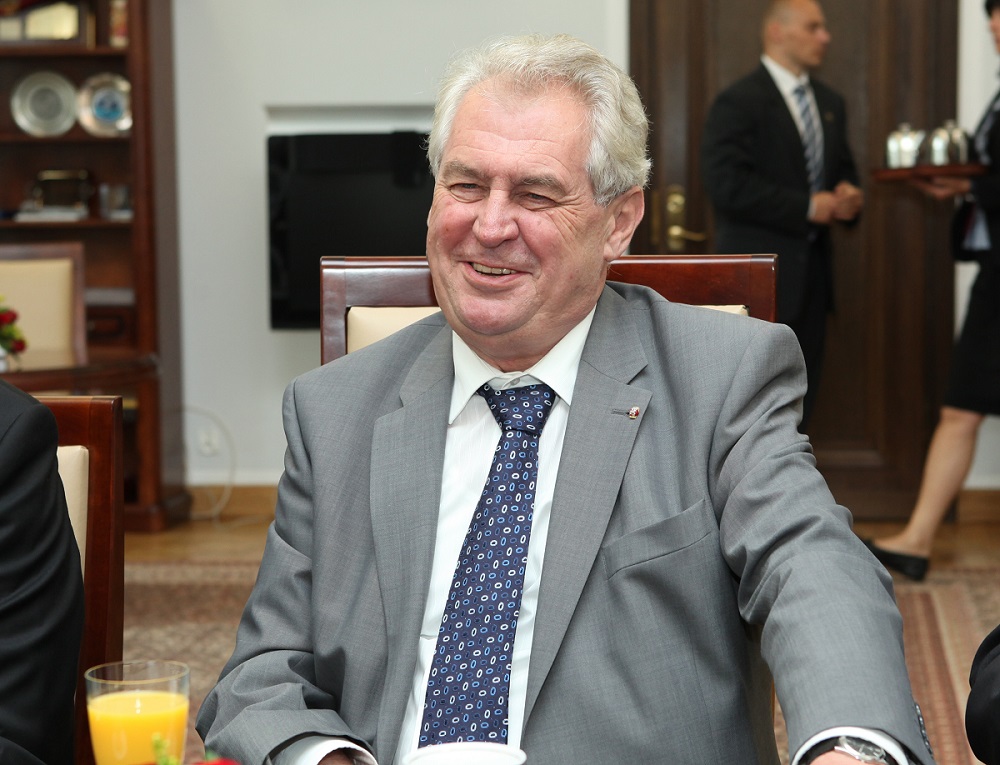
The most important Russian asset cultivation operation in modern Czech history was carried out on Miloš Zeman, the current president. Photo: Polish Senate (CC ) commons.wikimedia.org
Intelligence craftsmanship has perfected an understanding of the motivations of those who betray their own country, or at least start serving another country. The general framework is often referred to as “MICE”: money, ideology, compromising material (kompromat) and ego. Money is straightforward – people take money for serving another country. Ideology does not need to be a black and white example, such as communism against democracy; it often takes a subtler form. For example, various Soviet-led officers decided to leave the Warsaw Pact countries after the 1968 Soviet occupations of Czechoslovakia because they stopped believing in the allegedly peaceful objectives of communism.
Another key motivator is compromising material, where the victim is blackmailed into doing something that they would not have normally done. That is the reason why intelligence agencies seek high-level individuals who are unfaithful in their relationships or have committed financial fraud or have broken some other serious law. If you know someone’s dark secret, they might be more willing to work for you. However negative leverage does not usually hold for long, so other motivations need to be kicked in later. The fourth main component – ego – is often the most important one. A target with personal problems and grievances, such as the feeling of being overlooked or unappreciated at work or in one’s personal life, is easy prey for a trained professional. One of these four types of access is hardly ever activated exclusively. In most known cases, what works is a combination of two or three of the elements which need to be well mixed over time.
Case study in elite capture
An important thing to understand is that the process of cultivating a relationship between a targeted individual and the recruiting state is almost always done through proxies and often takes years to develop. Moreover, espionage (the stealing of classified or sensitive insider information and giving it to a foreign state) is not the only end goal. In the political arena, the objective does not have to be full control where the recruited asset would just wait for instructions and then do as they are told. Such an arrangement, in the long run, would be almost impossible to conceal. The real objective of recruiters could be to develop a relationship where specific ideological predispositions would be developed – for example, a personal grievance of being overlooked would be developed into a full personal anti-establishment ideology where the individual would blame mainstream politicians and mainstream media for everything – or a feeling of personal debt to somebody would be created.
Already available public knowledge about specific cases of elite capture in the Czech Republic can provide insights into how such a process works in real life. The first phase of each cultivation effort – or one can call it a “co-optation operation” – is scouting, psychological profiling and selecting the ideal approach to the targeted individual. Thesecond phase is often called “early cultivation” since the initial process of building up trust and slight dependency of the target on the recruiting entity is developed. In other words, it needs to look natural and legitimate, so the target does not get suspicious.
The most important Russian asset cultivation operation in modern Czech history was carried out on Miloš Zeman, the current president. The former chairman of the Czech Social Democrats is not only a tool that Russia can rely upon, but his story is the most graspable for understanding Russian political asset acquisition. In the early 2000s, Zeman was a one-term prime minister (1998-2002) whose political career was burdened by countless scandals and his own Social Democratic party turned its back on him during the 2003 presidential elections, which he lost and felt utterly betrayed. He then retired from politics and was considered to be finished as a public figure.
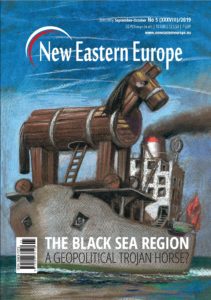
But what happened was a Russia-linked former Czechoslovak military officer brought a Russian businessman to meet Zeman in his forgotten village, when nobody cared about him. That individual was Vladimir Yakunin, a former KGB foreign intelligence officer and one of the prime Kremlin-linked oligarchs. Yakunin developed a personal relationship with the overlooked former prime minister and kept paying for his annual summer holidays in the Greek island of Rhodos, where a conference of similarly forgotten European public figures served as a Russia-friendly incubator for future use. Intelligence officers named this event the “Dialogue of Civilisations Conference” and referred to it as “KGB team-building”. A similar move was conducted by Russian entities around the former French prime minister, François Fillon, with whom the Russian President Vladimir Putin has developed a personal relationship. Therefore, if Fillon had not lost, due to his corruption scandals in the 2017 French Presidential elections, Moscow could have had its Trojan horse as president of France.
Loyal servant
Several years later, after the Russian proxies – such as Yakunin developing a close personal relationship with Zeman – a new person became his right-hand man, his campaign manager, and de facto chief of staff. He spent over a decade working within the energy industry in Moscow, and around 2010 he launched a single-issue political party. He then successfully became the main driver and organiser of Zeman’s return to high politics. His name is Martin Nejedlý and it is publicly confirmed that he had financial connections to Kremlin-linked companies and individuals.
The third phase is the activation of assets; in other words, cashing in and benefitting from the relationship. Nejedlý currently serves as advisor to President Zeman, but his main activity is to lobby on behalf of Russian interests while using his position as de facto chief of staff to the Czech president who serves as one of the most vocal allies of Putin in Europe. Zeman currently acts as the Kremlin’s Trojan horse as he keeps attacking Czech security institutions, which are pushing back against Russian aggression. He also lobbies on behalf of Russian foreign policy interests – for instance, by openly supporting the Kremlin-linked company Rosatom, Nejedlý is trying to get Rosatom to receive a strategic deal with Czech nuclear power plants. While some details of President Zeman’s relationship with Moscow remain hidden, it is clear that, since he only has a couple of years of his second (and therefore last) term remaining, he and Nejedlý are squeezing out the most of what they can to serve Russian foreign policy interests in the country and beyond.
Similar to Russia’s influence, the Czech communist party has been a loyal servant of Chinese interest. But only having an ageing and diminishing political party in your pocket can hardly hijack national policy. Therefore Chinese political and intelligence institutions have joined forces with collaborators who see personal profit as a reason for siding with the authoritarian regime in Beijing. Efforts by various Czech political lobbyists in Beijing were present during the 2000s, but Beijing clearly had not yet planned strategic influence operations for small countries like the Czech Republic. Early cultivation efforts could be observed in the early 2010s. The ground was laid during the government led by the conservative ODS party (2010-2013), but the main eruption of a Czech policy shift towards Chinese interests happened after 2014, when the new Czech government, led by the Social Democrats, came to power and Zeman was already in office. The main driver of these activities was the company CEFC Europe, which merged with several Chinese figures and current or former representatives of the Czech Social Democrats. A similar trend is visible in Germany where Russian companies and proxies are hiring former high-level figures within the German Social Democrats, which effectively became a tool of influence.
Hidden intentions
The strategic dynamics of elite capture often take place when three main interests fall in line. First, it is the clear geopolitical interest of the foreign power (Russia or China, in this case) to co-opt local elites and to turn or hijack local policies in its favour. Second, it is in the political interest of a significant portion of the domestic political establishment, which has a reason to turn its politics and policies in this direction. That clearly can be an ideological motivation and, to some extent, a personal one (ego). Here, the Czech Social Democrats came to power and, after opposing possible allied radar installation in the Czech Republic during the late Bush era (where the new Foreign Minister Lubomír Zaoálek played a leading role), they saw Russia becoming a hostile actor after it invaded Ukraine in early 2014. Thus, having a pro-Russian appeasement policy was not a politically realistic option. The Social Democrats then sought a new direction in their foreign policy portfolio and decided to shift it towards China, advocating it as the only economic opportunity.
The third strategic factor is to have a major domestic economic actor in support of a new policy, in order to lobby for it at home. That is where the largest Czech company, PPF, comes into play. Czech experts on China, such as the Sinopsis think tank, have observed that if you want to do major business in China, you need to have political backing. PPF runs its home credit company in China, for which it needs to have a Chinese-government licence. Therefore, PFF engaged in the Czech Republic’s foreign policy shift for its own economic reasons, while the concern is that it can become a de facto influencer on behalf of the Chinese government inside Czech politics. The practical example is that PPF officially co-operates with Huawei, a Chinese company highly suspected of espionage risks, which Czech security institutions see as a security threat. If PPF wants to maintain its business in China, it might be required to use its influence in Czech politics to lobby in favour of Huawei, which is currently under pressure from Czech security institutions. This risk of strategic economic dependency can have a significant impact on the politics of a small country of ten million people.
The above-mentioned examples of elite capture offer just a peek into how hostile powers engage in strategic corruption in the Czech Republic in order to gain a stronger geopolitical foothold. Since the Czech population is quite sceptical of Russia and China, and Czech security institutions and the media are relatively resilient and put up significant resistance to state capture efforts, trying to co-opt individuals among the Czech political elite is a logical approach for hostile foreign actors.
How to resist?
If there is anything we can learn from the Baltic republics countering Russian influence, or Australia pushing back against Chinese penetration, it is that public resistance matters. Since most foreign influence activities are formally legal, the most effective strategy is to publicly name and shame individuals who collaborate with adversarial regimes. Most elite capture efforts rely on deniability or secrecy. The defensive approach of a free society should be to protect its own mainstream institutions – political parties, the media, universities and civil society institutions. Every country has its extremists and traitors. The only difference is whether they are left on the fringes, smartly isolated from the mainstream, or if they take over the leadership of fundamental institutions.
Since the Chinese communists are very good at “managing the discourse”, which means buying off mainstream voices and silencing dissenting opinions, it is crucial for free societies to remain highly critical within public debate. It should be a matter of public record who is systematically supporting Russian or Chinese policies. The main prerogative of free debate is that it must be informed, so transparency of political funding and lobbying should be demanded and defended aggressively.
Jakub Janda is the director of the Prague-based European Values Think Tank and head of the Kremlin Watch programme. He has advised the Czech Interior Ministry on countering hostile foreign influence operations.