
Russia’s role in the Middle East – a grand plan or opportunism?
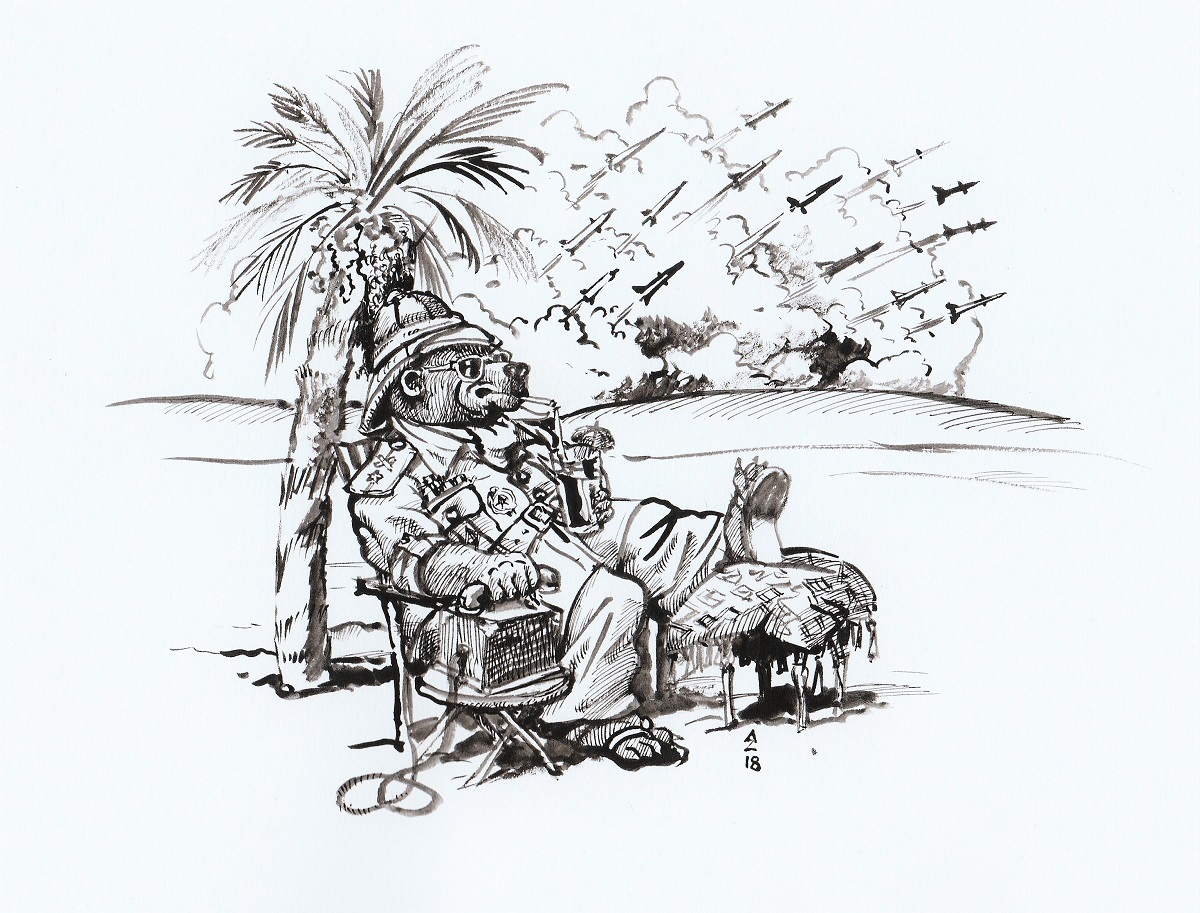
Russian military engagement in the Syrian war has been a big game changer. Whatever the tactical successes and failures, the sheer fact that Russian troops are present in Syria sends a clear message.
Since the start of the decade, Russia has been taking advantage of major security developments in the Middle East: the Arab Spring, including faltering regimes in Egypt and Libya; the United States’ light footprint approach, i.e. its withdrawal from Iraq and reliance on proxies in Syria and Yemen; and the growing tensions in the Gulf between Iran and the Sunni Arab states. The apex of Russia’s engagement arrived in 2015 when Moscow decided to provide militarily support for Bashar al-Assad’s regime in the Syrian war. Russian military intervention did not end in quagmire. Instead it empowered Assad’s forces to crush most of the rebelling groups, thus tipping the balance of power in Assad’s favour as per Russian objectives.
January 2, 2019 -
Wojciech Michnik
-
AnalysisIssue 1 2019Magazine
Illustration by Andrzej Zaręba
For Russia, provisional success in Syria marks a return to great power politics in the Middle East. Russia’s increasing presence in the Middle East has created additional uncertainties in the region where a web of alliances and conflicts is already incredibly complex.
United States out, Russia in?
There is no such thing as a strategic vacuum in international politics. The growing role of Russia in the Middle East is a striking reminder of this rule. Since the withdrawal of the US military from Iraq, Washington’s engagement in the region has been steadily diminishing. The former US President Barack Obama’s Middle East policy was ambiguous, while the current president, Donald Trump, lacks clear objectives in the region and proclaims an “America first” ideology. Under these presidents, American influence has weakened among its Middle Eastern allies and foes alike. In the meantime, the region, already no stranger to war and instability, has further deteriorated into sectarian violence, civil conflicts and proxy wars. From the fallout of the Arab Spring, through the Syrian war, crisis in Qatar, Iranian resurgence and a devastation regional war in Yemen, the Middle East has been hit by an unprecedented amount of insecurity.
Stepping into this highly risky, yet strategically crucial, geopolitical arena is no small undertaking. During the cold war, Russia exercised considerable influence in the region, but it has not been an active player in the past few decades. This was in large part due to the overwhelming dominance of the United States in the post-cold war order and because Russia itself was plunged into political and economic chaos during the 1990s. As the US presence has weakened and its military adventures have descended into chaos, the Russian leadership, consolidated since the early 2000s by President Vladimir Putin, has taken the opportunity to strengthen its presence in the Middle East once again. Before weighing the results of Russia’s policy, it is worth stressing that the rationale behind their growing political, economic and military presence stems from both domestic and foreign policy objectives.
The strategic importance of the Middle East for regional and global security is beyond dispute. The region is host not only to one of the richest oil and natural gas fields in the world, but, more importantly, it is a trading hub that connects Europe and Asia. Its sea routes are strategically crucial to the world economy – some of the most important sea trade lines go through geopolitical points in the region, including the Strait of Hormuz, Bab al Mandeb and the Suez Canal. The Middle East and North Africa also constitute a southern border to the European Union and NATO.
Dmitri Trenin, the director of the Carnegie Moscow Centre, highlighted in a 2016 report the major goals of Russia in the Middle East and North Africa: establishing Russia as a major external power in the region; containing Islamist extremism; affirming Russian military presence in the region; expanding Russian markets, including arms trade, nuclear technology, oil, food, etc.; and attracting investments from rich Gulf countries. This combination of strategic (i.e. military) and economic objectives is characteristic of Putin’s ambition to restore Russia’s global power after the decade of decline since in the 1990s. Establishing a presence as a primary external power in the Middle East is a powerful step in this direction.
Yet whatever the geopolitical logic behind Russia’s presence in the Middle East, Putin’s military adventures are also strongly influenced by his need to win support with the Russian public. Putin has used the intervention in Syria to show himself as a strong and decisive leader, intent on returning Russia to imperial glory and creating new economic opportunities. As far as the Kremlin’s official rhetoric of fighting terrorism in the Middle East goes, the rationale is mostly domestic: fighting ISIS in Syria sends a clear signal to the Russian public and to would-be enemies of the state (namely, radicalised Sunni Muslims from Chechnya and the Caucasus). Putin summarised Moscow’s counterterrorist effort as follows: “When a fight is inevitable, you have to hit first.” This rhetoric parallels that of the George W. Bush administration’s War on Terror. Yet almost two decades on it is clear that the results of this kind of strategy have been widely ineffective and, at times, counterproductive.
The economic rationale behind Russia’s new diplomatic offensive is more realistic and justifiable. In recent years the Middle East and North Africa have increased their demand for consumer goods, weapons and military equipment. Opportunities to sell goods and sign lucrative arms deals across the region were too tempting to pass up. Yet these economic goals need to be supported by diplomatic action and a military presence.
Here to stay
Russian military engagement in the Syrian war has been a huge game changer. Whatever the tactical successes and failures, the sheer fact that Russian troops are present in Syria, along with deals to build a military base for the Assad regime and a nuclear power plant in Egypt, sends a clear message: Russia is here to stay. After all, it is hard to significantly influence a situation on the ground in any country without at least a moderate military presence. It should come as no surprise that Russia is already harvesting the fruits of its military intervention in Syria. This was evident during Putin’s latest trip to Egypt in December 2017, which secured a deal (estimated at 21 billion US dollars for Russia) to build a nuclear power plant in Egypt; similar deals have been discussed with Turkey and Jordan. Russia has been aggressively pursuing its arms trade goals, selling weapons and military equipment to the Gulf states via a deal with Saudi Arabia for an S-400 air defence system and anti-tank missiles. In 2018 the European Union’s Institute for Security Studies enumerated Russian strategic gains so far: Moscow’s military intervention was “closely co-ordinated with Hezbollah and Iran; its growing role in Libya; Qatar’s acquisition of a 19 per cent stake in Rosneft; Moscow’s co-operation with Saudi Arabia to manage oil.”
Russian military intervention in the Syrian war is widely considered to have saved the Assad regime, its key ally in the region, whilst avoiding falling into the kind of quagmire that befell the US-led coalition in Iraq. Direct benefits, apart from testing its forces and weapons in a new environment, include access to the Tartus military base; new contracts for weapon deals, in which Morocco, Bahrain and Qatar display a strong interest; and the possibility of establishing naval bases in Libya, as Moscow has been actively engaged in the latest political developments there.
From NATO’s perspective, Russian polices in Eastern Europe and the Middle East are a worrisome sign – not only because of Russia’s strength but because of the West’s weakness. Whether Moscow’s latest actions constitute conscious attempts to encircle Europe or are just an ad hoc way to respond to a strategic void is another question. As the retired US Admiral James Stavridis noted in a piece for Bloomberg in October 2018 about Russian activities in the Kaliningrad Oblast, “all politics are local” for Putin and intended to boost his approval at home. Like NATO’s eastern flank, Russia’s policy in the Middle East and North Africa needs to be counterbalanced by the Alliance. And as in the case of Eastern Europe and the Caucasus, it is crucial for the West not to overplay its hand in the Middle East. Overreaction would be as dangerous as inaction (which currently prevails), and any future moves must be pursued with utmost care. Washington does not currently have a coherent policy for the Middle East and its diplomatic engagement is limited compared to previous administrations. NATO countries cannot yet agree on a united front towards developments on its southern flank, be it regarding the Syrian war, Libyan civil unrest or the bloody conflict in Yemen.
Foot in the door
Whether Russia’s policy in the Middle East will be enough to compensate for its difficulties, domestically and internationally, remains to be seen. Russia is struggling with a weak economy, and a military presence outside its borders could become a costly burden and lead to (imperial) overstretch. If history offers any guidance, Russia will not pursue overly ambitious goals in the Middle East, but it will continue a multi-layered policy that will concentrate on short-term goals, namely trade, weapons deals and strengthening military bases in Syria. In other words, Moscow will pursue a “foot in the door” strategy. One strong indicator that its policies have been intelligently designed and pursued is that Russia is virtually the only major power that maintains reasonably healthy diplomatic relations with almost everyone in the region – from Iran to Saudi Arabia, Palestine to Israel.
In a 2015 article for the Washington Quarterly, Kimberly Marten, a scholar in international relations, observed that the West has been trying to guess Putin’s endgame for years. Yet the search for an overarching goal may be a red herring. Marten argues that Putin’s foreign policy is more shaped by his love of Judo, which is concerned with responding in the moment to “the vicissitudes of a changing environment”. Like a Judo contest, Putin’s goal in the Middle East could simply be to remain the last outside power standing. Given the lack of unity and co-operation by western powers in the region, he might eventually succeed – though for the time being, the United States is far from bowing out completely.
Russian activities in the Baltic and Black Sea regions have dramatically tested the Euro-Atlantic alliance with worrying results. As the latest assertive moves against Ukraine in the Azov Sea showed, the Kremlin if unchallenged will push its strategic agenda. Perhaps the relative weakness of the West’s response on the NATO’s Eastern flank has boosted Putin’s confidence to pursue a more active policy in the Middle East. Whether its presence will have a destabilising effect remains to be seen. It equally is too early to conclude whether Russian short term success in Syria will become a long term gain. Yet from the perspective of the West, Putin remains an unpredictable and dangerous actor on the world stage and his moves in the Middle East are naturally treated with great suspicion.
While the western powers remain divided and preoccupied with domestic crises of their own, Russia has a fairly wide playing field in which to operate in the Middle East and is likely to remain an active player in the region for a long time to come. Diplomats in Brussels and Washington, DC must make peace with the fact that Russia has seized its moment and secured itself a voice in determining Middle East affairs.
Wojciech Michnik is an assistant professor at Jesuit Ignatianum University in Kraków, Poland. Between 2016 and 2018 he worked in the Middle East as a lecturer at the American University in the Emirates.