
Text resize: A A
Change contrast

Like in the good, old American movies…

A conversation with Nijolė Oželytė-Vaitiekūnienė, a prominent Lithuanian actress. Interviewer: Linas Jegelevicius

LINAS JEGELEVICIUS: In recent interviews, you have labelled yourself Homo Sovieticus, a sardonic and critical reference to the average conformist person living in the Soviet Union. How is this compatible with you being a woman who has spoken out many times on woman rights and who has travelled the world after the restoration of independence in 1990?

NIJOLĖ OŽELYTĖ-VAITIEKŪNIENĖ: All of us who were born during the years of Soviet occupation are Homo Sovieticus, more or less. In fact, we – that generation – shouldn’t be ashamed of it, deny or repudiate it. When I think of the past, I like to use the example of the victims of Stockholm syndrome.

January 2, 2019 - Linas Jegelevicius - InterviewsIssue 1 2019Magazine

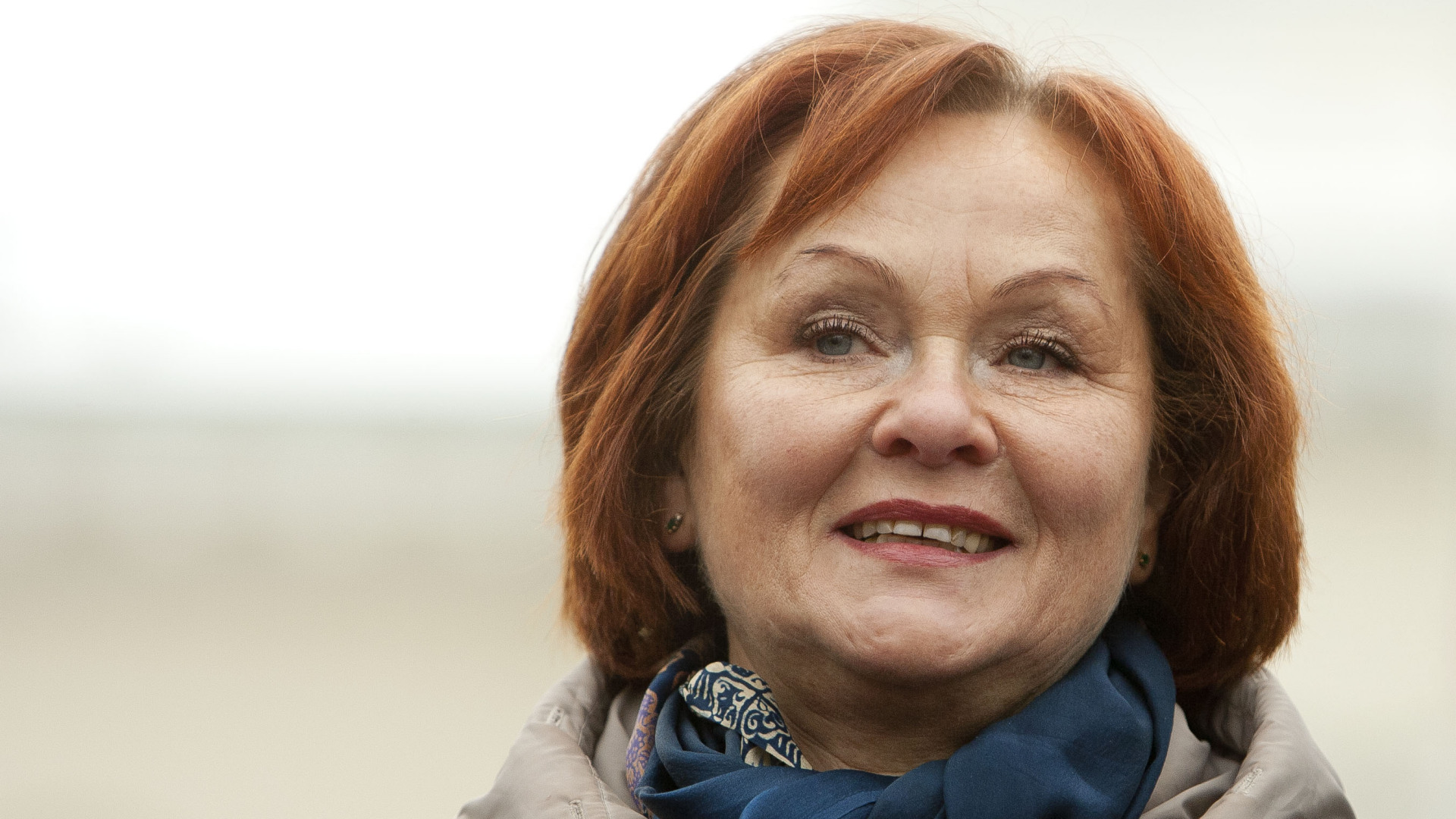
Photo courtesy of Delfi.lt

To explain the gist, the victim of rape or abuse falls in love with the perpetrator, or starts feeling sympathy towards him. It may sound weird to many, but the reaction is normal considering that our psyche is very adaptive, self–adjusting and self–hypnotising. Were it not so, the victim would go nuts and hang herself /himself during the ordeal.

As a grandmother, I’ve told my 17-year-old granddaughter many stories about the Soviet times. As I was a big-time hippy then, many of my stories relate to Vilnius hippies of the early 1970s. She was very impressed to hear that back then Soviet intelligence officers, known as kegebistai in the colloquial language, would chase after us right here where we are talking, on Gediminas Promenade – the main artery of Vilnius. Because of my reddish hair, my nickname among the local hippies was “Flaming Red Girl”. Being a hippy then was a non-vocal, yet powerful way to resist and rebel against the Soviet system. If we were caught, the kegebistai would handcuff us, pull out scissors and cut off the guys’ long hair while we girls would shriek and the passers-by would cast fearful glances at the scene. The KGB (the abbreviation for the Soviet intelligence, hence the name for the agents –“kegebistai”) agents would also slash and tear the girls’ mini–skirts to embarrass us.  Sometimes we would set off on longer journeys, to Estonia, for example. On the way, we’d bet on when and who in our small group would be stopped, frisked and apprehended.

The KGB agents would stop us and then bring us to the nearest precinct where they would take our names. Needless to say, it was a catastrophe for our future; being on the KGB watchlist meant a life on the margins. I am forever grateful to the professor and the chairwoman of the admission commission of the Lithuanian Conservatoire Academy who ignored the announcement that I was a “hostile” element to the Soviet system and not eligible to be among the students. Most of my friends, fellow hippies, never entered any school…

One day, just after hearing another one of these stories, my granddaughter sighed and said pensively: “Granny, they treated you worse than dogs, like soulless things!” I almost started crying – she was so damn precise with the description! So, like all the Stockholm syndrome victims during the Soviet times, many of us, and I am not an exception, lived with the injustice, the torture, the lies and, yes, many of us developed warm feelings for our perpetrators. If there are twin sisters and one  at the age of 16 is kidnapped and held in captivity for nearly 50 years, will the sisters find a common language if they ever meet again? No. Never. Like the captive sister, all of us who were born and raised in the Soviet era are still traumatised.

You recently said in an interview that those who claim that they envisioned a free Lithuania differently were lying. How did you imagine an independent Lithuania?

Like most, I didn’t imagine it at all. Well, to speak figuratively, how can the egg foresee that one day it will become something else? Let me ask you: how did you imagine our independence?

For me, it was about fulfilling my dream – to go to America, the symbol of freedom. And I did…

Like thousands of other Lithuanians. I remember, after March 11th 1990, when the parliament voted for restoration of independence, there were cohorts of foreign press. As I was sitting next to Justas Paleckis (a prominent Lithuanian politician, a former MEP, whose father was part of the Soviet-backed Lithuanian delegation to Moscow in 1940 that asked Joseph Stalin to include Lithuania in the Soviet Union – interviewer’s note), the journalists would ask him, and then me, the same question: “How do we see the future of independent Lithuania?” I was aghast at Paleckis’ answers – he called our independence “fake, only real on paper”. When my turn came to answer, I sprang up and nearly shouted out joyfully: “I imagine it like the good, old American movies…”

When I think back, I laugh at myself – to tell you the truth, I’d never seen an American movie uncensored by the KGB. All scenes alluding to independence, as well as sex scenes, even those innocent kisses, were always cut out. In fact, I had never been allowed to travel behind the Iron Curtain, even to neighbouring Poland, let alone to the West Germany or the United States. As a former hippy, I was viewed as being dangerous to the system. So having grown up like a blind kitten, how could I really answer how I envisioned independent Lithuania?

We rightly tend to recall the Soviet era as evil and terrible. Yet was there a grain of anything positive in it? If you speak to many elderly people, they will tell you they miss the security in their lives…

Such a question is either a provocation, reckless speculation or simply a sign of stupidity and ignorance. I hope none describes your intent. No, there was nothing positive there, as there cannot be a nugget of gold in a heap of manure. When you are behind bars and they rape and torture you incessantly, are there any nice moments in life? In fact, there are. I mean when they give you a break from the raping, when they give you some food and drinks.

Having said that, I agree the Soviet system was built – deliberately or not – on Christian values. The system’s pillars contained key Christian values. Social justice enforced by the state, which stipulated that every individual had to contribute according his or her capabilities; and in return the state committed to give someone what he or she needed to satisfy their livelihood. Yet the whole Soviet system was built on the bones of millions of people who perished in exile and in prisons. So what can be good about such a system?

Are you concerned about the on-going anti-globalisation movements and the rise of ultra-nationalist and populist political forces across Europe and the United States? Where will it take us?

I want to veer off from your question a little – what I intend to say will perhaps resonate more with your previous question: How did I imagine a free Lithuania back then? Right after the bloody January 13th events, where Soviet tanks fatally crushed 14 Lithuanians guarding the National Television Centre, I went to Oslo, Norway, where the Soviet leader, Mikhail Gorbachev had flown in to receive his Nobel Peace Prize. As I was gasping to explain that his hands were soiled with the blood of the Vilnius victims, I felt I was a thorn in the side of his admirers. At one of the meetings I was again asked to tell the audience how I imagined Lithuania’s future. I was blunt: “Like Norway: very democratic, prosperous and tolerant.”

One of the Norwegian women, who was sitting next to me bent over and whispered: “Just do not copy us completely, please…” Later she told me she was a single mother of four children and received half as much in state benefits as a refugee woman she knew. That was nearly 30 years ago. Frankly, I only fully grasped what she was saying in 2011, when Anders Bering Breivik, a wacky Norwegian loner, murdered 77 fellow Norwegians in two separate terrorist attacks. Since one of my three children lives at the other end of Europe, in Lisbon, I occasionally take the trip, driving the 3,200 kilometres that separate us. On the way I pass the bridges, viaducts, tunnels and roundabouts in major European cities, and every time I am shocked at what I can see: dozens, perhaps hundreds, of “nobody’s” peoples, mostly refugees, having settled there. While I feel compassion for their suffering, I am convinced that the irresponsible behaviour of the local European authorities towards their own people breeds fascism and, yes, new Breiviks. I do not believe in helping out refugees when we forget about our own people. I think it is reckless and very unfair on the refugees themselves – to let them in and leave them here alone. That said, I realise there are some great stories where refugees have successfully integrated into local societies and have brought something valuable to their new community.

Human rights and the fostering of individualism are what characterises contemporary western society. However, are we, the Balts, enjoying the hard-earned freedoms to the fullest and are we becoming better as human beings?

My superficial answer would be this: only that man who abides by the rules is free. However, we have a situation where the old rules have been wiped out and the new ones have not yet been set, not fully at least. As a result, we are choking on the freedoms we have; we often stray to reckless behaviour and we underestimate the consequences of such behaviour; we tend to downplay skills and expertise and extol the shiny and glossy veneer, the trappings, which we believe make us stand out.

Do not get me wrong: letting the freak flag fly high is a good thing overall, just because each of us feels way more safe and secure about our self-esteem and dignity. The younger generation is insanely vivid and interesting, let me tell you! Yet there is a danger that the superficiality, the incompetence and egoism, so prolific nowadays – present in Lithuania too – can abandon competence and knowledge. Should it happen, we will go extinct sooner or later. We may know many tricks on the iPhone in our pockets, but only one man, Steve Jobs, who stood behind the creation of the iPhone, will go into the history books.

­

Nijolė Oželytė-Vaitiekūnienė is a prominent Lithuanian actress. In 1990 she was among those who signed the Act of the Re-Establishment of the State of Lithuania.
Linas Jegelevicius is a Lithuanian journalist and editor in chief of The Baltic Times.

, ,

Partners

Terms of Use | Cookie policy | Copyryight 2025 Kolegium Europy Wschodniej im. Jana Nowaka-Jeziorańskiego 31-153 Kraków
Agencja digital: hauerpower studio krakow.
We use cookies to personalise content and ads, to provide social media features and to analyse our traffic. We also share information about your use of our site with our social media, advertising and analytics partners. View more
Cookies settings
Accept
Decline
Privacy & Cookie policy
Privacy & Cookies policy
Cookie name Active
Poniższa Polityka Prywatności – klauzule informacyjne dotyczące przetwarzania danych osobowych w związku z korzystaniem z serwisu internetowego https://neweasterneurope.eu/ lub usług dostępnych za jego pośrednictwem Polityka Prywatności zawiera informacje wymagane przez przepisy Rozporządzenia Parlamentu Europejskiego i Rady 2016/679 w sprawie ochrony osób fizycznych w związku z przetwarzaniem danych osobowych i w sprawie swobodnego przepływu takich danych oraz uchylenia dyrektywy 95/46/WE (RODO). Całość do przeczytania pod tym linkiem
Save settings
Cookies settings