
Intellectuals need to compete in quality, not quantity
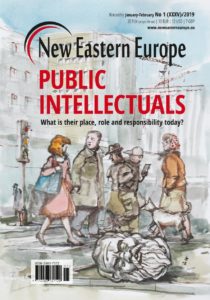
Interview with Marci Shore, associate professor of history at Yale University in New Haven, Connecticut. Interviewers: Kate Langdon and Jordan Luber
KATE LANGDON AND JORDAN LUBER: What does it mean to be a public intellectual in 2018?
MARCI SHORE: I can answer this only for myself. For me, it has been important to learn to speak at different registers, to reach out to different people beyond the university and beyond my own academic field. This is a kind of translation: can I express in essence the same ideas, the ones I feel it is most important to convey at a given moment, in different kinds of language? This demands a kind of empathy with the audience, a figuring out of what is and what is not self-evident at a given moment to a given group of people. And it involves taking a risk to leap out of one’s disciplinary comfort zone.
January 2, 2019 -
Jordan Luber
Kate Langdon
Marci Shore
-
InterviewsIssue 1 2019Magazine
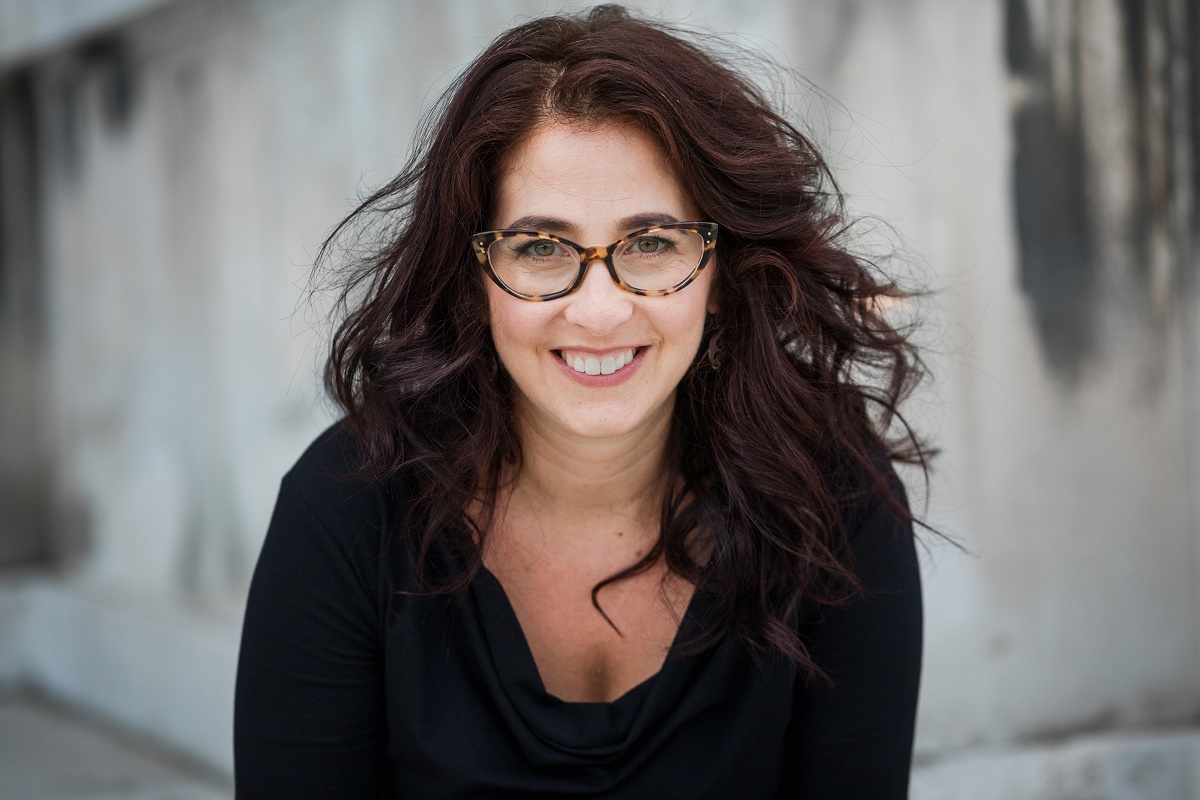
Photo by: Rostyslav Kostenko
I am definitely not saying that I always do this well, that I always find the right register and connect with listeners (or readers), or that I manage to fulfil this role at all, but I do try.
Speaking to a broader public also involves negotiating the relationship between the Wissenschaftlich (scientific, scholarly) and the normative in a more explicit way. The ideal of scientific detachment and objectivity long implicit in the notion of scholarship, of Wissenschaft (scholarship/science), is much harder to preserve in its purity in the public sphere: non-specialists want to know what all this information means, and why it matters. And it is very hard to express meaning in a way that is purged of any ethical implications. To appear on stage, so to speak, is to take a moral position.
Consider Aleksandr Dugin, the controversial fascist Russian philosopher: his words and ideas have impacted Russian society and influenced the policies of Vladimir Putin. But should we call Dugin a public intellectual? Is some kind of liberalism and a concern for every individual’s humanity – to which someone like Dugin appears to stand opposed – fundamental to the definition of a public intellectual?
We are making up categories and definitions here as we go, and I am not sure that the categories (how we categorize Dugin, for instance) are what matters most. In any case, I do not think that we can say that to be a public intellectual means to be on the side of the good. And I think Dugin does count as an intellectual (someone who has read a lot of books, who has studied literature and philosophy quite seriously, who has learned foreign languages) who is speaking to a broader public. I would contrast him in this sense to someone like Steve Bannon, who is speaking to a broader public, but whom I would not call an intellectual at all. The person who has seriously researched these figures and would have more developed ideas about how to categorize them is Anton Shekhovtsov, author of Russia and the Western Far Right: Tango Noir.
Our tendency to identify “public intellectual” with liberalism is a bit like our tendency to identify “democracy” with liberalism. In reality “the public” – the majority – can (and often enough does) decline to choose liberalism.
Are there differences between public intellectuals in the East versus the West? If so, what are they?
The American tradition is very different from the European one, including both Western and Eastern Europe. To generalise: an anti-intellectual sentiment or perhaps rather, mood, has long been dominant in the United States. Traditionally, Europe has had intellectuals; we have had professional academics. When I was working on my first book, Caviar and Ashes: A Warsaw Generation’s Life and Death in Marxism, 1918-1968, I was captivated by these young avant-garde poets of the 1920s who sat in a café and chain-smoked and drank black coffee and absolutely believed that the world moved on what they said to one another there. And the extraordinary thing was that, to a nontrivial extent, they were right.
Later, what most dramatically separated intellectuals in Eastern and Western Europe were their experiences during and after the Second World War. To be a “fellow traveller”, a communist-sympathising intellectual in Western Europe in the 1950s was very different than to be a fellow traveller or party member who helped usher in Stalinism in one’s own country. And to oppose communism then generally meant to be a victim of Stalinist terror.
Later more than a few of those Stalinist intellectuals would become dissidents. Many of them spent time in prison. In an interview in the 1960s with the editor Antonín Liehm, the Czech writer Jiří Mucha said, “Actually, prison is an important experience, too, just like war. It’s simply a writer’s postgraduate education.” And think about people like Václav Havel and Adam Michnik and Jacek Kuroń: some of their best texts were written in prison. And those were tremendously influential texts. In the communist period, intellectuals took great risks to read those texts, to distribute them underground, to copy poems by hand. Irena Grudzińska-Gross remembers being 20 years old in 1967 and staying up all night reading Aleksander Weissburg-Cybulski’s Wielka czystka (The Great Purge) about his experience in Soviet prison. The copy she was reading had been smuggled from Paris, and Irena read all 600 pages in a night and a day because so many others were waiting to read that one copy.
During a lecture in Prague in the mid-1990s, the Slovak writer Martin Šimečka, son of the dissident philosopher Milan Šimečka who sat in prison in the 1980s, spoke about how for an intellectual, being in prison was in some sense its own kind of privileged position. It meant, after all, that those in power cared deeply about what you wrote, that a writer was powerful enough to be threatening to the regime. This is an important observation. In some sense the real crisis of public intellectual life came, paradoxically, after the fall of communism. Suddenly censorship was lifted, but no one cared about reading anymore. Looking back on 1989, some 20 years later, Adam Michnik wrote, “Today we ask: What has happened to us? Why have we changed the human rights charter into a credit card and why do we reach less willingly for Joseph Conrad’s Lord Jim or Albert Camus’ The Plague, the books of our dreams in those years, than for our own check books, the books of our dreams in these times?”
On November 11th 2018, I was in Łódź for a forum called “Freedom Games”. During a panel on historical policy and cinematography, actors and filmmakers spoke about attempts of the ruling party Law and Justice to exert control over film and media and reintroduce censorship. Agnieszka Holland, the great Polish director, commented just slightly satirically about the attention now being paid to censored films and filmmakers: “The period of the Civic Platform party (the central-liberal party under Donald Tusk that had previously been in power in Poland) was just terrible for us; the government took no interest in me at all.”
Today almost everyone has access to information, all the more so because of the internet. Additionally, the West remains largely prosperous and free. How can public intellectuals overcome such communication saturation and a certain level of social complacency to get their messages out in this era?
This is the million-dollar question to which I am afraid I have no magical solution. I certainly feel the epidemic attention deficit disorder. The quantity of communication is so overwhelming that very few people remain able to focus. My intuition would be to say that intellectuals need to compete in quality, not quantity. We need to resist temptations toward graphomania. We need to resist the pressure to produce more material faster and faster. We should not send anything out to press – be it online or in print – until we are ready to take responsibility for every word.
In the 20th century there was an unquestioned intellectual and moral elite. That is not as clear anymore. Is this level of diffusion of public debates better or worse for the advancement of liberal causes?
This is not an easy yes-or-no question. It relates, too, to the fact that democracy and liberalism are not the same thing. I am saying this from the former imperial capital of Vienna and it is worth remembering that in the Habsburg period it was precisely when the franchise expanded that the liberals were voted out of power.
What I worry about most in my own country is not that so many people are now able to participate per se, but rather that in so much of the country our public education system is so disastrously weak and unfunded. Education really, really matters. People can learn to read and think and empathise, but there has to be an investment in education. We have public schools in the United States that are not safe for children to walk into – that are dilapidated, unsanitary, demoralising and plagued with violence.
What can be done to support public intellectuals and an honest debate? How can we reverse the trend of marginalisation and irrelevance they have faced over the last 80 years, especially since “the end of history” of the early 1990s?
In 1935, having been stripped of his status in Germany as a “non-Aryan”, the philosopher Edmund Husserl came to Prague to give the lectures he could no longer give in his own country. The thinness of Enlightenment rationality had rendered it vulnerable to irrationality, Husserl said, now bringing about a descent into barbarism. He believed that only the philosophers could save us now. In 1966, more than 30 years after his own decision to join the Nazi party, Husserl’s erstwhile student Martin Heidegger told Der Spiegel, “Nur noch ein Gott kann uns retten.” (“Only a God can still save us.”) Today I find myself thinking, “Only the journalists can save us now.”
We need to return to empiricism; that is what grounds us. Barack Obama, speaking this year in Johannesburg, expressed his sense of bewilderment at the present untethering from empirical reality. “We have to actually believe in an objective reality,” he said. “If I say this is a podium and you say this is an elephant, it’s going to be hard for us to co-operate.”
I love philosophy and I love theory. That said, when I talk with my graduate students about their dissertation projects, I tell them that the empirical has to come first. There has to be a narrative, a story that happened. First, we have to let the empirical provoke our theoretical questions. Then, we have to be unafraid to pose questions to which we do not yet have answers, to which there are no unambiguous answers. Thinking is much more about asking questions than providing answers.
We are now at the five-year anniversary of the Maidan. How have the revolution’s ideas remained pervasive in Ukrainian society over this time? As Ukraine struggles with its legacy of corruption, the lingering effects of totalitarianism, Russian political interference and war, and western apathy, can those human values embodied in the Maidan succeed politically and socially? How do you feel about Ukraine’s future?
I am terrified about all of our futures. In the past five years since the Maidan, Ukraine has not become a liberal democracy, but the United States has become a kleptocratic oligarchy. This was hardly the desired direction of influence, so to speak.
That said, I do not think this disappointment negates the moment of the Maidan. When I talk to Americans about the Maidan, they often ask why it was called the “Revolution of Dignity”. I answer by going back to Kant: “Whatever has a price can be replaced by something else as its equivalent, on the other hand, whatever is above all price, and therefore admits of no equivalent, has a dignity.” This was the foundational assumption of Kant’s ethics: A human being – a person – does not have a price. A person is not replaceable or exchangeable. A person has dignity. The Maidan was a revolt against произвол (proizvol, arbitrariness tinged with tyranny, capriciousness), against being treated as an object, not a subject, as a thing that could be bought and sold and not a human being. And it was the moment of assuming responsibility for one’s subjecthood. For those who participated, I think it was an existentially transformative experience: it changed people’s souls, like Solidarity in its time in Poland. And I do not think that ever completely goes away.
What is Ukrainian identity like five years after the Maidan? How are public intellectuals, especially younger ones who have only emerged in the past five years, playing a part in this project?
I am not qualified to speak for them, all the more so as I do not live in Ukraine. I can say that when I am there and I meet with students and graduate students and journalists I am struck by the talent and energy and commitment on the part of so many of them. In September I gave a lecture at Dnipro National University, in eastern Ukraine (in such bad Russian that if no one present ever wanted to use the Russian language again that might well be my fault, or perhaps could be considered my own inadvertent contribution to Ukrainian-language promotion). The students were incredibly and generously attentive, and asked very perceptive questions. Afterwards a doctoral student in history wanted to talk to me about the concept of Grenzerfahrung (border experience). He told me he was writing his dissertation about the Ukrainian Insurgent Army (UPA) in the 1940s. The history of the UPA is in the very centre of historical politics: decommunisation laws in Ukraine have declared it a criminal offense to deny the legitimacy of “the struggle for the independence of Ukraine in the 20th century”. Members of the UPA did indeed struggle ferociously for Ukrainian independence; they also carried out gruesome acts of ethnic cleansing against Poles in Volhynia. The debate about whether they were heroes or war criminals depends on whose lives one considers more valuable, and I am sceptical that such a debate will ever lead us anywhere except to a moral impasse. And now this young historian was telling me about his research on the UPA partisans. His project, though, was not about proving they were either war criminals or national heroes; rather, he was working on an Alltagsgeschichte (history of the everyday) of their life in the forest. How did they organise their lives without sanitation facilities? In what ways did living in the forest affect family relations and gender roles? Was love for a woman seen as a weakness at a time of battle? This, I thought, was a great dissertation topic, one that really does push us beyond the (often politically instrumentalised) politics of historical memory and towards a deeper understanding of the past, and of the human condition at times of extremity.
Marci Shore is an associate professor of history at Yale University. Her most recent book, The Ukrainian Night: An Intimate History of Revolution, was published by Yale University Press in 2018. Her wide focus includes 20th century Central and Eastern Europe, Jewish history, philosophical history, and post-communist transformation. In 2018 she received a Guggenheim Fellowship.
Kate Langdon is finishing her studies as an Erasmus Mundus scholar in the European Politics and Society: Václav Havel Joint Master Programme at Jagiellonian University in Kraków, Poland. She is also an editorial intern at New Eastern Europe.
Jordan Luber is finishing his studies as an Erasmus Mundus scholar in the European Politics and Society: Václav Havel Joint Master Programme at Jagiellonian University in Kraków, Poland. He is also an editorial intern at New Eastern Europe.