
Can Israel accept Russia in its backyard?
Military intervention in Syria put Russia in Israel’s neighbourhood starting in 2015. This, on top of the 1.4 million Russian-speaking Jews already living in Israel, has made for an interesting dynamic in Russian-Israeli relations.
For contemporary Israel, Russia is not just a country that is more than three thousand kilometres away: Russia is already in Israel. Having absorbed more than one million “Russian” Jews, Israel is not the same anymore. What is more, the Middle East has, again, become a strategic region for the Kremlin. By intervening in neighbouring Syria, and backing Bashar al-Assad in his struggle to stay in power, Russia has made spectacular inroads into Israeli national security debates.
January 2, 2019 -
Agnieszka Bryc
-
AnalysisIssue 1 2019Magazine
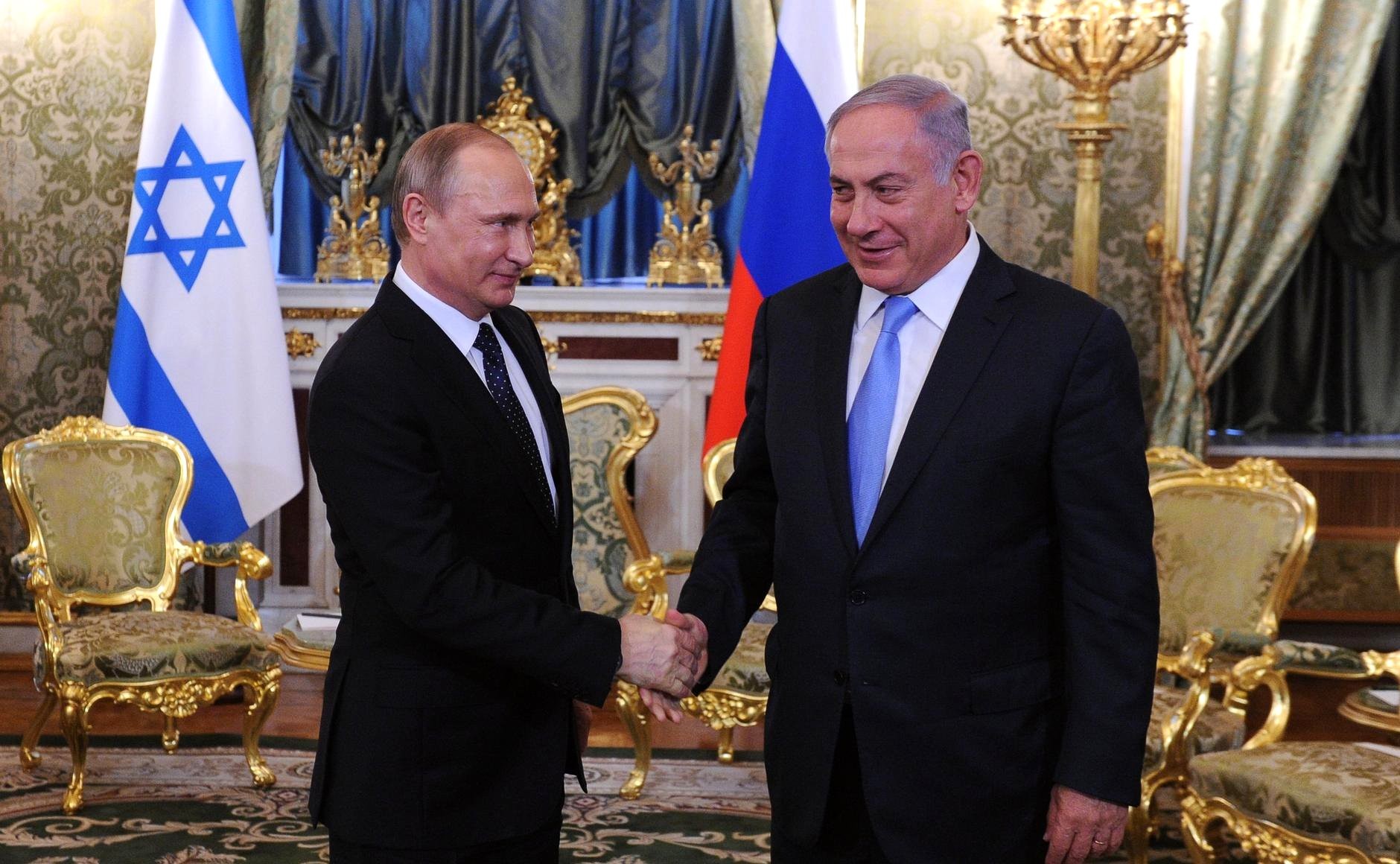
The Israeli government has declared that both countries have a fundamental interest in continuing good relations. The last thing Netanyahu needs is a confrontation with Russia. Photo: Office of the President of the Russian Federation (CC) http://en.kremlin.ru/catalog/persons/40/events/52123/photos
Russia now has to be taken into account in any Israeli decision taken against its enemies, some of which are Russian allies. All told, Russian-Israeli relations are like a Matrioshka – multi-layered, complex and full of paradoxes.
Russia(ns) in Israel
Among the Israeli population of eight million, 1.4 million are Russian-speaking Jews. The newcomers from the former Soviet Union form the largest immigrant group, who came during the aliyah (meaning a return to Israel) during the collapse of the Soviet Union, and afterwards from Russia and other post-Soviet republics. Soviet Jews were immigrating to Israel throughout the 1960s and 70s as well. The reasons behind immigrating to Israel were many, but two stand out. First, Israel was offering better economic prospects. For most of the Soviet Jews, the alternative was clear – either to stay in a collapsing country or to take the chance elsewhere. Second, for those who, to a large extent, recently discovered their Jewish heritage, immigration was primarily an aliyah, a return to their Jewish ancestral home.
Russian-speaking Jews have influenced every aspect of Israeli life. What they brought with them was primarily culture – art, theatre, music, a new sense of entrepreneurialism and an East European mentality. Since nearly 60 per cent of those who “returned” held a degree from a higher educational institution, Israel instantly became a country with the most artists and classical musicians per capita.
Moreover, it is believed that Russian immigrants contributed to Israel’s economic miracle of the 1990s. They were mostly middle class and held high-status jobs. Nevertheless their professional and educational profile was not in demand within the small Israeli job market. As a result, qualified specialists were in excess and a majority of them ended up in the service industry working as cashiers, gatekeepers or cleaning staff. Nevertheless, “Israeli Russians” not only earned their own living, but they were quite productive and inventive and thus helped develop the Israeli economy.
There is still the question of whether Russian-speaking Jews have become more Israeli or remain more Russian. To make matters more complex, according to traditional Judaism one-third of those who have “returned” would not be considered Jewish. However under the less restrictive formal requirements of the Israeli Law of Return, they were granted Israeli citizenship. On the one hand, they have successfully integrated into Israeli society. Yet on the other hand, many choose to stay culturally separate. Therefore the “Russian Street”, with numerous Russian-speaking dailies, magazines, clubs, restaurants and shops, resembles a mini-Russia in Israel. This phenomenon is well-reflected in social research and polls. According to the Central Bureau of Statistics, 72 per cent of immigrants from the former Soviet Union communicate predominantly with other Russian speakers. At the same time, 85 per cent feel Israel is their home and some 96 per cent say they will remain here. However, 67 per cent of the immigrants feel that Israelis view them as “Others” – as “Russians”.
Such feelings are not unwarranted, as one-third of Israelis have expressed negative attitudes towards Russian-speaking immigrants. They doubt their Jewish identity and think that “Russians” bring crime and alcoholism to the country. These kinds of stereotypes are amplified by the fact that over 30 Russian oligarchs have found safe haven in Israel. Some of them were drawn by the tax breaks for new immigrants; others sought the advantages of possessing an Israeli passport, which offers protection against the threat of extradition or visa-free entry to the European Union.
Some of those oligarchs include Roman Abramovich, the famous Chelsea Football Club owner, Arkady Gaydamak, the owner of the popular Beitar Jerusalem football club, and Valery Kogan, who owns Moscow’s Domodedovo Airport and is an alleged ally of the Russian president, Vladimir Putin.
Political influencers
While individual Russian tycoons yield influence over Israeli business and politics, the one million plus Russian-speaking community makes for a powerful voting bloc in elections. Since the beginning, they set up primarily ethnic political parties, like the Zionist Yisrael Ba Aliyah (literally Israel on the Up) headed by Natan Sheransky, or the secular, right-wing nationalist Yisrael Beiteinu (Israel Is Our Home) party led by another immigrant from the former Soviet Union, Avigdor Lieberman. In time, however, their political preferences have diversified and they are now present across the whole political landscape, from the far right to the moderate left.
Undoubtedly the most prominent politician of post-Soviet origin is Avigdor Lieberman, who has achieved political success as a small but valuable partner of the ruling Likud party; he is also a personal ally of Benyamin Netanyahu, the prime minister of Israel. On several occasions Lieberman was nominated for governmental posts, but the most prestigious came in 2016, after years of being in political limbo due to a long list of allegations including bribery, money-laundering and breach of trust. From 2016 until his resignation in late 2018, he served as defence minister, which is the second most powerful office (after the prime minister) in the Israeli government.
Lieberman is recognised as a hardliner. He is well-known for his fierce criticism of any future peaceful solution with the Palestinians and for being zealous in terms of broad military action against Hamas; he is also in favour of the expulsion of Arab citizens from Israel. He is known for supporting the execution of Palestinian terrorists, an idea that was fiercely debated in Israel. Furthermore, he is one of most prominent politicians living in the West Bank, thereby physically backing Jewish settlements in the occupied territories. His hawkish stance, combined with his post-Soviet origin, has made him a convenient channel to contact the Kremlin. Lieberman has publicly praised Putin as a strongman who “truly understands the threat posed by Islamist extremism” and has endorsed Russia’s controversial 2011 parliamentary elections as “free and democratic”.
At first glance, pro-Russian attitudes like these would seem to be common for Russian-speaking Jews. Yet according to a 2015 poll conducted by the Public Opinion Research of Israel, the “Russian Street” is politically distanced from the Kremlin. As figures show, 46 per cent would appreciate strengthening Russo-Israeli relations but not at the cost of Israeli-American relations. Simultaneously 20 per cent warn against Russia as being Arab-biased. Regarding their priorities, the top one is national security (85 per cent), followed by prosperity (81 per cent), the liquidation of Hamas and Hezbollah (79 per cent), housing (77 per cent) and high prices (74 per cent). Under the surface, it seems that Russian-speaking immigrants share a dual Jewish-Russian mentality. Contrary to Arab immigrants in the West, they do not feel obliged to be loyal to Russia. Consequently, the stereotype of being a fifth column of the Kremlin is rather false.
Russia behind the border
Military intervention in Syria put Russia in Israel’s neighbourhood in 2015. Choosing among bad and worse options – Assad’s survival with Russian patronage or Iranian presence via their proxies (Hezbollah and Shia militias) operating in close neighbourhood – Israel had only one course of action in favour of accepting a Russian presence beyond their borders. Netanyahu regularly visited Putin to discuss the most current issues and to defend Israel’s interest. Russia, beyond the border of Syria, is likely to stay for decades. As soon as Russia began its intervention, Efraim Halevi, an ex-chief of Mossad, Israel’s intelligence agency, warned that “Russia has entered Syria to establish itself and remain there for a long time”.
Russia’s military and political presence in Syria, combined with Israel’s interest to deter any terrorist group (Hezbollah) or Shia militias from entering the Golan Heights, has motivated both countries to find a channel of communication and operational co-ordination to avoid any confrontation. A “de-confliction mechanism” has been operating at multiple levels. Nevertheless it is always a matter of time until something happens. The first crisis broke out in September 2018 when Syrians downed a Russian jet, mistaking it for an Israeli one. Netanyahu, of course, expressed his sorrow, but the Kremlin’s reaction was acute. Although Putin did not downgrade the bilateral relations, he ordered a transfer of advanced S-300 ground-to-air missiles to Syria which could challenge any Israeli air operation in Syria. The S-400 system was operating in Syria prior to this; however it was only used by Russia and was not used against Israel. The Israeli government has declared that both countries still have a fundamental interest in continuing good relations, but the risk of Moscow repaying Israel is serious. Needless to say, the last thing Netanyahu needs is a confrontation with Russia.
Kingmaker in the Middle East?
By risking a conflict with Russia, Israel could jeopardize its improved relations in the Middle East. Israel understands that Russia’s potential is much greater than its own, but in terms of military the Israeli Defence Force would be able to manage a Russian challenge. Politics is by far a different story.
Since 2015, Russia has regained a few outposts in the Middle East, not to mention Syria. Its strategy is based on the assumptions that the vacuum left by the United States’ withdrawal – or lack of interest – is an opportunity that should not be wasted; that countries in Middle East prefer hawks rather than doves; and finally that, contrary to the West, Russia does not abandon its allies. All this has allowed Moscow to gain respect and favouritism of many Middle Eastern powers. Russia, in other words, is able to complicate Israeli politics if necessary.
The Jewish state has been challenged by Russian-Iranian co-operation. Jerusalem is worried about Teheran’s ongoing effort to arm itself with nuclear weapons and then develop a missile programme that would generate a military presence on Israel’s border with Syria and Lebanon. The final step of this process would mean an end of its strategic superiority in the region that would thus neutralise its deterrence capabilities. From Moscow’s perspective, its alliance with Iran is one of the most useful cards to play in the Middle East, but undoubtedly their bilateral relations are overshadowed by a long tradition of mutual fear and suspicion. Additionally, Russia’s backing of Iran is neither unconditional nor unambiguous. Israel can hope there will be a clash of interest between Moscow and Teheran in order to try and attract Russia in security matters or its special relationship with the United States. This type of thinking does make sense because even in Syria there is much room for Russian-Iranian competition. Their views on the future of Syria are the first, but not last, bone of contention.
Second, the Kremlin’s value is a function of the rapprochement of Russia and Turkey, another key non-Arab player in the region. The cooler the relations between Turkey, the United States and Israel are, the more valuable a pragmatic co-operation with Russia is for Israel. Turkey’s ambition in the Middle East has challenged Israel for years. President Recep Tayyip Erdoğan has presented himself as an advocate of Palestinians and spoken out against moving the American embassy from Tel Aviv to Jerusalem. At the same time, Jerusalem understands that there is more competition than co-operation between Russia and Turkey. And, moreover, even if current Russo-Turkish relations are pragmatically warm, there is not enough room in the Middle East and post-Soviet space for two ambitious strongmen. One day their interests are likely to clash again.
Finally, being aware of all of the advantages and risks coming from Russia, Netanyahu plays the Russian card well. First, he has focused primarily on pragmatic issues like security. Thanks to the shared perception of an Islamist terrorist threat since the beginning of the century, a Russian-Israeli rapprochement was always possible. Second, both leaders speak the same realpolitik language and pursue a decidedly interest-led politics, which helps them survive stress tests and avoid a military clash. Third, Israel has managed to develop a strong Israeli identity among the majority of Russian-speaking Jews. Even if Putin refers to “our compatriots” with “our mentality”, it does not resemble the Russian diaspora in Crimea, for example. Last but not least, in Putin’s eyes Israel has many strong cards in its hand, and one of them is priceless – their very special partnership with the United States. At the end of the day, it seems that however Israel faces the Russian puzzle, they will have to be masters in solving it.
Agnieszka Bryc is an assistant professor at the Nicolaus Copernicus University in Toruń, Poland. She is a former member of the board of the Centre for Eastern Studies (OSW). She specialises in Russian foreign policy and Israeli security.