
Text resize: A A
Change contrast

Postcolonialism in the Soviet Bloc

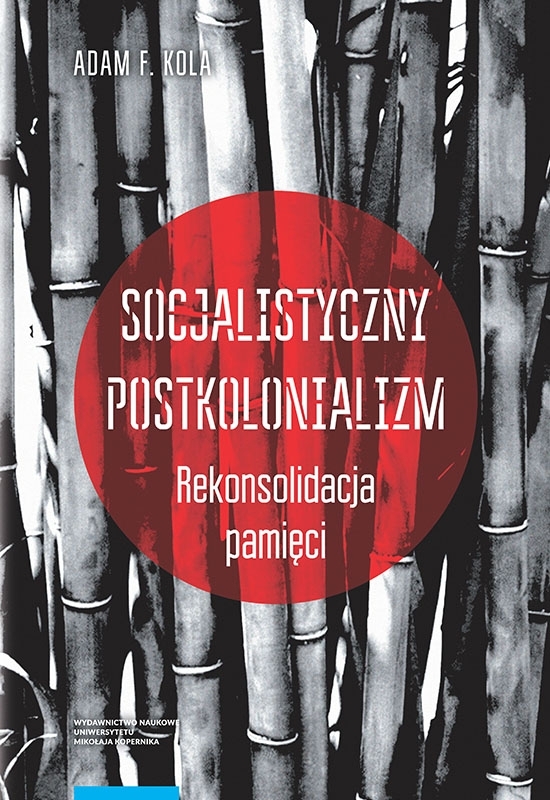
A review of Socjalistyczny postkolonializm. Rekonsolidacja pamięci (Socialist Postcolonialism: Memory Reconsolidation). By: Adam F Kola. Publisher: Wydawnictwo Naukowe Uniwersytetu Mikołaja Kopernika, Toruń, Poland, 2018.

During the latter half of the 1980s I was a student of English language philology and literature at the University of Silesia in Katowice. Through assigned readings we were introduced to the western discourse of postcolonialism, but the lecturers took care to not operationalise these analytical instruments for any research on books and essays written and published in communist Poland or the Soviet bloc. Some conclusions that we could arrive at about our own communist regime might be ideologically dangerous for ourselves and our tutors. When communism collapsed in 1989 and the Soviet Union broke up two years later, the imageries and analytical approaches of postcolonialism suddenly began to make much sense to my colleagues and myself.

November 5, 2018 - Tomasz Kamusella - Books and ReviewsIssue 6 2018Magazine

We began toying with the collocation of “post-communist postcolonialism” in order to describe the then as yet nameless huge socio-political changes, which nowadays are referred to as (post-communist) systemic transition in the literature. But this discourse of post-communist postcolonialism never took off. Most of us were busy finding gainful employment or determined to continue education and research abroad, that is, in the West. Meanwhile in Central Europe’s post-communist states the discourse of (re-)joining the West (that is, NATO and the European Union) achieved more traction among politicians in the press and in scholarship.

Forgotten discourse

During the early 21st century, a conscious scholarly reception of and concomitant reflection on postcolonial literature and discourse commenced in Poland. This is the starting point of Adam F. Kola’s monograph under review. First of all, he was stunned by the derivative quality of Polish engagement with postcolonial studies and its silences on a socialist (communist) version of this discourse prior to 1989. A popular assumption was that in communist Poland there had been little if any serious research on the postcolonial (Third) world and that all the intellectual and political effort was focused on collaborating with or rejecting the Soviet-style communist system. Thanks to his perusal of Polish-language books on Asia and Africa during his childhood and teenager years before the end of communism, Kola serendipitously recollected that Polish authors from the communist “Second” (socialist/communist) world did engage in the discussion on the decolonised areas of the globe. This realisation developed into a years-long research project that finally bore fruit in the form of the volume under review, which is devoted to uncovering and analysing the socialist discourse on the postcolonial situation as conducted in communist Poland.

Kola reintroduces this unduly neglected and forgotten discourse, proving that postcolonial studies in Poland only began around the year 2000 and solely under the influence of western scholarship. His efforts give a temporal and methodological dimension to the field, hence the book’s subtitle: Memory Reconsolidation. The alluded memory is the continuing silence on communist Poland’s postcolonial discourse, which this monograph strives to break. Furthermore, the book also goes in a potentially rewarding direction: instead of following the well-trodden western paths that many postcolonial scholars go down, this work reincorporates postcolonial reflections from the communist period into the general discourse. Obviously the communist reflection on the postcolonial condition was skewed in line with the ideological needs of the Soviet bloc. However, the degree of skewing was not necessarily more than the way in which ideology has continually influenced the way western scholars think about the postcolonial world since the eruption of the unprecedented phenomenon of mass decolonisation in the aftermath of the Second World War.

Kola’s monograph is divided into three parts. The first part on memory outlines the scope of the issues analysed and the theoretical framework employed, and reflects on the processes of forgetting and remembrance in the context of postcolonial studies in the Soviet bloc and communist Poland. I believe that in this part it would be of import to add some material on the self-conscious postcolonial discourse that was independently developed in communist Yugoslavia. On the strength of this discourse and its translation into real-life political action, Yugoslavia became one of the leaders of the Non-Aligned Movement, alongside India. This example would be quite attractive, showing that instead of having to choose between the western or the Soviet blocs, postcolonial countries could opt for socialism – which was not Soviet in its character. Hence, a postcolonial state could disengage from the Cold War conflict which was, in essence, a western (European, “white”) quarrel. I believe that thanks to linguistic proximity, Polish scholars and writers have learnt much about the postcolonial world from books published in Yugoslavia.

Historiography

The second part on history opens with the 1948 World Congress of Intellectuals in Defence of Peace, held in the newly Polish Wrocław (three years earlier it had been Germany’s city of Breslau). The liminal space of the German-turned-Polish lands perhaps attuned the region’s party and intellectual elites to the postcolonial condition and they used this event to boost the legitimacy of post-1945 communist Poland worldwide. Newly founded postcolonial states offered an easier path of gathering international legitimacy for communist Poland than the staunchly anti-communist and anti-Soviet West, self-styled as the “Free World”.

Kola shows that the Polish scholars and writers who engaged in writing about postcolonial countries predictably chose those at the frontline of the confrontation between the East and West – i.e. Korea and Vietnam. The pro-Soviet India was also written about alongside the newly communist China, prior to Mao’s rift with the Kremlin in the 1960s. Interestingly, and perhaps not in communism’s interest in this never-ending strengthening of the unity of communist Poland and the Soviet bloc, some Polish authors engaged in a deepened reflection on the creation of a new state in Nigeria’s secessionist region of Biafra.

Some concepts of Polish historiography also lent themselves to the rather deceptive likening of Polish history to that of postcolonial states. Polish writers, led in this practice by the famous reporter Ryszard Kapuściński (1932-2007), claimed that Poland and the Poles had been colonised by enemy neighbouring powers after the partition of Poland-Lithuania in the late 18th century. Hence the commonality of the Polish and postcolonial experience was ethically deepened by the fact that Poland never had colonies (apart from Poland-Lithuania’s vassal of Courland that did engage in maritime colonial ventures).

Obviously, as Kola rightly points out, Polish intellectuals who supported this normative claim chose to not remember the colonial-style treatment of slave-like serfs in Poland-Lithuania, or the colonial character of the oppression of Belarusians, Jews and Ukrainians in interwar Poland. Most interestingly, Kola emphasises that despite the isolating effects of the Iron Curtain, Polish scholars in many ways continued to engage in research conducted both in the West and East. Among them, Marian Małowist (1909-1988) contributed novel insights into the comparative history of colonialism and, by extension, of the postcolonial world. Immanuel Wallerstein acknowledged the importance of Małowist’s findings and models for the development of his own world-systems theory.

The monograph’s third and final part is devoted to Polish-language fiction and non-fiction on postcolonial countries and themes written during the communist period. The selection of texts is a bit subjective and the omission of Zbigniew Domarańczyk’s Kampucza, Godzina Zero (1981, Kampuchea: Hour Zero) is surprising given that it was apparently the first book ever written on the aftermath of the Cambodian Genocide. Domarańczyk was a member of the first group of journalists (all from the Soviet bloc) allowed into the newly post-Red Khmer Cambodia. I also wonder about the status of Polish-language literature written by Holocaust survivors in Israel. Was it not a genuine form of participation in the postcolonial condition, rather than a reflection of it?

Cultural imperialism?

Kola’s monograph breaks new ground on several counts. First of all, he recovers the forgotten Polish communist discourse on the postcolonial condition. Second, he points to the importance of the inclusion of sustained reflection on similar issues that developed in the Soviet bloc countries (and – I would propose – also in the Soviet Union’s national republics) in today’s global postcolonial discourse. Finally, and perhaps most importantly, he reintroduces western postcolonial scholarship to some methodological roots that were developed in communist Poland.

Because of its unique aforementioned achievements, I hope this book will be soon translated into English so that it can be read by the broader community of scholars active in the field of postcolonial studies. Otherwise the communist-period roots of the Polish and global postcolonial discourse may be forgotten again.

On a final note, I wonder to what degree postcolonial studies may be a concealed form of cultural imperialism, given the fact that the vast majority of contributions in the field are written in colonial languages (i.e. English, French, German, Portuguese, Russian and Spanish) and published in former imperial metropolises (Britain, France, Germany, Spain, Portugal, Russia, and the United States). Hence, the current and communist-period development of postcolonial studies in Poland and other communist and post-communist states in Europe appear to amount to quite an unreflective emulation of the predominantly western-oriented postcolonial discourse. For instance, why should it be considered of more value to write about the postcolonial condition and remember older works on the subject composed and published in Albanian, Bulgarian, Czech, Hungarian, Polish, Romanian, Serbo-Croatian, Slovak, or Slovenian than in Chinese, Hindi, Kamba, Kinyarwanda, Korean, Lao, Punjabi, Sinhalese, Swahili, Tamil, Vietnamese, Xhosa, or Zulu? Is this urge to show that the countries of the Soviet bloc also contributed to the postcolonial discourse a reflection of the West’s neo-imperialist insistence that “real” scholarship is only possible at western universities, with the use of western languages? Would it not make more sense for postcolonial scholars in western and post-communist states to master the languages of the cultures they aspire to study instead of reinforcing the neo-imperial tradition of using works in colonial languages only? That is why hardly anyone objects to a monograph on the Rwandan Genocide based on material solely in French and English, while it is unacceptable to do research on communist Poland without the use of documents in Polish. Perhaps the author of this valuable work will consider including a reflection on these burning meta-methodological issues for the English translation of this work.

Tomasz Kamusella is a Reader in Modern Central and Eastern European History at the University of St Andrews in Scotland. His latest monograph Ethnic Cleansing during the Cold War: The Forgotten 1989 Expulsion of Turks from Communist Bulgaria was just published by Routledge.

Partners

Terms of Use | Cookie policy | Copyryight 2025 Kolegium Europy Wschodniej im. Jana Nowaka-Jeziorańskiego 31-153 Kraków
Agencja digital: hauerpower studio krakow.
We use cookies to personalise content and ads, to provide social media features and to analyse our traffic. We also share information about your use of our site with our social media, advertising and analytics partners. View more
Cookies settings
Accept
Decline
Privacy & Cookie policy
Privacy & Cookies policy
Cookie name Active
Poniższa Polityka Prywatności – klauzule informacyjne dotyczące przetwarzania danych osobowych w związku z korzystaniem z serwisu internetowego https://neweasterneurope.eu/ lub usług dostępnych za jego pośrednictwem Polityka Prywatności zawiera informacje wymagane przez przepisy Rozporządzenia Parlamentu Europejskiego i Rady 2016/679 w sprawie ochrony osób fizycznych w związku z przetwarzaniem danych osobowych i w sprawie swobodnego przepływu takich danych oraz uchylenia dyrektywy 95/46/WE (RODO). Całość do przeczytania pod tym linkiem
Save settings
Cookies settings