
Past as weakness or strength? The shared history, strained present and uncertain future of Belarus and Lithuania
How can barriers between two historically close countries like Belarus and Lithuania be lowered or eliminated? What are the prospects of improved relations between the two states? Ultimately, closer ties between ordinary Belarusians and Lithuanians could serve as the best guarantor of closer political relations.
During his September 2018 visit to Vilnius, Pope Francis quoted Lithuania’s national anthem and encouraged people to “draw strength from the past”. He reiterated what is often common knowledge: for one to look to the future, one must first know and make peace with the past. In theory the same logic could apply to Lithuania and Belarus, two neighbours that, over the centuries, have spent more time together – that is, belonging to (or being ruled by) the same state – than apart.
November 5, 2018 -
Dovilė Šukytė
-
Articles and CommentaryIssue 6 2018Magazine
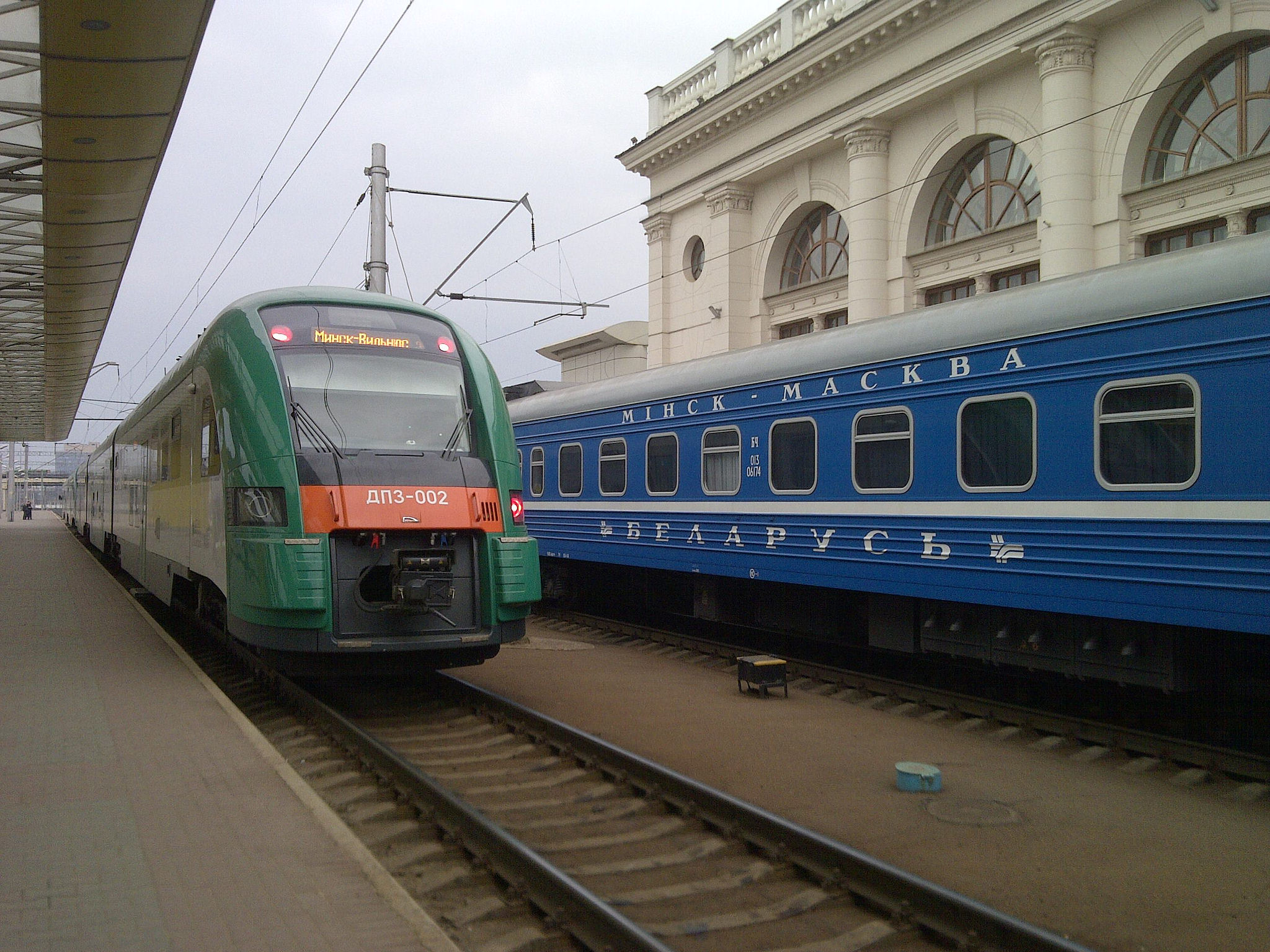
Photo: Konrad Adenauer Stiftung (CC) www.flickr.com
The process of recovery from their shared past hardships, notably during the Soviet period, could provide fruitful grounds for co-operation. Unfortunately, in the context of the current strained relationship between the two states, the shared past is not utilised as a source of unity.
Barriers
Several barriers separate the two countries. The first one, which actually presents the fewest problems, is the 679 kilometre shared border: a well-fenced and clearly demarcated barrier that serves as the external boundary of the Schengen zone as well as NATO. In fact, Lithuanian businesses have found it to their advantage as they can produce goods on either side of the border and thus export easily to the EU or to members of the Eurasian Economic Union (EEU), especially Russia. The second barrier, one far more salient in terms of political relations, is the rift in democratic values, reflecting the contrast between the democratic safeguards in Lithuania and the disregard of human rights in Belarus which consistently restricts the latter’s progress. Finally, the last barrier, which can be called a fog of oblivion, prevents people-to-people contact or understanding from emerging – even as the number of cross-border visits (to take advantage of opportunities such as shopping or entertainment) increases. Ultimately, closer ties between ordinary Belarusians and Lithuanians could serve as the best guarantor of closer political relations between Minsk and Vilnius; the continuing absence of such ties only contributes to the ongoing crisis in bilateral relations.
How can barriers between these two historically close countries be lowered or eliminated? And what are the prospects of improved relations between the two states? First, to return to Pope Francis’ call to find strength in the past, throughout history there have been many positive examples of ties between Belarus and Lithuania. Perhaps the most symbolic is language. For centuries both states were part of the Grand Duchy of Lithuania, which used Old Belarusian (also known as Ruthenian) as one of the main administrative languages until the late 17th century. While Lithuanian was often spoken, legislation – including the polity’s main legal code, the Lithuanian Statutes – was written in Old Belarusian. However, in the ensuing two centuries of Russian imperial rule, both the Belarusian and Lithuanian languages were targeted by Moscow’s policies of Russification. Civic resistance was widespread (for example, illegal Lithuanian-language books were secretly printed and then smuggled in from Germany’s East Prussia region), later flowering in brief periods of independence, beginning in 1918.
Absorbed into the Soviet Union after only a year (compared to the 22-year period of statehood enjoyed by Lithuania), Belarus consequently suffered a greater impact from the renewed wave of Russification; only now are Belarusians reclaiming their language and increasing its use in the private and public spheres.
Whose history?
The revival of the Belarusian language is a part of a more ambitious process, fostering the resurgence of a more distinctive Belarusian identity, supported by President Alyaksandr Lukashenka in order to reverse centuries of Russification and reduce the country’s dependence on Russia. However, in drawing upon non-Russian historical elements, notably by emphasising the Belarusian character of the Grand Duchy of Lithuania, this campaign has, in fact, increased tensions between Minsk and Vilnius. As a result, when visiting the Duchy’s ancient stronghold at Trakai Castle near Vilnius, Belarusian students frequently argue with their Lithuanian tour guides that the polity’s rulers were Belarusian, not Lithuanian, in origin.
This argument is based on the above-mentioned fact that the Old Belarusian language was the administrative tongue of the Grand Duchy. For Lithuanians, by contrast, it is ancestry that is of greater importance. The Grand Duchy arose from Baltic-speaking tribes united by King Mindaugas in the 13th century. Moreover, the remembered past experience of statehood, both of the Grand Duchy and of the interwar Republic of Lithuania, helped fuel Lithuanian resistance to Soviet occupation and maintained hope that freedom and independence would one day be regained.
However, it is certainly true that as the Grand Duchy became more idealised over time, Lithuanians neglected the role that Slavic, especially Belarusian, people and regions played in contributing to its development and prosperity. Now, at least, Lithuanians learn about this role by walking the streets of Vilnius’s Old Town and seeing memorial plaques to figures such Francysk Skaryna, who established the first printing house in Vilnius and published the first book in what would become the Belarusian language in 1522. For Belarusians, the existence of such memorials ensures that the mark on the Grand Duchy left by their ancestors will not soon be forgotten.
The Silva Rerum series of books by the Lithuanian author Kristina Sabaliauskaitė is another way in which Lithuanians have slowly begun to lift the fog of oblivion and learn more about their joint heritage with Belarus. One book in the series focuses on the Grand Duchy’s influential noble Radziwiłł family, whose main residence was Nyasvizh (Nesvizh) Castle in present-day Belarus. Yet despite such efforts, as well as technical work like the co-operation between Belarusian and Lithuanian archaeologists in preserving the castle, this joint history remains largely unknown within either Belarusian or Lithuanian societies. One way forward would be for historians – from both sides – to review the Grand Duchy period and agree on history textbooks that could be used in the two countries; after all, the era contains more than enough history to absorb.
Border issues
The current level of border traffic between Belarus and Lithuania offers another prism through which to view people-to-people relations, while digging deeper into the roots of bilateral difficulties. In general, the establishment of a harder border (with visa requirements enacted by both sides) after Lithuania’s accession to the EU in 2004 had a negative effect on Lithuanians’ desire to visit Belarus; generally, only those with relatives on the other side of the border were sufficiently motivated to endure the bureaucratic hassles associated with obtaining permission to travel. Despite generally lower prices, Belarus was simply unable to compete with other countries that Lithuanian tourists could discover visa-free.
Belarusians, by contrast, are among the leading recipients of Schengen visas and have consistently shown an interest in traveling to Lithuania for purposes including entertainment and shopping. Many young Belarusians also come to study at the European Humanities University, a Vilnius-based Belarusian university in exile. Furthermore, due to the harsh restrictions and controls at home, many Belarusian non-governmental organisations are registered in Lithuania, as are many Belarusian businesses – for instance, IT companies that prefer having a base in the EU’s single market.
In order to ease the border movement of Lithuanian and Belarusian citizens, a local border traffic system was proposed in 2010. Like similar measures in force between Latvia and Belarus, it was designed to facilitate the travel of residents in border areas to maintain family relationships, foster tourism and increase cultural exchanges. However implementation was shelved by the Belarusian side, mainly due to political reasons; Belarus, at the time, was subject to EU-imposed sanctions that were strongly supported by Lithuania. Instead, Lukashenka launched a unilateral visa-free regime for citizens of the EU (and most other) countries visiting Belarus, but not vice versa. For the government in Minsk, this system is more beneficial as it does not offer additional opportunities for Belarusian citizens to travel and spend their hard-earned roubles abroad; on the contrary, it boosts Belarusian tourism by attracting foreigners.
Lithuanians can now take advantage of these programs. One now allows visa-free access for 30 days to those flying to Minsk, while others offer access of up to 10 days to the western Belarusian cities of Hrodna and Brest. For Lithuanians, the prospect of paying premium prices to fly a mere 172 kilometres from Vilnius and Minsk is less appealing than traveling by bus or car to Hrodna, a city rich in the heritage of the Grand Duchy. At the moment, Belarusian pharmacies that offer medicines at prices several times lower than those in Lithuania (while often not requiring prescriptions) are notably attractive to Lithuanian residents.
Lithuania’s commercial engagement with Belarus is far larger – representing the second largest source of foreign capital for Belarusian firms (after Russia). Primarily specialising in wood processing, food processing (such as meat products) and construction, Lithuanian firms have been encouraged to set up production facilities in Belarus thanks to tax exemptions granted by Minsk as well as the prospects of access to EEU export markets (primarily in Russia). Of course, against these advantages must be weighed the risks that business assets can be seized by the Belarusian authorities at any time, given the relative lack of respect for property rights in what is still a largely state-controlled economy.
Landlocked Belarus utilises Lithuanian rail links as well as the port of Klaipėda to export goods outside the EEU. This dependence is actually increasing – with Belarusian cargo accounting for a third of all transit freight in Klaipėda – and the port has recently attracted Belarusian investments in terminal construction and expansion. Lukashenka has mused openly about the possibility of diverting transit shipments to the port of Riga, most recently in September this year when the newly-appointed ambassador to Latvia was given instructions to secure unobstructed access to maritime shipments via Lithuania’s northern neighbour.
Power plays
While previous periods of bilateral political tension were primarily rooted in Lithuanian support for democracy and civil society in Belarus – notably of non-governmental organisations and opposition political parties, as well as the above-mentioned sanctions – it is currently dominated by one issue: the Astravyets Nuclear Power Plant (NPP). Belarus is now constructing the facility at a location less than 30 kilometres from the Lithuanian border and a mere 50 kilometres from Vilnius. Lithuania is exhausting all legal mechanisms to prove that the Astravyets NPP does not meet security requirements and is preparing for Plan B – to halt the selling of Astravyets NPP generated electricity on the Lithuanian market.
To the Belarusian public, Lukashenka presents Astravyets NPP as a key to decreasing the country’s energy and economic dependence on Russia as well as a project that already provides jobs and will generate income from selling electricity. Lithuania is primarily concerned with the NPP’s safety as several construction incidents have already taken place and were not properly communicated, stoking fears whether in the event of an accident an immediate warning would actually be issued to safeguard Lithuanian citizens from radiation exposure. Furthermore, the Astravyets NPP from a Lithuanian perspective is seen as a Russian, not Belarusian, project. It is fully loan-funded by Russia; thus, should Belarus fail to repay annual loans, Russia would take over control. Furthermore, due to existing energy transmission links, electricity produced by the NPP would flood the Lithuanian energy market and jeopardize Lithuanian achievements in reducing dependence on Russian electricity by diversifying energy suppliers.
Paradoxically, both states declare the same aim – to decrease dependence on Russian energy – but there is not even the slightest attempt to co-operate. Mostly, due to a rift in democratic values, Lithuania is of the position that only if Lukashenka ensures free and democratic elections, stops persecution of opposition and civic activists, and upholds basic human rights, closer relations are possible. In September this year at a conference in Tbilisi, the Lithuanian Foreign Minister Linas Linkevičius compared Belarus with Russia and said both countries should be treated the same. The Lithuanian position contradicts the new EU approach, which is to engage and involve Belarus in different co-operation platforms under the EU’s Eastern Partnership (EaP) initiative. Though Lithuania is among the strongest advocates of EaP policies, it has no illusions about a “warm up” of EU-Belarus relations. Lithuanian mistrust is based on lessons from the past, when no matter how open and engaging the EU was, Minsk ended up prioritising its ties with the Kremlin; as a result, progress during co-operation with the EU was set back by cracking down on pro-democratic civic activism.
For Lithuania, Belarus is a country highly dependent on Russian subsidies and loans. Belarusian and Russian security is also closely intertwined. Some experts even believe that in order to remain in power, Russian President Vladimir Putin might push the implementation of the Union State between Belarus and Russia where he would assume the position as Head of the Union. Therefore, even if Lithuanian concerns over the safety of Astravyets NPP would be appeased, it would not spark a new level of mutual trust. As mentioned, a precondition for Lithuanian co-operation is the democratic progress of Lukashenka’s regime.
At this point no concrete recipe for improving Belarus-Lithuania relations can be prescribed. A breakthrough in political relations should not be expected anytime soon. Economic relations, despite Lukashenka’s intimidations, will continue, as it is in the interest of both countries. The most promising area is people-to-people relations, which might be primarily focused on everyday needs such as affordable medicine in Belarusian pharmacies or quality goods in Lithuanian supermarkets; again, however, such a project requires a hitherto unrealized willingness among citizens of both countries to learn more about their joint heritage. Although shared history will not itself lead to an immediate improvement in bilateral political relations, over time it may help lead people (and their political leaders) to choose closer ties.
Dovilė Šukytė is a policy analyst with the Eastern Europe Studies Centre in Vilnius.