
Text resize: A A
Change contrast

The model student, the latecomer and the bully. NATO relations in Eastern Europe

The next NATO summit will be held on July 11-12th 2018 in Brussels. It provides the alliance with an opportunity to uphold or – if needed – potentially update the decisions regarding its relationship with Russia, Ukraine and Georgia. Certainly NATO must assess what it can realistically achieve in today’s relations with Moscow, Kyiv and Tbilisi.

The NATO summit in Warsaw in July 2016 constituted a turning point for the alliance. For NATO’s deterrence and defence policy it was not just a summit. It was the summit. A number of crucial decisions were made including a set of instruments that enhance NATO’s eastern flank. Most importantly, the allies agreed to establish an enhanced forward presence which consists of four multinational battalions in Estonia, Latvia, Lithuania and Poland. NATO also endorsed a tailored forward presence for the south-eastern flank which has been built around a Romanian framework brigade. Moreover, NATO decided to recognise cyberspace as an operational domain – joining land, air and sea – which enables the alliance to better protect its networks, missions, and operations.

April 26, 2018 - Dominik P. Jankowski - AnalysisIssue 3-4 2018Magazine

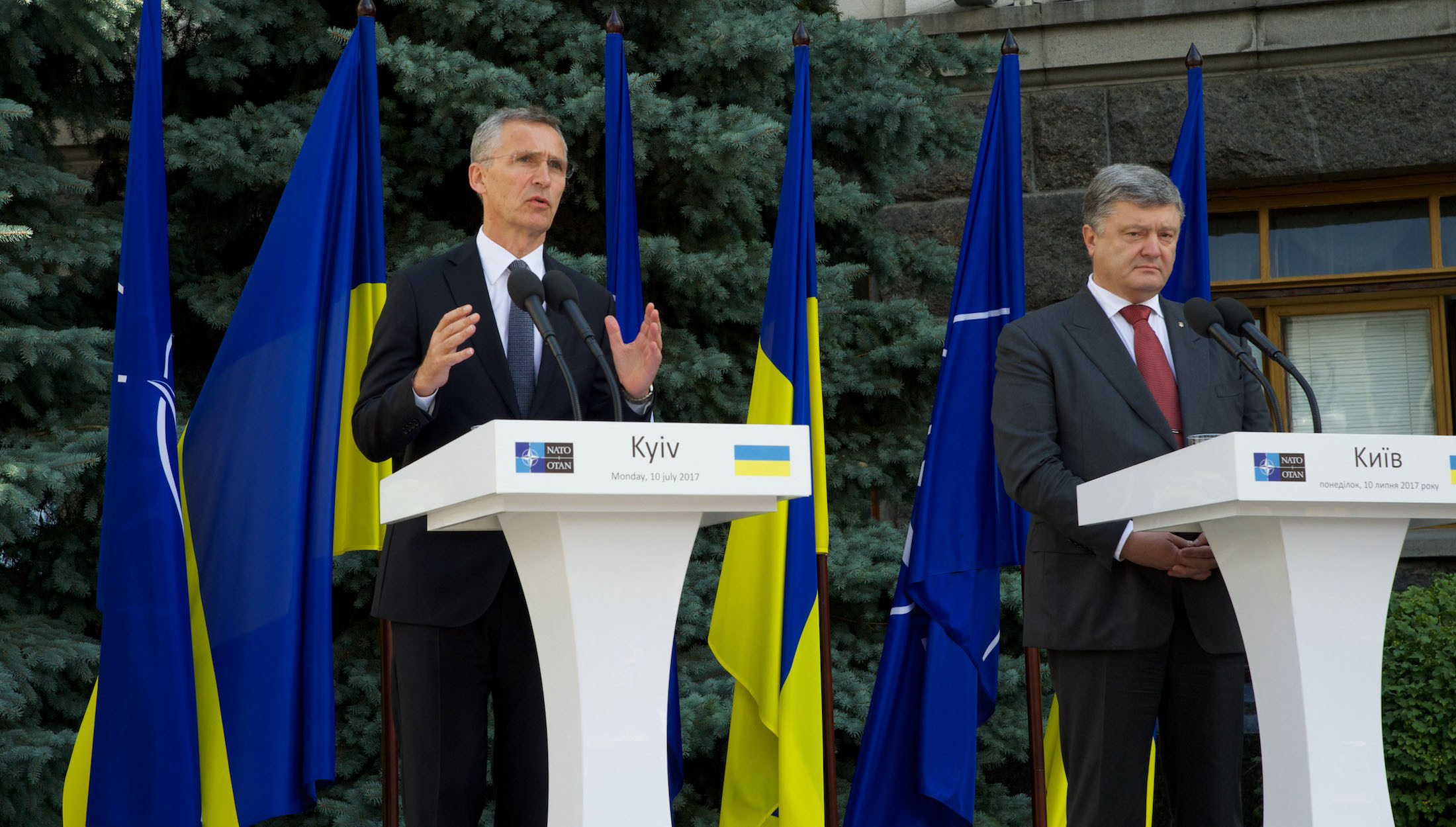
Photo courtesy of NATO

Additionally, the allies committed to continue to enhance NATO’s resilience and develop individual and collective capacity to resist any form of armed attack. Finally, in Warsaw NATO took its relationship with the EU to the next level. A joint declaration identified key areas for expanding bilateral co-operation, including hybrid and cyber threats, supporting partners in defence capacity building and increasing maritime security.

NATO Christmas tree

Even if the Warsaw summit was oriented on collective defence, it did bring new momentum in the alliance’s relationship with eastern partners – Russia, Ukraine and Georgia. In practice, NATO has tried to act as a good, yet principled, school director. It judged the performance of the three countries according to their actual behaviour as well as their commitment to obeying a set of school rules. In short, the summit in Warsaw confirmed that NATO has to deal at the same time with a bully (Russia), a latecomer (Ukraine) and a model student (Georgia).

In an unpredictable security environment there is one constant: every NATO summit delivers a lengthy final communiqué. It is often called the “NATO Christmas Tree”, as it embraces all potential topics from nuclear capabilities to the role of NATO Parliamentary Assembly. Importantly enough, every summit communiqué is based on agreed language and serves as a reference point for any future decisions. With 139 paragraphs the Warsaw summit communiqué was no different. It set out a clear framework on how to deal with the bully, the latecomer and the model student.

Russia was mentioned 56 times in the communiqué and was clearly depicted as a global bully. Allies underlined that for over two decades NATO has endeavoured to build a partnership with Russia, including through the NATO-Russia Council. Yet, Russia’s activities and policies reduced stability and security, increased unpredictability and changed the security environment. Russia breached the values, principles and commitments which underpin the NATO-Russia relationship as outlined in the 1997 Basic Document of the Euro-Atlantic Partnership Council, the 1997 NATO-Russia Founding Act and the 2002 Rome Declaration. NATO clearly pointed out that decisions made at the Warsaw summit were fully consistent with international commitments and therefore could not be regarded as contradicting the NATO-Russia Founding Act.

In Warsaw, NATO was very clear in naming and shaming Russia’s destabilising actions and policies. The list included: the ongoing illegal and illegitimate annexation of Crimea; the violation of sovereign borders by force; the deliberate destabilisation of eastern Ukraine; large-scale snap exercises contrary to the spirit of the Vienna Document; provocative military activities near NATO borders in the Baltic and Black Sea regions and the Eastern Mediterranean; Russia’s irresponsible and aggressive nuclear rhetoric; and repeated violations of NATO allied airspace. In addition, the alliance highlighted Russia’s military intervention, its significant military presence and support for the regime in Syria and the use of its presence in the Black Sea to project power into the Eastern Mediterranean which posed further risks and challenges for the security of the allies.

Fundamental issues

One of the key elements of a future NATO-Russia relationship was defined in paragraph 12 of the communiqué. The allies stressed that while all practical civilian and military co-operation between NATO and Russia remained suspended, political dialogue will continue. NATO set out a concrete framework for such a dialogue. The alliance remained open to a “periodic, focused and meaningful dialogue with a Russia willing to engage on the basis of reciprocity in the NATO-Russia Council, with a view to avoiding misunderstanding, miscalculation and unintended escalation and to increase transparency and predictability”. The allies also noted the importance of keeping the existing military lines of communication open.

In short, the message was unequivocal: the nature of the alliance’s relations with Russia will be contingent on a clear, constructive change in Russia’s actions that demonstrates compliance with international law and its international obligations. Until then, NATO cannot return to “business as usual”. The Russian aggression in Ukraine was also a fundamental issue in shaping NATO’s relationship with Kyiv. In February 2010, Ukraine formalised its non-aligned status as a basic principle of Ukraine’s foreign policy. Even if the practical co-operation with NATO continued, the alliance membership for Ukraine was then taken off the agenda and Kyiv became a latecomer in the Euro-Atlantic integration process. Yet, the Russian-Ukrainian conflict became a game-changer. NATO’s level of political and practical engagement with Ukraine since 2014 has been unprecedented. The summit in Warsaw delivered not only an explicit signal of political support for Ukraine’s sovereignty, territorial integrity and its inherent right to decide its foreign policy course free from outside interference, but also offered a concrete framework for additional practical co-operation.

Ukraine was mentioned in the final communiqué 35 times. NATO decided to support Ukraine in carrying out its reform agenda, including by making the best use of the already existing mechanisms – the Annual National Programme (ANP) and the Planning and Review Process (PARP) – as well as by creating the Comprehensive Assistance Package (CAP). The ANP, which reflects Ukraine’s national reform objectives, is composed of five chapters focusing on political and economic issues; defence and military issues; resources; security issues; and legal aspects. On an annual basis the allies assess progress under the ANP.

In addition, the PARP has helped to guide transformation and reforms in the defence and related security sectors. The 2016 partnership goal package explicitly aimed to support Kyiv’s strategic organisation reform and institution-building for defence and security sector organisations. The PARP has also supported Ukraine in pursuing the reforms mandated in its 2015 National Security Strategy and Military Doctrine as well as the Strategic Defence Bulletin. Finally, the CAP’s aim has been to consolidate and enhance NATO’s assistance aimed at helping Ukraine to become more resilient and to better provide for its own security. As set out in the CAP, NATO decided to continue to advance and implement strategic reforms. The CAP has contained more than 40 areas where NATO has supported Ukraine in reforms conducted by the Ukrainian government.

Practical tools

The NATO summit in Warsaw confirmed that the above activities constitute just a part of NATO’s effort to enhance Ukraine. In fact, the latecomer has an immense list of programmes at its disposal including those assisting Ukraine’s military sector with professional development, education, data sharing and most importantly overall reform efforts. Adding to this list, the allies have also helped launched trust funds to help with the financial side. Since 2014, six of them have been set up. They cover such critical areas as command, control, communications and computers; logistics and standardisation; cyber defence; medical rehabilitation; military career transition; and counter-improvised explosive devices and explosive ordnance disposal.

Finally, the summit in Warsaw addressed NATO relations with its Eastern European model student – Georgia. Every teacher knows that praising good students is an important, yet only a temporary, solution. At some point, they need a tangible reward. In fact in 2016 Georgia had all the practical tools to become a member of NATO, but for political reasons – including the protracted conflict in the Russian-occupied Abkhazia and South Ossetia region – it was not granted a Membership Action Plan. Therefore, allies had a hard nut to crack in Warsaw in order to find added value to NATO-Georgia relations.

Ultimately, NATO encouraged Tbilisi to continue making full use of all the opportunities for moving closer to the alliance offered by the NATO-Georgia Commission, the Annual National Programme, the Enhanced Opportunities Partner status, the participation in the Defence Capacity Building Initiative and the Substantial NATO-Georgia Package (SNGP). The SNGP, approved at the NATO summit in Newport in 2014, has proven to be a success story. In Warsaw, NATO stressed that within the SNGP the Joint Training and Evaluation Centre started work and more than 30 allied and partner security experts were in Georgia supporting security reform efforts, including in areas such as cyber defence, aviation and logistics. Moreover, the Defence Institution Building School was inaugurated and allies decided to provide support to the development of Georgia’s air defence and air surveillance capabilities as well as strategic communications. Finally, NATO and Georgia agreed to deepen their focus on security in the Black Sea region, including in the maritime area.

Limited dialogue

The next NATO summit will be held on July 11-12th 2018 in Brussels. It provides the alliance with an opportunity to uphold or – if needed – potentially update the decisions regarding its relationship with Russia, Ukraine and Georgia. Certainly NATO must assess what it can realistically achieve in today’s relations with Moscow, Kyiv and Tbilisi.

Since 2016 one has not seen a new quality in Russian security and defence policy. Moscow continues to act as a global bully with its aggressive actions, persistent violations of international law, military build-up and political coercion. The list remains long: Ukraine, Syria, the Baltic, Black and Mediterranean Seas, the Western Balkans and the High North. One should also not forget about interference in western countries’ domestic issues, including France, the UK, Germany, the Netherlands, Spain and Poland. On top of this, evidence indicates that Russia was responsible for the use of a nerve agent in the UK on March 4th this year. This was the first offensive use of chemical weapons on alliance territory since NATO’s foundation. In response, Secretary General Jens Stoltenberg withdrew the accreditation of seven staff at the Russian mission to NATO and denied the pending accreditation request for three others. NATO also reduced the size of the Russian mission by ten people, bringing its maximum number down to 20 diplomats.

Although NATO did deliver on dialogue after 2016, its results were, at best, extremely modest. Three meetings of the NATO-Russia Council in 2017 revealed Moscow’s true intentions. There was no real progress either on the Russian-Ukrainian conflict or on increasing transparency. The level of reciprocity was all but disappointing. In fact the “Zapad-2017” military exercise was another reality-check through which Russia communicated its offensive intentions and sophisticated capabilities. And the recently adopted Russia’s State Armament Programme 2018–2027 is yet further proof that an aggressive and unpredictable Russia – with steadily growing military capabilities – will stay with us for a long period of time.

For now, Russia continues to be a part of the problem rather than a part of the solution. Therefore, this year’s NATO summit in Brussels should reconfirm the modalities of the alliance’s policy towards Russia as agreed in Newport and Warsaw: deterrence based on defence and limited dialogue based on a set of rules. Dialogue with Russia can be treated as a support for fulfilling the alliance’s core task, yet cannot be treated as the aim in itself.

A new level?

Since 2016 Ukraine has also made some additional steps to enhance its political and practical co-operation with NATO. Step by step it has diminished the impact of its latecomer status in the relationship with the alliance. On June 8th 2017 the Ukrainian parliament voted to restore NATO membership as the country’s strategic foreign policy objective, amending legislation on national security and internal and foreign policies. During the North Atlantic Council visit to Ukraine on July 9th and 10th 2017, which marked the 20th anniversary of the distinctive partnership between NATO and Ukraine, the allies decided to launched yet another instrument dedicated to Kyiv: the NATO-Ukraine Platform on Countering Hybrid Warfare. Its framework has four focus areas: model of a hybrid conflict, crisis management system, critical infrastructure protection and strategic communications. The first seminar within this platform was organised by Poland in Warsaw in the autumn of 2017. The goal of the event was to analyse the environment prone to hybrid warfare and responses available to state actors, e.g. by identifying means to enhance resilience and strengthen civil preparedness. Indeed, NATO has a prominent role to play in countering hybrid threats. The NATO summit in Brussels should confirm that the NATO-Ukraine platform could be used by the alliance to catch up with the latest lessons learned from the Russian-Ukrainian conflict. Recommendations identified by the platform, including through the study projects submitted by Ukraine to NATO in March 2018, could contribute to relevant strands of work in NATO, including the ongoing work on increasing resilience, projecting stability, enhancing civil preparedness and improving strategic communications.

Finally, few countries in Europe express as much enthusiasm for NATO as Georgia – even though it is not yet a member of the alliance. Georgia has 870 troops in Afghanistan, making it the largest non-NATO troops contributor to the NATO training mission. In fact, one should not forget that on a per capita basis Georgia has until now the most killed in combat in Afghanistan. Moreover, Tbilisi has also contributed twice an infantry company to the NATO Response Forces which is quite a commitment for a non-NATO country.

The upcoming NATO summit in Brussels will offer the alliance a chance to take the NATO-Georgia relationship to a new level while keeping Georgia firmly on the path to full membership. There are three vital elements for such an approach: ensure that the Substantial NATO-Georgia Package is fully resourced; place Black Sea security at the centre of the relationship with Tbilisi which ultimately could lead to the opening of a NATO-certified Centre of Excellence on Black Sea security in Georgia; and push for a greater allied presence in the Black Sea region, including the Black Sea Maritime Patrol mission modelled off the successful Baltic Air Policing mission. Such concrete additional military instruments might help the model student to stay on the path of Euro-Atlantic integration.

The views and opinions expressed here are the author’s and do not necessarily reflect the official position of the institution he represents.

Dominik P. Jankowski is a security policy expert, diplomat, think tanker and social media afficionado. He currently serves as head of the OSCE and Eastern Security Unit at the Polish Ministry of Foreign Affairs.

, ,

Partners

Terms of Use | Cookie policy | Copyryight 2025 Kolegium Europy Wschodniej im. Jana Nowaka-Jeziorańskiego 31-153 Kraków
Agencja digital: hauerpower studio krakow.
We use cookies to personalise content and ads, to provide social media features and to analyse our traffic. We also share information about your use of our site with our social media, advertising and analytics partners. View more
Cookies settings
Accept
Decline
Privacy & Cookie policy
Privacy & Cookies policy
Cookie name Active
Poniższa Polityka Prywatności – klauzule informacyjne dotyczące przetwarzania danych osobowych w związku z korzystaniem z serwisu internetowego https://neweasterneurope.eu/ lub usług dostępnych za jego pośrednictwem Polityka Prywatności zawiera informacje wymagane przez przepisy Rozporządzenia Parlamentu Europejskiego i Rady 2016/679 w sprawie ochrony osób fizycznych w związku z przetwarzaniem danych osobowych i w sprawie swobodnego przepływu takich danych oraz uchylenia dyrektywy 95/46/WE (RODO). Całość do przeczytania pod tym linkiem
Save settings
Cookies settings