
Text resize: A A
Change contrast

Helping refugees in Russia. An act of bravery?

The influx of refugees has become one of the major challenges for Europe in recent years, which has required a response and mobilisation. In Russia, on the contrary, only a few non-governmental organisations are trying to help those who arrive to the country in a search of asylum. They face little compassion and a lot of bureaucracy.

According to the most recent figures from last October fewer than 3,000 people have refugee or provisional asylum status in the Russian Federation – a ridiculously small number for a country of 140 million. Thousands more who have applied will never receive such status and will be eventually deported. Yet, in Russia no one really pays attention to this problem.

February 26, 2018 - Natalia Smolentceva - Issue 2 2018MagazineStories and ideas

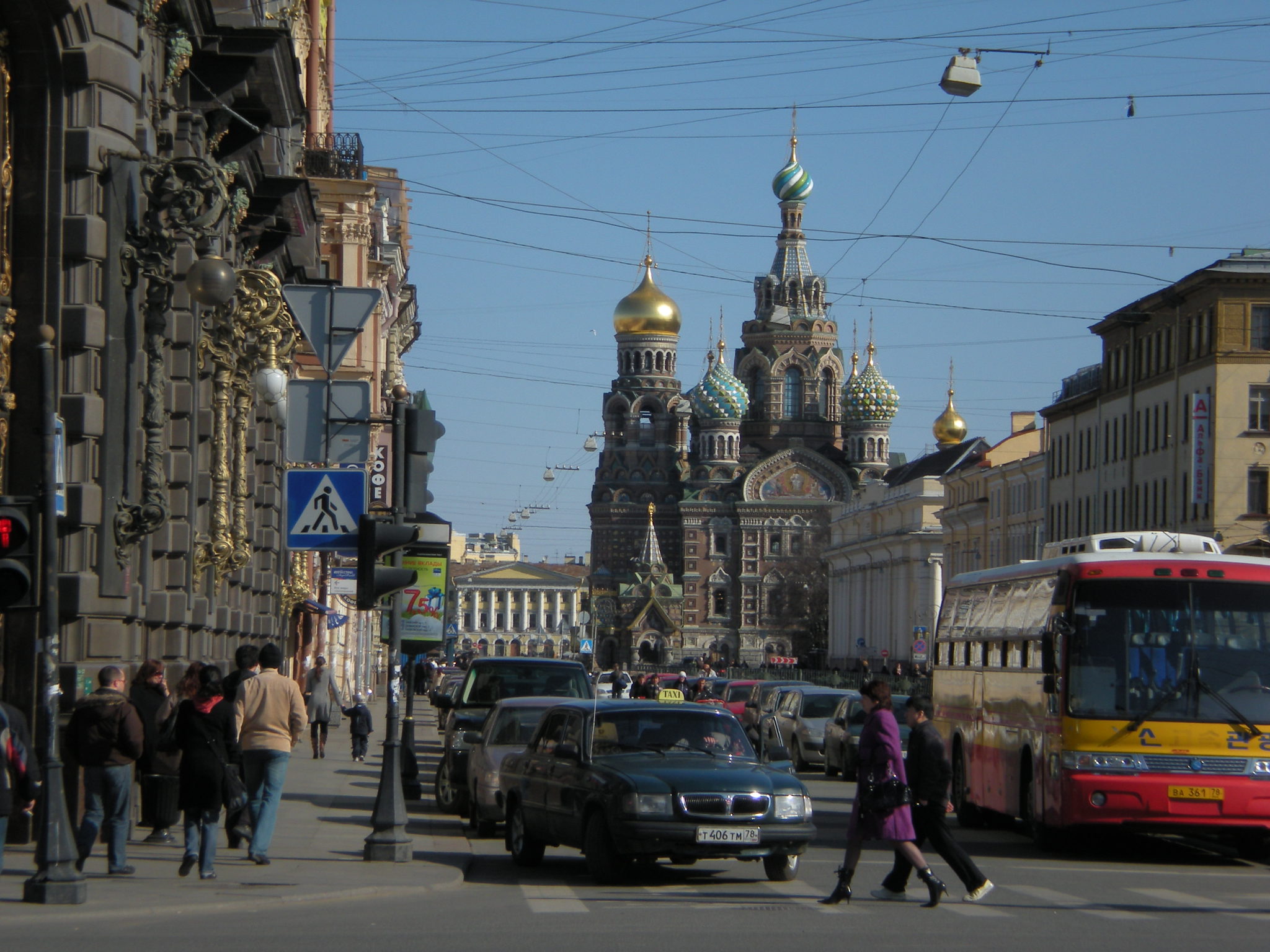
Photo: l0da_ralta (CC) commons.wikimedia.org

It seems that Russians are too busy discussing the refugee crisis in Europe while the refugees arriving in Russia are offered little support. It is true that many Russians do not come into contact with refugees on a daily basis and have little information about the situation of refugee and asylum seekers who arrive in the country – the only exception are those who arrive from Eastern Ukraine and who are exploited for propaganda purposes.

In 1951 Russia (as the Soviet Union) was one of 144 countries to sign the Geneva Refugee Convention, which states that “a refugee should not be returned to a country where they face serious threats to their life or freedom”. However, in Russian courts it is extremely challenging to prove one’s right to refugee status.

Little help

Jessica Jacklyn escaped from Nigeria to Russia in hope of avoiding female circumcision – a harmful surgical operation that can sometimes lead to death. This procedure is widespread in traditional Nigerian families, with nearly one-third of all women in the country having undergone it. To protect herself from this brutal practice, Jessica applied for asylum in Russia but was denied. The official reason given says the following:  “On May 5th 2016 the president of Nigeria signed a law forbidding female circumcision.” The fact that this law does not apply to the whole country and was rescinded a year later was of little interest to the court.

“Judges in Russia often show little knowledge both of the situation and of the legislation and do not demonstrate any interest in cases for refugees,” says Evgeny Yastrebov, a volunteer with the Civic Assistance Committee – one of the few Russian NGOs that helps those seeking asylum. “People are running from their countries because they face death. And here [in the court] they are asked to provide a certified translation of their passport,” he says heatedly. “They don’t know the Constitution! You can come without anything and say ‘I am refugee’ and then they are obliged to take your case.”

As a volunteer, Evgeny accompanies asylum seekers and migrants to courts, to migration centres and to medical services. Without him, or one of his colleagues, a court case could last six times longer, he says. When refugees need assistance the organisation provides Evgeny’s contact number, and from that point on the volunteer does not leave this person on his or her own.

“Let’s say a refugee woman needs to go to the doctor,” Evgeny explains. “The law says that a refugee is eligible for free health care, but one needs to call an insurance company to ensure temporary health insurance for her, make an appointment at the doctor’s and then go there with her.”

Evgeny has recently finished his studies in international development and economics at the University of East Anglia in the United Kingdom and returned to Russia to work with migrants and refugees. The Civic Assistance Committee turned out to be one of the few organisations of its kind in Russia. For over the last 25 years it has provided legal, humanitarian and medical assistance to refugees and migrants in Russia. The head of the organisation is a well-known Russian Human Rights activist, Sveltana Gannushkina, who was also a member of the Presidential Council for Civil Society and Human Rights until 2012. For her work she was nominated for the Nobel Peace Prize seven times.

In 2015 the Civic Assistance Committee was added to the list of “foreign agents” by the Russian ministry of justice. This has deterred some of the work of the organisation, mainly due to a large decrease in international funding. And they are indeed, quite literally, “agents of foreigners”, as they support refugees and migrants whose rights are often not respected in the Russian Federation.

Complex process

A key skill for those working at Civic Assistance is to know the Russian constitution by heart, Evgeny says. Everything the organisation is fighting for is guaranteed in constitutional law. However judges often fail to consult it. Evgeny walks me throw the legal procedure for a refugee in Russia. It is not easy, even when one has professional legal assistance. First, the person applies for refugee status. If denied, s/he can file an appeal to the courts – all the way up to the Supreme Court. If all these appeals are denied, s/he can then apply for provisional status. Provisional asylum status can be given when the person is not eligible for refugee status, but cannot be sent back home. It is given for a shorter period and needs to be prolonged, but applicants are more likely to get one. When a person is denied provisional asylum and has lost in court, the last chance for her is to file a complaint to the UNHCR – the United Nation’s refugee agency. The procedure of application for legal status in Russia can take several months if not years. During this time a person cannot officially work and s/he receives a small one-time support from the government. The amount is so little, however, that many do not even bother to apply for it, Evgeny says. Many also fail to apply on time and often come to the Civic Assistance when they already face deportation. “We even take on hopeless cases, when people have no documents at all,” says Evgeny.

I met Evgeny in Gdańsk, Poland, together with two other volunteers from Russia. He was taking part in a project titled “Solidarity Here and Now” which was a workshop for volunteers who help refugees. Among the many countries present during the workshop, the situation in Russia looks the bleakest. In Germany, for instance, volunteers are busy organising cultural activities for refugees to help them better integrate into society; while in Russia it is still a matter of where will they sleep, what they will eat and how not to get deported.

Volunteering with the refugees has changed the way Evgeny sees his own life. “I cannot get upset about minor issues because there are people who have real problems,” he says. When he comes home and his sister is upset about her daily problems or his friends call him and express their sorrows, it is hard for him to sympathise.

This is also dangerous, as volunteers often forget about self-care, explains Hania Hakiel, a psychologist and volunteer co-ordinator from Berlin. “They experience a lot of emotions in their work and very often their own personal stories are being triggered,” she says. Volunteering in Russia is currently under development with a new draft law being discussed in the State Duma. However, the debate is mostly focussed on being a volunteer for the upcoming FIFA World Cup, hosted by Russia, rather than about helping vulnerable parts of society. And not everyone understands what it means to be a volunteer in Russia. “When I started volunteering my parents asked me: ‘Are you paid? Do they guarantee to employ you? Why are you doing it then?’” says Evgeny.

Kids are kids

Aygerim (Aya) Mambetalieva and Valeria Pavlova – two other volunteers from Russia – work in the Kids are Kids centre of integration for refugee and migrant children in Moscow. Before coming to the centre both women worked with children in Africa.

“When I came home from that trip, I realised that one does not need to go far away to help, one can help people at home, there’s even more meaning,” Valeria says. She has been working at the centre for two years already. While adults who come to Russia in search of an asylum deal with the bureaucracy and try to survive by working illegally, their children are often left on their own. Many cannot attend school, even though on paper Russia guarantees free access to education for everyone. In practice, signing up for school is a challenge, even for Russians. One needs an official registration in the city or district where they live. In many cases, language is also a problem as there are no special courses for non-Russian children in Russian schools.

The Kids are Kids integration centre offers additional classes for children about two or three times a week, including maths, Russian and English plus special programmes for small kids and additional cultural events. The teachers are all volunteers. Some children come to the centre after school to get additional tutoring, but for many it is the only way to get any sort of education. “Many kids are behind on the programme,” Valeria tells me. “Kids are not problematic per se, but they have missed a chance to move to the next level on time and keep up with their peers.”

According to the centre, there are around 50,000 refugee and migrant kids in Moscow alone. Fewer than 100 are enrolled in courses at the centre. Most of the children come from the Middle East, Central Asia and Africa. “Kids are kids,” Aya says. “They open up; it is not so difficult for them. They can adapt when they are directed properly.” The centre has no proper premises: classes take place in the museums and libraries around the city. Classes are often cancelled due to other events taking place at these locations. “It is very hard to move from place to place all the time,” says Aya. “It is even harder for the parents to bring their kids every time to a new place, so some stop coming.” Without a proper office, the organisation lacks unity as well, says Valeria, as many volunteers do not ever meet each other.

Volunteers come to the integration centre through word of mouth and social media. Students from universities, like the Higher School of Economics and Moscow State University of International Relations, also come through co-operation programmes with the centre. Yet, proper training for the volunteers is still very much needed. “We lack professional teachers,” Valeria says. “Most of our teachers are kind people who have no knowledge of teaching or intercultural communication.”

International exchange

International events like the Solidarity Here and Now, organised in Poland, allow volunteers from around Europe a chance to exchange their experience and learn from each other. Despite the drastic differences in levels of state support, there are also many similarities that volunteers from different countries face when helping refugees across the European continent.

“In Russia, the media talk a lot about Germany, but I had no idea that in Serbia and in the Czech Republic people are also volunteering to help refugees,” Valeria admits. “It is helpful to hear which problems these people face, how they were able to solve them and what advice they have.” Valeria says they are trying to start co-operation programmes with NGOs who work with refugee and migrant kids within Russia as well. This year they held two conferences, inviting organisations from Nizhniy Novgorod, Irkutsk, St Petersburg and Yekaterinburg. “Now there is an understanding that an exchange of experience within Russia is needed,” she says.

“It would be good to learn more about how volunteers are organised in other countries,” Evgeny adds. His organisation is trying to develop a proper volunteer co-ordination system. For now, 32 volunteers with Civic Assistance are “all over the place” without a proper working space or a co-ordinator who manages their organisation. The experience of German colleagues came in very handy: In Berlin nearly all the refugee residences have volunteer co-ordinators.

International support is very important for volunteers in Russia. For them it is a big “thank you” for what they are doing, since neither the official administration nor society is so eager to publicly recognise their efforts.

Natalia Smolentceva is a freelance journalist and project manager based in Berlin. She has a master’s in global communication and international journalism.

, ,

Partners

Terms of Use | Cookie policy | Copyryight 2026 Kolegium Europy Wschodniej im. Jana Nowaka-Jeziorańskiego 31-153 Kraków
Agencja digital: hauerpower studio krakow.
We use cookies to personalise content and ads, to provide social media features and to analyse our traffic. We also share information about your use of our site with our social media, advertising and analytics partners. View more
Cookies settings
Accept
Decline
Privacy & Cookie policy
Privacy & Cookies policy
Cookie name Active
Poniższa Polityka Prywatności – klauzule informacyjne dotyczące przetwarzania danych osobowych w związku z korzystaniem z serwisu internetowego https://neweasterneurope.eu/ lub usług dostępnych za jego pośrednictwem Polityka Prywatności zawiera informacje wymagane przez przepisy Rozporządzenia Parlamentu Europejskiego i Rady 2016/679 w sprawie ochrony osób fizycznych w związku z przetwarzaniem danych osobowych i w sprawie swobodnego przepływu takich danych oraz uchylenia dyrektywy 95/46/WE (RODO). Całość do przeczytania pod tym linkiem
Save settings
Cookies settings