
Polish-Ukrainian reconciliation and its contribution to Ukraine’s independence. A Memoir
The Polish discussion on Ukraine and the “Eastern Question” filled the pages of many of the underground publications that existed in the 1980s in communist Poland. Similar to Kultura since the late 1940s, they called for reconciliation between former enemies and mutual forgiveness for past crimes committed by all sides.
Growing up in northern England I was surrounded by nationalisms of different kinds. Irish nationalists seeking a united Ireland were at war in Ulster and had brought their terrorist campaign to the British mainland. Eastern European refugees from the communist bloc had brought their nationalisms with them to Great Britain and these continued to open old wounds in the émigré ghettos. The two biggest of these nationalisms were Ukrainian and Polish. Most members of the Ukrainian community in Britain were members of the three wings of the OUN (Organisation of Ukrainian Nationalists) with the Stepan Bandera wing by far the largest. Their primary enemy though was the Russians and the Soviet empire – not Poles or Poland.
January 2, 2018 -
Taras Kuzio
-
Issue 1 2018MagazineStories and ideas
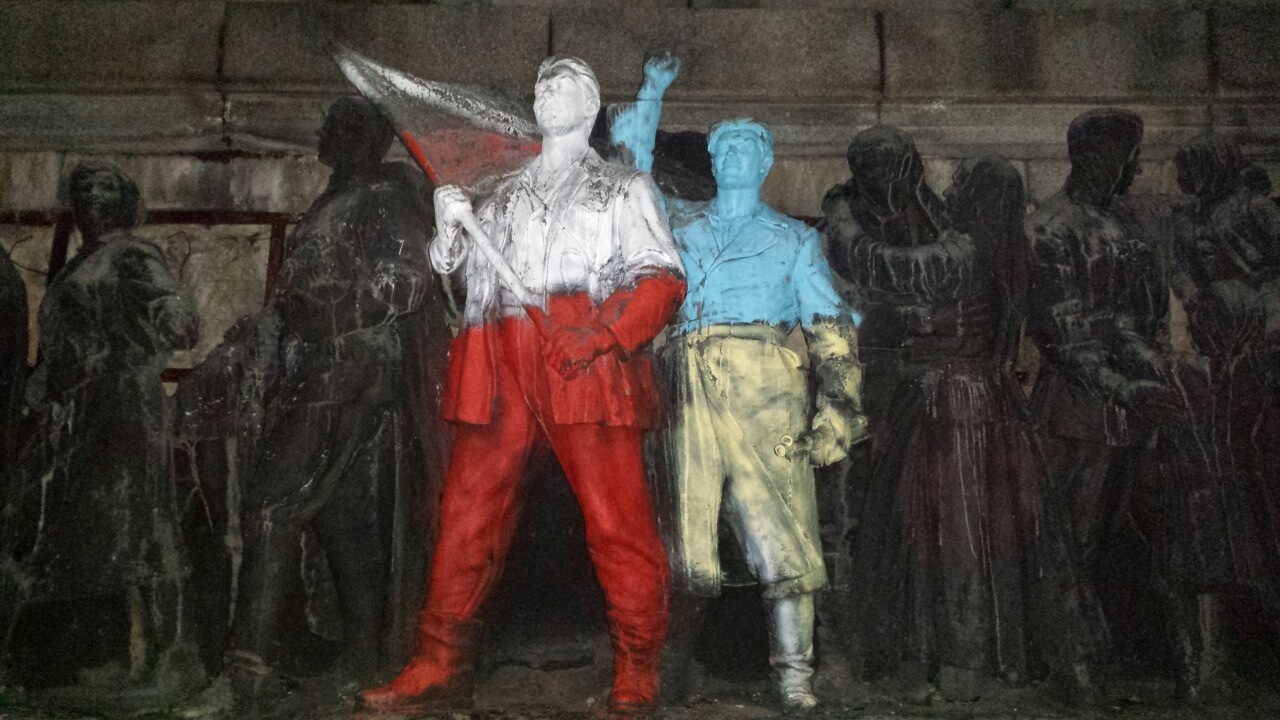
George Valkov Photo (CC) commons.wikimedia.org
However, the Polish diaspora in Britain that I came into contact with was virulently anti-Ukrainian as reflected in the two main British-Polish publications, Dziennik Polski and Tydzień Polski, which routinely ran anti-Ukrainian articles. Many members of the Polish diaspora were from the Kresy (borderlands of eastern Galicia and Volhynia) and were sympathisers with the pre-war National Democrats.
Thankfully my image of Poland changed as an exchange student at the Adam Mickiewicz University in Poznań in the late 1970s where Poles were very different than those with whom I had grown up. Three other factors deepened this growing understanding of the existence of another Poland. The first was the election in 1979 of Cardinal Karol Wojtyła as Pope John Paul II and head of the Catholic Church. The second was the emergence of the Solidarity movement in 1980-1981. The third was the creation of a huge underground and alternative Poland after martial law was declared in 1981 and that existed until 1988 when Solidarity was legalised.
Émigré communities
Poles in communist Poland accepted their post-1945 borders as “normal” and did not hold deep seated grievances against Ukrainians. Poles living in Britain belonged to a different era where Poland existed from the Baltic Sea to the Black Sea and where the Kresy were part of the Polish state. There were, as always, exceptions. In the diaspora, Polish and Ukrainian intellectuals had worked on reconciliation since the late 1940s. The United States provided financial support which enabled Ukrainians and Poles to create the best publishing houses in their respective diaspora’s – the Prolog Research Corporation (publisher of Suchasnist magazine) and Instytut Literacki (publisher of Kultura magazine). Although it is well-known within the Ukrainian diaspora that the US government supported Prolog, the Polish diaspora and Poles in Poland do not wish to discuss the source of financing for Instytut Literacki. There were only two sources of funding for émigré publishing – the émigré community organisations and foundations or governments. As Instytut Literacki did not receive Polish émigré funding then, the only other alternative was from a government.
Prolog was active from 1952-1990 and Instytut Literacki from 1946-2000. The US financial support enabled Prolog and Instytut Literacki to be independent of the diaspora nationalisms (OUN, Polish National Democrats and others) allowing them to publish on a wide variety of themes. Polish-Ukrainian co-operation in the 1980s and 1990s was built on the foundations of work undertaken earlier by Suchasnist and Kultura.
The other exception was inside communist Poland. As the Yale University historian Timothy Snyder discusses, the Polish Communist Party integrated pre-war National Democrats and especially their ideology of creating a Polish “national state” from 1944-1945. Both were pro-Russian and anti-German and anti-Ukrainian. The more bitter internal conflicts in communist Poland were with the UPA (Ukrainian Insurgent Army) which protected the Ukrainian minority from attacks by Polish communist forces, the pro-National Democrats NSZ (National Armed Forces) and the Peasant Battalions. Five thousand Ukrainian and 1,000 Polish civilians died during those battles in 1945-1947. In 1947, the Ukrainian national minority was dispersed throughout the recovered territories in the Vistula Operation, in what was termed the “final solution to the Ukrainian problem”. Their political sympathies remained suspect and the official Ukrainian Social and Cultural Society came under the supervision of the ministry of internal affairs.
Wojciech Jaruzelski, who would later become the head of the Polish Communist Party which imposed martial law, participated in military operations against UPA after the Second World War. A photograph of Jaruzelski as a young officer can be found on page 379 of Droga do nikąd: działalność organizacji ukraińskich nacjonalistów i jej likwidacja w Polsce (Road to Nowhere. The activities and organisation of Ukrainian nationalists and their liquidation in Poland), published by the ministry of people’s defence in 1973. The book was banned because it gave a relatively objective (for a communist country) analysis of the war against UPA. Polish communist propaganda against Ukrainians was evident in the large number of books published that continued the stereotypes of bloodthirsty Ukrainians who hated Poles. Edward Prus was the most prolific anti-Ukrainian author in communist Poland publishing over ten books on anti-Ukrainian themes.
As with The Road to Nowhere, communist authorities were more tolerant of what was permitted to be published in Poland than in the Soviet Union. Ukrainians mass mailed Władysław A. Serczyk’s History of Ukraine (1979, published in Polish as Historia Ukrainy) to Soviet Ukraine because it was so much better than the Russophile histories of Ukraine which were published in the Soviet Union. Official Catholic newspapers and journals like Tygodnik Powszechny, Znak and others also published relatively objective articles about Ukrainians.
Ideological underpinnings
The Solidarity generation had little in common with the Polish diaspora and especially the National Democrats who had repainted themselves within the Polish communist party. The emergence of Solidarity and other opposition groups and publications led to a wide ranging discussion of the “Eastern Question” in which Ukraine was prominently featured. Six underground journals were dedicated to analysing the countries that made up the Soviet empire: ABC published by ANTYK; Evropa: Pismo Instytutu Europy Wschodniej published by Solidarność Walcząca; Nowa Koalicja published by Wolność, Sprawiedliwość, Niepodległość (WSN); Międzymorze published by the Robotnik political group; and Obóz published by the Dalszy Ciąg Nastąpi underground publishing house and Zona.
The ideological underpinning of these underground publications came from interwar Polish President Józef Piłsudski’s support for an alliance of nations lying between Germany and Russia. The Polish underground also published two special Polish-language editions of Suchasnist, each over 200 pages that contributed to the intellectual debates taking place in the underground. In 1990 I edited a volume published in Warsaw, titled Stosunki polsko-ukraińskie 1917-1947. Od tragedii do współpracy (Polish-Ukrainian Relations, 1917-1947. From Tragedy to Co-operation). It was published by the Perturbantsii journal, which we had launched for Ukrainians in Poland, and was edited by Roman Kryk who went on to work in Polish news agencies.
There was no dissension in Solidarity and the Polish underground about positive attitudes towards Ukraine and acceptance of existing borders. The general atmosphere was reflected by well-known opposition leader and intellectual Jacek Kuroń who called “for your freedom and ours”. Kuroń and other Polish opposition leaders attended the inaugural congress of the Ukrainian Popular Movement for Restructuring (known as Rukh) in September 1989. Fifteen years later Lech Wałęsa spoke to the huge number of protesters at the Orange Revolution. Large numbers of Polish journalists and activists attended both the Orange and EuroMaidan Revolutions showing a spiritual connection between Polish and Ukrainian movements for liberation from communism.
The Polish discussion on Ukraine and the “Eastern Question” filled the pages of many of the underground publications that existed in the 1980s in communist Poland. Similar to Kultura since the late 1940s, they called for reconciliation between former enemies and mutual forgiveness for past crimes committed by all sides. The Polish liberals and the right were more willing to criticise the Soviet Union than the Polish left, who wanted to restrict co-operation to only Central European countries. This leftist stance was reflected in the magazine Eastern European Reporter (1985-1992) published by Polish, Czech and Hungarian exiles. The post-1968 Central European left were not xenophobic, of course, but certainly more cautious in not antagonising the Soviet Union, while liberals and the right believed that Poland could not regain its independence and freedom unless the USSR disintegrated. In other words, they believed the fate of Ukrainians and Poles were united. During the 1980s, this viewpoint became dominant in the Polish underground.
Technical support
An example of the deep desire for Polish-Ukrainian reconciliation was the well-known underground book by Kazimierz Podlaski (published in 1983 and 1984 in Warsaw) titled Białorusini-Litwini-Ukraińcy. Nasi wrogowie, czy bracia? (Belarusians-Lithuanians-Ukrainians. Our Enemies or Brothers?) Podlaski’s influential book was reprinted in Polish in London (1985) and published in Ukrainian by Vidnova (1986) in Munich. The title of Podlaski’s book asked why Poland’s three eastern neighbours – Ukrainians, Belarusians and Lithuanians – should be enemies and not brothers because they have a long common history.
Moreover, Polish liberals and the right were more active in providing technical support to the Ukrainian opposition. Under US President Ronald Reagan, overt and covert funding was increased for the AFL-CIO (labour unions), Prolog, other diaspora structures and intelligence agencies fighting communism in the Soviet Union and Eastern Europe. Much of the support provided to Solidarity and Polish underground groups came from the AFL-CIO American trade union federation whose international wing, which co-ordinated assistance to the Polish underground, was headed by American-Ukrainian Adrian Karatnycky. The AFL-CIO co-operated with Prolog in channelling support to Polish underground groups, who in turn assisted the Ukrainian opposition. Karatnycky’s then wife, British-Ukrainian Nadia Diuk, has worked at the National Endowment of Democracy (NED) since it was founded in 1983 and is today the Vice President for Programs for Europe, Eurasia, Africa and Latin America and the Caribbean.
Prolog’s London office, the Ukrainian Press Agency (where I was executive director), provided financial and other forms of support to underground Polish groups who were co-operating with the Ukrainian opposition that began to emerge in 1987. In London I was on the editorial board of Voice of Solidarity, edited by Marek Garztecki. The Ukrainian Press Agency also worked with Marek Matraszek and Radosław Sikorski who were based, during different times, at Oxford University. Ukrainians travelled to Poland to train in silk screen printing while silk screen printing equipment was smuggled back to Soviet Ukraine. The Polish underground printed Ukrainian independent publications which were then smuggled back into the USSR. In the second half of the 1980s Lithuania also became a location where Ukrainian independent publications were printed by the opposition.
By the late 1980s there were over 1,000 independent publications in Soviet Ukraine which represented a massive increase over the small number of samvydav publications that had been traditionally reproduced by dissidents on typewriters. Ukrainian diaspora books, published by Prolog-Suchasnist, were smuggled by Polish and Ukrainian “tourists” to Soviet Ukraine. Video cassettes, such as the 1983 documentary Harvest of Despair about the 1933 artificial famine and Holodomor, were dubbed into Ukrainian, duplicated in Poland and smuggled to Soviet Ukraine.
Setting the stage
By the second half of the 1980s small office technology was also increasingly smuggled into Soviet Ukraine from Poland. Particularly important were small office Xerox machines and fax machines. The fax machine enabled the quick sending of opposition documents to western news agencies and diaspora media without the need for them to be dictated over the telephone to a tape recorder and then re-typed. Documents faxed to Radio Liberty were quickly re-broadcast back to Soviet Ukraine. In essence, fax machines were the equivalent of the internet today. By the time communism and the Soviet Union disintegrated in 1990-1991, the stage was set for cordial Polish-Ukrainian relations in the 1990s. The ground had been prepared by five agents of change. The first factor was the US government which had provided financial support for the Prolog and Instytut Literacki publishing houses, which enabled them to be free of dogmatic Ukrainian and Polish nationalisms.
The second was three decades of reconciliation promoted by these two publishing houses and affiliated intellectuals. Volumes dedicated to Polish-Ukrainian reconciliation appeared in a 1980 publication edited by Peter J. Potichnyj (Poland and Ukraine. Past and Present) and in two issues of the journal Vidnova (also funded by the US government) in 1985-1986. The third factor was good timing. As John O’Sullivan brings out in his masterful volume The President, the Pope, and the Prime Minister, the appearance at the same time of three anti-communist leaders – Ronald Reagan, Cardinal Wojtyła and Margaret Thatcher – had a profound impact upon the destiny of communism.
The fourth factor was the emergence of the Solidarity movement as a mass underground in Poland, the most strategically important country in the Soviet outer empire. Solidarity and the Polish underground viewed Ukrainians as allies in a common struggle against the Soviet empire. The Polish underground’s support for the Ukrainian opposition is one of the untold but very important stories of the 1980s. The final factor was Mikhail Gorbachev’s rise to power and his policies of glasnost and perestroika which opened up a Pandora’s Box of grievances held by Ukrainians and other non-Russian peoples. Here, Ukraine played an analogous role to Poland in being the most strategically important republic in the Soviet Union. The year 1989, when communism disintegrated in Poland, was also the year of the founding of Rukh and the beginning of Ukraine’s drive towards independence, which I predicted would come quickly in an essay “Początek końca pieriestrojki? (The beginning of the end of perestroika?)” published in Kultura (no.7, 1990).
From the early 1990s, Poland has been a strategic partner of Ukraine and an advocate and lobbyist for Ukrainian interests in Brussels, Washington and elsewhere. Poland’s support for Ukraine did not appear out of thin air but emerged after decades of hard work by Poles and Ukrainians alike, both of whom wanted to put the past behind them. Sadly, some of this has been damaged by politicians in Ukraine and Poland meddling in historical disputes. It is, though, unlikely that new found nationalisms will be able to undo five decades of Polish-Ukrainian reconciliation.
Taras Kuzio was director of the Ukraine Press Agency in London from 1985 to 1992. His most recent books are (with Paul D’Anieri) The Sources of Russia’s Great Power Politics: Ukraine and the Challenge to the European Order and Putin’s War Against Ukraine: Revolution, Nationalism and Crime.