
Text resize: A A
Change contrast

The self-made Apaches of Kyrgyzstan

In the south of Kyrgyzstan, locals work in old Soviet-era coal mines with horrific conditions and little hope of improvement.

With the collapse of the Soviet Union, the economies of many states of the former Eastern bloc found themselves in shatters. Soaring unemployment and poverty engulfed all the countries of Central Asia. In Kyrgyzstan, people lost their jobs overnight, while Russians hastily abandoned the former Soviet republics to return to the fallen mother Russia. As they fled, they left behind their homes, jobs and factories. What remained was soon looted, including the railway tracks which were sold to Chinese scrap metal dealers.

October 31, 2017 - Magdalena Borowiec - Issue 6 2017MagazinePhoto

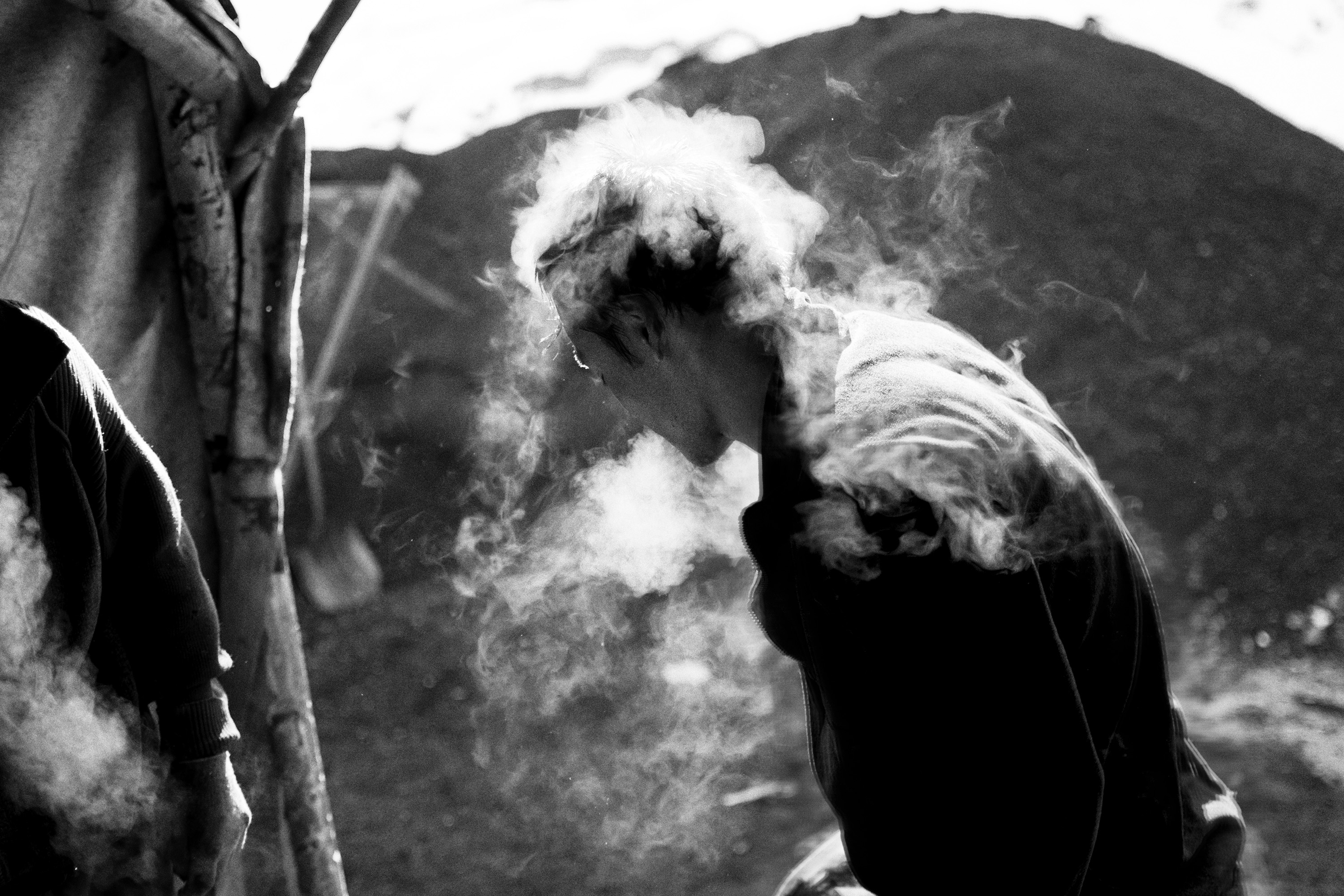
Photo by Magdadelna Borowiec

The local people, left on their own, did not possess the adequate skills and technical know-how in order to continue operating the abandoned factories. Helpless in the face of the sudden gift of regained freedom and independence, they followed the Russians through the gateway to Moscow. But instead of striking it rich, what awaited them in Russia were low salaries, high living costs and racism. They were the “Other”, disdained by Muscovites; many accepted the most humiliating work, and lived in appalling conditions, far away from their communities. As soon as they earned some money, many Central Asians returned home. Some of them managed to renovate the old Soviet machinery and recreate past skills to become miners again.

Homemade mines

The mines are being worked in a manner one does not normally associate with modern mining. An unsophisticated network of underground corridors is found throughout this mine, which is located in the Osh oblast. The shallower corridors are located 15 metres down, and the deeper ones are as deep as 60 metres. The miners use unsophisticated and medieval tools: pickaxes, crowbars and spades. The mines are made up of substandard structures with low ceilings and a lack of proper ventilation. The miners can make three US dollars for every 70-kilogramme sack of coal, which is usually about ten dollars a day. The labyrinth of corridors can hold between three to five miners. The miners work underground for ten hours per day without a break. A foil pipe or a revamped old hoover pipe is the only source of fresh air.

The lack of ventilation is one of the most common reasons for contamination and carbon monoxide poisoning. In the case of a methane explosion or the collapse of a poorly supported ceiling, the chances of survival are infinitesimal. Death as a result of electrocution also happens occasionally. Extraction of the coal is possible thanks to the light coming from Chinese headlamps. The locals call the self-made miners “Apaches”, as their faces are constantly covered in black dust. The campsites, surrounded by the apocalyptic landscape of the austere mountains, crevices, caravans and yurts, have become a provisional home for hundreds of men and women who moved to the south of the country in search for work and a better life.

Kyrgyzstan, a county that has been immersed in political chaos for the past years, is one of the poorest places in the world. It offers few opportunities to its inhabitants. For many in the region, coal is the only hope for survival. But new investments are needed in order to improve the quality of work and life. The Kyrgyzstani government, however, does very little to address these problems.

Translated by Agnieszka Pikulicka-Wilczewska

Magdalena Borowiec is a Polish sociologist and photographer. Her works appeared in a number of international publications, including Calvert Journal, DOC! Photo magazine, Dodho and foto8.com and others.

, , ,

Partners

Terms of Use | Cookie policy | Copyryight 2026 Kolegium Europy Wschodniej im. Jana Nowaka-Jeziorańskiego 31-153 Kraków
Agencja digital: hauerpower studio krakow.
We use cookies to personalise content and ads, to provide social media features and to analyse our traffic. We also share information about your use of our site with our social media, advertising and analytics partners. View more
Cookies settings
Accept
Decline
Privacy & Cookie policy
Privacy & Cookies policy
Cookie name Active
Poniższa Polityka Prywatności – klauzule informacyjne dotyczące przetwarzania danych osobowych w związku z korzystaniem z serwisu internetowego https://neweasterneurope.eu/ lub usług dostępnych za jego pośrednictwem Polityka Prywatności zawiera informacje wymagane przez przepisy Rozporządzenia Parlamentu Europejskiego i Rady 2016/679 w sprawie ochrony osób fizycznych w związku z przetwarzaniem danych osobowych i w sprawie swobodnego przepływu takich danych oraz uchylenia dyrektywy 95/46/WE (RODO). Całość do przeczytania pod tym linkiem
Save settings
Cookies settings