
The disintegration train has left Brussels
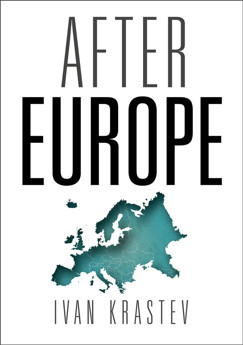
A review of After Europe. By: Ivan Krastev. Publisher: University of Pennsylvania, Philadelphia, 2017.
Let me start this review with a disclaimer: the positive assessment of Ivan Krastev’s recent book is in no way related to the fact that the author is also a member of New Eastern Europe’s editorial board. It solely reflects the value of the publication and its relevance as it has been interpreted by the undersigned reviewer. That said, readers who are familiar with Krastev’s writings will not be surprised that his recent book, tellingly titled After Europe, focuses on disintegration rather than integration. They may even remember that on the pages of this magazine Krastev had written: “I know how things collapse; this is what I have been studying all my life. I was working on the Balkans and I know how they collapsed, and before that I studied how the Soviet Union had collapsed”.
October 31, 2017 -
Iwona Reichardt
-
Issue 6 2017MagazineStories and ideas
With these credentials, Krastev is now analysing the possible dismantling of the common European project. It should, nonetheless, be seen as alarming that on the first pages of this analysis Krastev writes: “I am someone who believes that the disintegration train has already left the Brussels station – and who fears it will doom the continent to disarray and global irrelevance”. Keeping this statement in mind we should also remember that the author is not – as he straightforwardly admits – a Eurosceptic, nor only a theorist of disintegration. Conversely, he is a representative of a generation of Eastern Europeans who have personally experienced the collapse of the Soviet Union and who put great hope into their countries’ integration with common European structures.
Eastern European déjà vu
In Krastev’s view it is this first-hand experience of the process of the dismantling of the Soviet bloc that is one of the key markers of today’s divisions taking place on the old continent. “Europe is divided not only between left and right, north and south, large and small states, and those who want more Europe and those who want less (or no Europe at all), but also between those who have experienced disintegration first-hand and those who know it only from textbooks”, he writes in the introduction. The impact of the experience of those who lived through the fall of the Iron Curtain and are now, while looking at the EU, having a sense of déjà vu; it can be seen in their less optimistic outlook for the EU’s future. For them, as Krastev writes, “shutting one’s eyes and believing that everything will be just fine is a far more tenuous proposition”.
Not surprisingly, it is also reflected with the highest levels of support towards the EU that is recorded for Central Europeans. Take the example of Poland, where (despite a noticeable presence of Eurosceptic voices in the public debate) support of the EU is at a whopping 80 per cent, and is the highest among people who are aged 35 and older. Similar attitudes have been found in Hungary (despite widespread disapproval of EU leadership) where the public largely supports state membership of common European structures. And in the Czech Republic when the president in 2016 called for a referendum to leave the EU, it was rejected by the government as, it probably would not have got the approval of the Czech public.
The consequences of this déjà vu experience among the populations of the former Soviet bloc, highlighted by Krastev, are not yet a guarantee that Eastern Europeans will save the EU from a collapse. Nor will they cause it, which is often indicated by some media outlets negatively interpreting populist tendencies in the region and viewing them as having a devastating impact on the integrity of the European community as a whole. Countering this assumption, Krastev repeats a thesis he has already articulated before, that “if disintegration happens, it will not be because the periphery has run away but because the centre (Germany, France) has revolted”. At least for the moment the results of the French and the German elections show that this is not the case.
Europe’s 9/11
The disintegration, if it is to happen, will obviously have many explaining factors. Among the key ones, according to Krastev, is the refugee crisis that has been haunting Europe’s political life since 2015. In his analysis of its impact and unforeseen consequences, Krastev is certainly at his best and at the same time sombrely painful – especially when he is not afraid to use powerful language and call the migration crisis “Europe’s 9/11”. (Anyone who has lived through the terrorist attacks on the World Trade Centre in New York and the Pentagon building in Washington DC in 2001 is also aware of the enormous change that took place in the aftermath). In so doing, Krastev suggests that just like after September 11th 2001 America became irreversibly different from what it was before, the same is happening to Europe now.
Krastev further argues that the influx of people from North Africa and the Middle East to Europe over the past two years is a new revolution. It is not, however, as he explains “a 20th century revolution of the masses, but an exit-driven revolution of individuals and families”. This very real transfer of people is taking place in areas that they believe are better places to live.

Theorists of revolution, as well as those who have experienced any rapid change of a political system, know that with a revolution inevitably comes a counter-reaction. In today’s literature, counterrevolution, which Krastev sees to be taking place among those Europeans whom he calls “anxious majorities”, is often explained by references to social rage (thymus) theory, associated with the writings of the German philosopher Peter Sloterdijk. It assumes that an inability to address anger, which characterises modern societies, leads to frustration and an explosion of negative emotions. This theory is often used to explain the popularity of extreme right-wing groups in western states. Krastev expands on this idea and points to a few lesser known phenomena that help explain current social reactions to the ongoing migration crisis.

In the case of Central Europe, where anti-migrant attitudes are undoubtedly at the highest level among all European societies, it is the lack of a positive experience regarding the integration of the Roma minority. Such is definitely the case for countries like Hungary, Slovakia, but also Poland and Krastev’s native Bulgaria. “The story of Roma,” he says, “is among the most disturbing in contemporary Europe”.
More obviously, Krastev points to a wide turn against the liberal elite. Among their sins, he accurately enumerates their inability to conduct an honest discussion on migration. Not afraid to call this behaviour hypocritical, Krastev admits that the popular revolt against the elite is what is now fundamentally reshaping Europe’s political landscape. Indeed, we can see it, to varying degrees, in many of the states that have undergone elections since 2015; and it will most likely continue in the near future. What is more, despite the final loss of anti-establishment forces in the Netherlands and France, we have to admit that the course of many elections, as well as the result of the German extreme right-wing, anti-migration party (AfD), have shown (unfortunately) that Krastev is right in saying that “in the age of migration, democracy started to operate as an instrument of exclusion, not inclusion”.
Just as he points to the faults of the liberal elite, Krastev is also critical of the Europe’s left, which – in his view – has also proved unable to adequately respond to the fear generated by the migration crisis, giving way to extreme right-wing movements and other anti-establishment forces. The latter has been taking place despite, as Krastev mentions, the anti-capitalist sentiments that have skyrocketed particularly among younger generations.
Compromise
When reading the book, the question of what should be done to avoid the collapse of the current European order is the first one that comes to mind. While it is far from perfect, the current system comes across as the best one we have had so far. In response to this question, Krastev offers simple advice, but needless to say it is difficult to implement in practice. He writes: “What will increase the likelihood of the European Union surviving will be the spirit of compromise”.
In an ideal world, this recommendation should be taken into account by all European leaders (those who are openly supporting the current political arrangement on the continent and those who question it). Should this not be the case, we are certainly doomed for what Krastev refers to as “after Europe” – meaning a continent that has both lost its centrality in global politics and the confidence of Europeans themselves.
For the moment, polls still show that European societies would not be willing to welcome that. Hopefully, this time around their elite will recognise the people’s concerns and adequately react. Otherwise, we may be soon reading another book by Ivan Krastev, and one that not necessarily discusses a possible, but quite likely real, disintegration.
Iwona Reichardt is the deputy editor in chief of New Eastern Europe.