
Text resize: A A
Change contrast

Nothing has really changed

For me going back to the 1990s is a means to revisit my childhood memories. I have a lot in common with the characters of Cobain’s Students (Cobainovi žáci), my book about adolescence which was just published in Poland.

I was born in 1986 and grew up in a small town near the Austrian border. Until the age of eight, I lived in an estate block and I had lots of friends. I remember an old abandoned house which (at least in my imagination) was inhabited by some dark power. We used to send someone up there and they had to show up in the window on the second floor to prove that they had walked through the whole building. Today it is a veterinarian practice. For me the 1990s were not a decade of great transformation, or great history. I simply lived in those times and watched the world through the eyes of a child. Once our town was visited by Václav Havel; we saw him waving from the train and laughing. Never before had I seen such a crowd.

October 30, 2017 - Miroslav Pech - Issue 6 2017Magazine

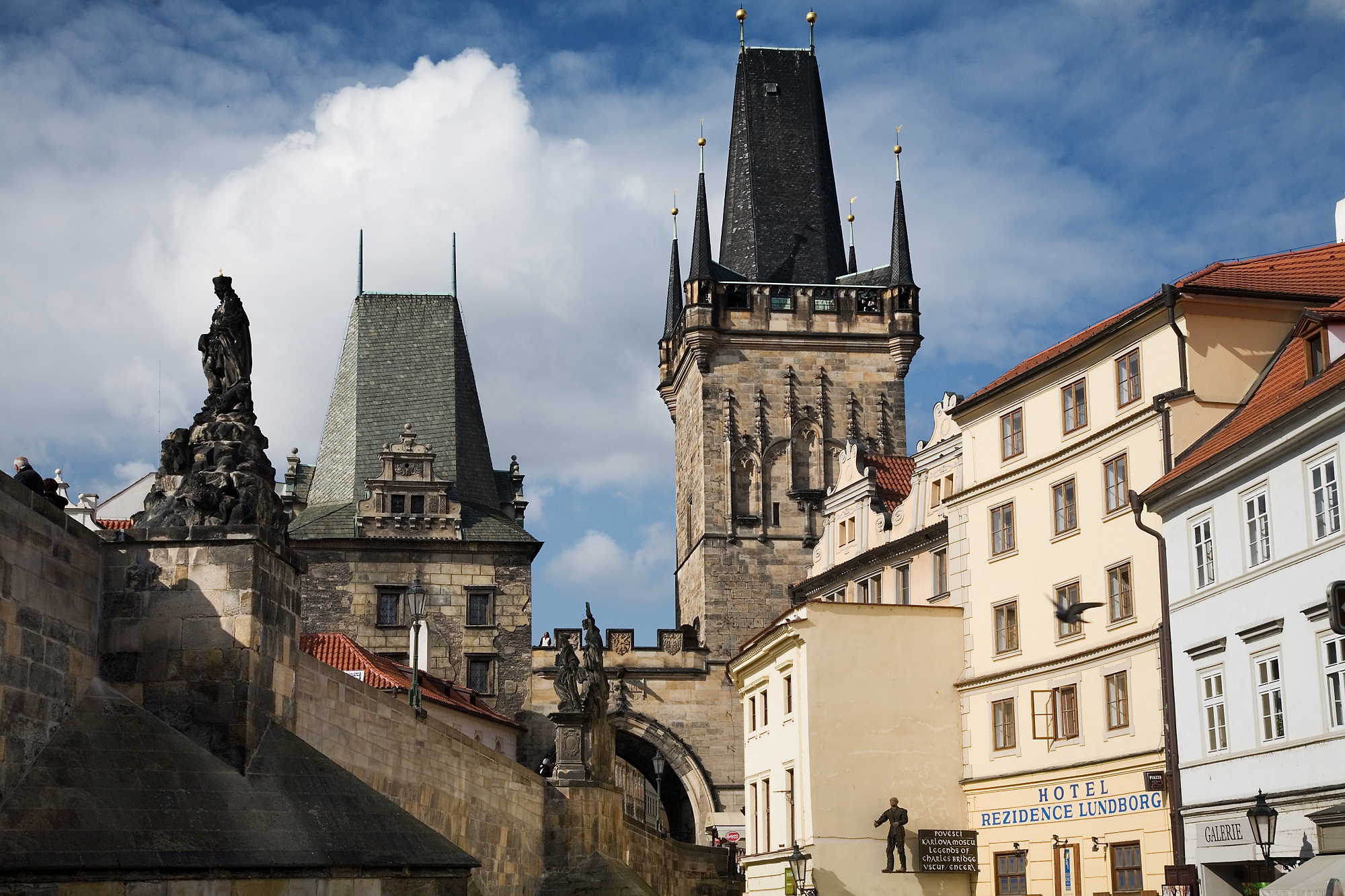
Photo: Jorge Royan (CC) commons.wikimedia.org

I was pretty comfortable in this “unreality”, which is my connection to the narrator of my book Cobain’s Students. I lived through the turbulent times of adolescence; similarly to my rock idols, I tried everything that was possible, or not even possible to try. I was pretty comfortable when my band and I would lock ourselves up in the garage and we jammed the whole day. I was pretty comfortable when instead of going to school we ended up in a bar or a park, drinking cheap wine and smoking joints. Today I am married with a one-year-old daughter and two cats. We are in the process of buying an apartment, so for the next 30 years we will be paying off the mortgage. It has to be completed before we die so that it does not fall on our daughter’s head.

When I was 15 a thought like that would never have crossed my mind; perhaps even when I was 25, since I was a rebel. I’d rather say: “Shove this mortgage up your asses! Shove all your factories, schools and vocational schools up your asses too!” But today I am happy. I prefer to play with my daughter than drink in a bar. Friday night we order pizza, have some Coca Cola and watch a horror movie. I simply got soft. But, it does not bother me in the slightest.

TV generation

For me the 1990s were the times of television. I loved watching the X Files, The Outer Limits, Are You Afraid of the Dark?, The Simpsons, or Alf. We also used to watch Dallas, Baywatch, Heartbreak High, Helen and the Boys… It is hardly a coincidence that the main character of my book is addicted to watching TV. It was cool when I would take one of the recorded movies and watch it on my grandpa’s VCR. Poor grandpa had to watch Bruce Lee, Sylvester Stallone, Arnold Schwarzenegger, Jean-Claude Van Damme and other tough guys. Every now and then I would check if grandpa was asleep. When he was on the verge of dozing off I would wake him up: “Grandpa, don’t sleep, let’s watch this badass scene!” At my grandma’s I would watch satellite cartoons. They were not broadcast in Czech and I understood nothing, but it did not matter. From those times I remember tracksuits and leggings that everyone hated. And Pedro chewing gum. I also remember my mountain bike and the patches my mom sewed on the tracksuit sleeves and legs as I wanted to look like a Native American.

I came cross Polish literature and movies when I was already an adult. As a kid I liked the Polish cartoon Bolek and Lolek. I remember that in the 1990s people used to go to Poland to shop, especially for clothes – my aunt was one of those. I did not understand why she would choose Poland if one could buy everything from the Vietnamese seller around the corner. It was only years later when reading the Pocket Atlas of Women by Sylwia Chutnik that I learnt about Polish bazaars. Then, at last, I got it.

From the early part of the 1990s I do not remember much about Nirvana but I do remember the Kelly Family, Backstreet Boys, Lunetic and children’s discos in the school gym. I also associate those times with horror books and movies. I believe my first horror movie was A Nightmare on Elm Street. In turn in Cobain’s Students there is a scene in which the narrator and his brother go to the movie theatre to watch Alien. It’s a true story: we were just kids then but the cashier let us in anyway. A great experience…Cobain’s Students is often presented as a book about the 1990s, which is not accurate as most stories there take place between 1999 and 2005. Hence, it is a book about the turn of the century.

How do I assess the changes that have taken place in human relations since that time? Today a great deal of our lives is on social media, which is both positive and negative. It is positive since you can chat to someone without actually having to go out but the negative aspect is that you can chat to someone without actually having to go out. I do not think people have changed that much. We are still the same; it is the things around us that have been changing and very fast too.   

Many people ask me if I am happy to see my kids growing up in this world. Is it a cause for concern? As long as several madmen stay relatively sane and do not go around dropping bombs, there is nothing to worry about. We would surely be better off without yet another economic crisis but this sometimes cannot be helped.

Transcribed by Łukasz Grzesiczak and translated into English by Justyna Chada

Miroslav Pech is a Czech writer. His book has been announced the Czech Trainspotting. The Polish translation of his book Cobainovi žáci was published in 2017 by Stara Szkoła publishing house.  

Partners

Terms of Use | Cookie policy | Copyryight 2025 Kolegium Europy Wschodniej im. Jana Nowaka-Jeziorańskiego 31-153 Kraków
Agencja digital: hauerpower studio krakow.
We use cookies to personalise content and ads, to provide social media features and to analyse our traffic. We also share information about your use of our site with our social media, advertising and analytics partners. View more
Cookies settings
Accept
Decline
Privacy & Cookie policy
Privacy & Cookies policy
Cookie name Active
Poniższa Polityka Prywatności – klauzule informacyjne dotyczące przetwarzania danych osobowych w związku z korzystaniem z serwisu internetowego https://neweasterneurope.eu/ lub usług dostępnych za jego pośrednictwem Polityka Prywatności zawiera informacje wymagane przez przepisy Rozporządzenia Parlamentu Europejskiego i Rady 2016/679 w sprawie ochrony osób fizycznych w związku z przetwarzaniem danych osobowych i w sprawie swobodnego przepływu takich danych oraz uchylenia dyrektywy 95/46/WE (RODO). Całość do przeczytania pod tym linkiem
Save settings
Cookies settings