
The Reformation’s unexpected legacy in Ukraine
In Ukraine the history of Protestantism spans for centuries, marked by four major waves. The most recent one came after the collapse of the Soviet Union. As with all newcomers, however, Protestants are often faced with biased attitudes from a significant part of society. Despite this, Protestant communities have emerged as significant players in providing charity relief to war victims as well as in the politics of the post-Maidan Ukraine.
October 4, 2017 -
Kateryna Pryshchepa
-
AnalysisHeritage of the ReformationIssue #5/2017Magazine
Protestants have been arriving to Ukraine for a long time. The first wave of Protestants came through Poland in the 16th century when a significant part of today’s Ukrainian lands belonged to the Polish state. The latter, at that time, offered a relatively high level of religious freedom and thus allowing non-Catholic Christians to be active and expand. As a result, many Protestants found a home in Eastern Galicia and Volhynia. The heritage of these early Protestant communities in Ukraine is a marked invigoration of social life within the local communities and thanks to their influence on Orthodox fraternities they formed the cultural and social life in all of Ukraine.


Orthodox fraternities, which were civic unions of Orthodox laymen, first appeared in the 15th century, and organised social life outside of church and counteracted activities of the Catholic Church, as well as trying to prevent the conversion of Orthodox believers to Catholicism. In the late 16th century Protestant communities joined with the fraternities to pursue such aims. Moreover, during the 1599 congress in Vilnius, to address the counter-reformation, participants represented mostly Calvinist and Lutheran communities and were supported by a number of noble families from today’s Ukrainian territories. Participants at the congress agreed on mutual protection of property and religious freedom for communities in the Polish state.
Historical influence
On a broader scale, the result of the reformists’ work manifested in an increase of educational activities in Ukraine, the translation of Biblical texts into local languages and subsequently supported the self-determination of the Ukrainian nation. The two most prominent publications of Biblical texts in Ukraine were the Ostrog Bible and the Peresopnytsia Gospels – the first Biblical texts translated into the language of ordinary people. The translation from Old Church Slavonic was undertaken in 1561 and the hand written manuscript was commissioned by a member of a Volhynian noble family – Anna Zaslavska. In 1583 the first Bible in the Old Church Slavonic – the Ostrog Bible – was published in printed form. It was also commissioned by a member of a noble family in Volhynia, Kostyantyn Ostrozkyi.
The positive aspects of Protestant contribution to Ukrainian society have been widely recognised by leading Ukrainian scholars as well as religious and political commentators. They include Mykhailo Dragomanov (a political thinker, social activist and representative of the old Volhynian nobility) who stressed that the Ukrainian attachment to freedom has its roots in the Reformation. Mykhailo Hrushevsky, a historian and chairman of the Central Council of Ukraine, further believed that the Reformation was one of the factors that contributed to the self-identification of Ukrainians and the rise of Ukrainian social organisations.
By the end of the 17th century the first wave of Protestantism in Ukraine faded. It was not until the 19th century when the second wave came. This was the result of 18th century German migration, when new settlers came to parts of Ukraine under the rule of the Russian Empire. The economic development and industrialisation taking place in the south of Ukraine, as well as the abolition of serfdom in the Russian Empire in 1861, attracted investments from many European countries and created a demand for engineers who were often recruited abroad, particularly from German lands. This migration indirectly contributed to the spread of Protestantism in the region.
The main factor behind the third wave of Protestantism was very different – outward economic migration at the turn of the 20th century, when large groups of people from western Ukraine left for countries like as Canada, the United States, Argentina and Brazil. Some later returned later and thus established Protestant communities in their native land.
Bible Belt
Despite the official atheistic policy during the Soviet times and repressions against those who wanted to freely practice their faith, the number of Protestant Christians living in the USSR exceeded several million people. With two-thirds of parishes of the Russian Orthodox Church as well as many Greek Catholic and Protestant communities, the Ukrainian Socialist Soviet Republic was labelled as the “Bible Belt of the USSR” by American scholar William Fletcher. Fletcher estimated the number of Protestants living in Soviet Ukraine as over one million and their community activities were recognised and tolerated by the authorities in the late 1980s.
Somewhat unexpectedly, the collapse of the USSR significantly reduced this number after many members of Pentecostal and Baptist communities left for the US where they were eligible for protected status. That is why today’s estimations indicate that Protestants constitute now about one per cent of Ukraine’s population. According to a 2016 survey conducted by the Kyiv International Institute of Sociology, out of 2,014 people surveyed, only seven declared to be a member of a Protestant church. Eight more said that they were Christians, belonging to a confession other than Eastern Orthodoxy, Roman or Greek Catholicism. Similarly, a Razumkov Centre study, also conducted in 2016, found that a mere 1.2 per cent of respondents identified themselves as members of a Protestant church.
This data suggests that at present Protestant Christians are the smallest component of the Christian community in Ukraine. However, in absolute terms and given the size of the population (which, unfortunately, has not been properly analysed since 2001, probably largely due to the ongoing war in Donbas), there are probably as many as 400,000 members of Protestant churches in Ukraine. According to data from Ukraine’s ministry of culture in 2016, 29.3 per cent of all religious organisations registered in Ukraine are protestant.
In a video interview published in May this year Filaret, the Patriarch of the Ukrainian Orthodox Church, described the Orthodox view of Protestantism. He recognised the basis of Martin Luther’s protests (i.e., the abuse of power by the Catholic clergy and the scale of indulgences) but also stated that the Reformation had gone awry in rejecting the teachings of the Holy Fathers of the church and the theological doctrines developed by the ecumenical councils. Despite these remarks, it must be said that tensions between Protestant and Orthodox confessions in Ukraine have significantly diminished since the 1990s. Back then, Orthodox churches were still very likely to accuse Protestant missionaries of proselytism. Today, it is not uncommon for Orthodox priests to declare that Protestant churches often serve as “bridges” – eventually bringing former atheists to Orthodox Christianity.
On social issues, Protestant churches share the rhetoric of the dominant Orthodox and Greek Catholic churches. In 2007 the All-Ukrainian Council of Churches and Religious Organisations (a representative body created in 1996 by most religious denominations active in Ukraine) published a declaration titled “On the negative attitude towards the phenomenon of homosexuality and attempts to legalise so-called same-sex marriages registration of same-sex partnerships)”. The document was signed by representatives of Christian (including Protestant), churches, as well as Jewish and Muslim communities. In a similar vein, while responding to a questionnaire distributed in early 2017 by the Razumkov Centre to different religious organisations, representatives of Protestant churches agreed that phenomena such as the so-called “gender ideology” and LGBT narrative has a bad influence on wealthy Western European countries today. They see modern-day Europe (which tolerates such things as divorce, abortion, same-sex marriage) as a danger to Ukrainian society.
Public perception
While official relations between Protestants and other denominations in Ukraine appear to be amicable, the perception of the general public regarding these communities is still worrying. In the Razumkov Centre questionnaire, representatives of the Seventh Day Adventists Church stated that “biased attitudes towards Protestant churches which have already a long history in Ukraine” remains a problem. There is no doubt that this negative attitude at least partially reflects the overall critical position of some “traditional churches” in Ukraine. But it is not the only reason.
In private conversations members of Protestant churches mention some additional factors which also generate negative attitudes towards their communities. They include a general confusion regarding the activities of some Protestant churches and religious movements, especially some financial scams that have been reported as well as cases of direct political involvement by some charismatic leaders. Yet, the most damage comes from media reports of illegal centres for drug addicts, which are run in the name of Protestant organisations (without any real affiliation). These centres are often seen as last resorts by affected families, yet the truth is that, quite often, “patients” are forcefully brought there. Afterwards, they are kept without access to professional support, are cut off from the external world and are forced to perform heavy labour. Admittedly, such centres also operate as “Orthodox” organisations, but in almost all cases they claim religious ties, hence the confusion.
A lack of proper media coverage is also a problem. Members of Protestant churches claim their social activities are on a much larger scale compared to similar projects run by traditional churches. However they are less recognised by society. A good example is the humanitarian aid offered to the victims of the war in Donbas.
Charity in a time of war
Paradoxically, the war in eastern Ukraine and the large social consequences have created new conditions, raising the profile of Protestant communities. Between February and June 2014 protestant communities initiated a prayer marathon for the peace and unity of Ukraine in the centre of Donetsk. Some of the participants, including protestant pastor Sergey Kosyak, who is now a vocal commentator of the situation of the war zone, were imprisoned by the separatist-run “security services”. In June 2014 four members of the Church of the Christians of the Gospel Faith were tortured and murdered by members of a paramilitary group, led by Russian officer Igor Strelkov in the then-occupied town of Sloviansk in the Donetsk region. It is believed that the victims were killed for being Protestant. In fact, the separatist leaders, on many occasions, have openly accused Protestant churches of being “sects” and possible agents of foreign powers.
Throughout the course of the conflict, especially at its height, Protestant churches based in the region became actively involved in relief operations. One example was the leader of the Good News Church in Sloviansk, Petr Dudnik, who had already become widely known for his charity activities in Sloviansk. Together with members of his church, Dudnik organised the supply of basic foods and helped evacuate hundreds of people from the than occupied city. As military operations forced many from the east to flee their homes and move to other, often more remote, parts of Ukraine, Protestant communities were among the first relief-providers. This was possible due to their international network as well as efficient co-ordination within the communities themselves.
It is difficult to provide concrete numbers, yet there is some data that illustrate the scale of charitable involvement. For instance, according to the leader of the Evangelical Baptist Union of Ukraine, members of the Union provided shelter in their homes or other Union facilities to at least 30,000 people. The Seventh Day Adventists Church is now implementing a series of grant programmes specifically addressed towards internally displaced persons (IDPs) in Ukraine via the Adventist Development and Relief Agency (with the funding from international organisations and foreign governments). The following projects are financed by this framework: professional training skills, support for small business run by IDPs and potable water projects for the Donetsk region.
Protestant pastors are also actively present on the front where they serve as military chaplains. As a matter of fact the decision to establish military chaplains was approved by the All-Ukrainian Council of Churches and Religious Organisations and recognised by the Ukrainian state. In light of this a majority of Protestant denominations have declared their loyalty to the Ukrainian state and showed their readiness to support the army when needed.
Window to Europe
The political developments that have taken place in Ukraine since the Revolution of Dignity have unexpectedly brought a valuable change with regards to the state’s recognition of Ukraine’s Protestant communities. On August 26th 2016 President Petro Poroshenko signed a decree on “the celebration of the 500 years of the Reformation in Ukraine” which called for a number of events commemorating the Reformation in Ukraine. These events, which are to be held together with religious communities, will receive financial support from state institutions and are taking place throughout 2017. The planned activities, according to the decree, include: the publishing of academic and popular books dedicated to the 500 years of the Reformation; the organisation of educational and public events dedicated to its history; opening of special museum exhibits; issuing a postage stamp and commemorative coin; and supporting documentaries and popular films.
The reason behind this decree, however, is more political in nature. The president and his supporters decided to exploit the anniversary to stress, once again, the fact that Ukraine belongs to the West (with its appreciation of personal freedom and entrepreneurship) not to the “Russian world” (which is cursed by fatalism and paternalism). This move was meant to show that Ukraine has incorporated the fruits of the Reformation into its national culture, which cherishes western values. Thus, on some public blogs there are some mentions of the famous works by Marx Weber, particularly The Protestant Ethic and the Spirit of Capitalism, claiming that Ukraine is eager to adopt a value that brought about unprecedented economic growth in Europe. This narrative is avidly supported, however, by many members of Ukraine’s Protestant communities. Among them is Mykhailo Cherenkov, a Baptist theologian and former provost of the Donetsk Christian University who often publically states that Protestantism is Ukraine’s window to Europe.
Organisationally, within the Protestant community, the celebration of the 500 year anniversary is co-ordinated by a committee which includes representatives of 12 Protestant unions in Ukraine (representing the majority of Protestants in the country). The celebrations have a dedicated website (www.r500.ua), which publishes not only news and announcements about current activities, but also information on the history of the Reformation in Europe and Ukraine, press coverage on numerous Protestant activities and interviews and it hosts videos and infographics. Due to the president’s decree many of these events receive public support.
Working with the state
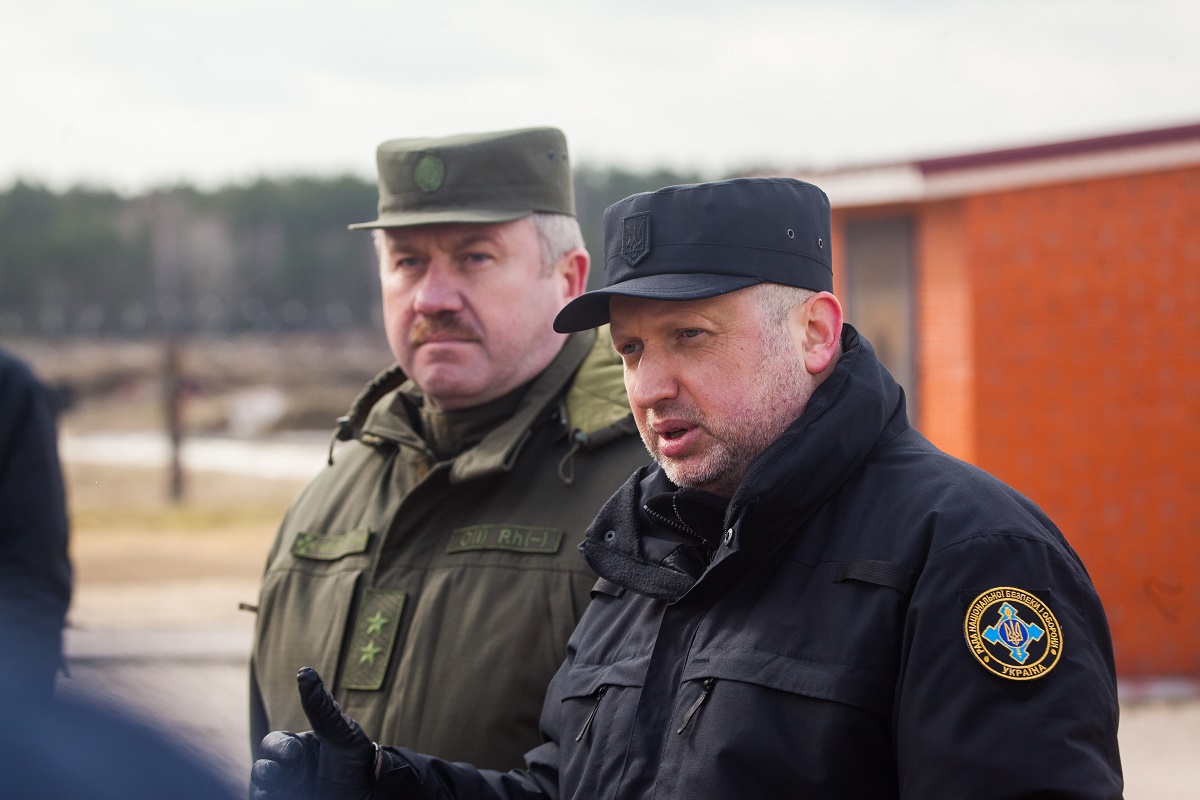
There are already high profile politicians in Ukraine who come from Protestant communities. Oleksandr Turchynov, for example, who took on the role of acting president after Viktor Yanukovych fled the country and who has been dubbed “the bloody pastor” by the Russian media, is among them. Protestant unions also continue to be active as members of the All-Ukrainian Council of Churches and Religious Organisations through which they can also influence state policy. The Council opposed ratification in Ukraine of the Istanbul Convention – Action against violence against women and domestic violence. Recently, representatives of the council met with members of the parliament commission on health policy to discuss health care reform. The council has also issued an appeal in the midst of a highly politicised crisis related to problems of waste management in Lviv, and welcomed a declaration by Prime Minister Volodymyr Hroysman in which he expressed his wish to co-operate with the council more closely.
In addition, reflecting the desire of Protestant churches to be an integral part of Ukraine’s public life, these activities also show that Ukrainian society is – at least at a declarative level – becoming more religious. Indeed, a recent survey by the Pew Research Center shows that 59 per cent of the Ukrainian population think that Ukraine is at least somewhat religious as a society, while data obtained by the Razumkov Centre shows that as much as 67 per cent of the population identity themselves as believers.
Lastly, even though almost 80 per cent of Ukraine’s population believe that Ukraine is an Orthodox country, the events of the last number of years and the involvement of Protestants in providing charity relief to those in need, especially in the war-torn areas, have significantly improved the image of these denominations, while the official celebration of the Reformation’s 500th anniversary has become an unprecedented opportunity for a stronger partnership with the state.
Kateryna Pryshchepa is a PhD student at the Graduate School for Social Research (Institute of Philosophy and Sociology of the Polish Academy of Sciences). She also works for the College of Europe-Natolin campus in Warsaw.